
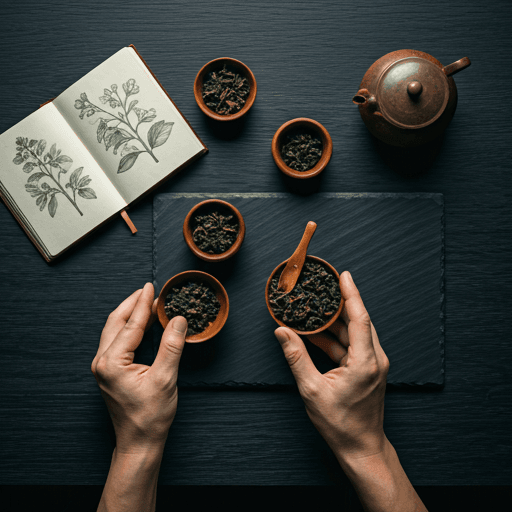
To learn how to make lemon balm iced tea, start with the leaves: steep a generous handful of fresh lemon balm (a lemony member of the mint family) in just-off-the-boil water, sweeten it lightly, brighten it with a squeeze of lemon, then cool it and pour it over plenty of ice. The finished glass is soft, citrus-scented and gently minty, and because lemon balm is a herb rather than true tea it is naturally caffeine-free, so it suits any time of day.
This is the chilled, over-ice version. If you want the hot cup, the plant's history and who should take care with it, that all lives in our lemon balm tea guide. Here we stay focused on getting a bright, refreshing iced glass every time.
What lemon balm iced tea is
Lemon balm iced tea is simply a cold infusion of lemon balm leaves, served over ice. Crush a leaf and you get an unmistakable bright lemon scent with a faint minty, herbal edge, and that is exactly what carries through into the glass: lemony and fresh up front, softly herbal underneath, with none of the tannic bite you get from over-brewed black tea. It reads as light and thirst-quenching rather than rich.
Lemon balm (Melissa officinalis) is one of the easiest garden herbs there is. It belongs to the Lamiaceae, or mint, family, the same clan as peppermint and spearmint, and it has been grown across the eastern Mediterranean, western Asia and the monastery gardens of Europe for well over two thousand years. The genus name Melissa comes from the Greek word for honeybee, because the plant's flowers are a magnet for bees. It spreads happily in a pot or a border, which is why a handful of fresh leaves for a jug of iced tea is often as close as the windowsill.
The key technique
A few small choices make the difference between a flat glass and a bright one:
- Fresh leaves give the most aroma. Fresh lemon balm has the brightest lemony scent, so use a generous handful (roughly a loosely packed cup) per litre of water. Dried works too and is more concentrated, but the aroma is quieter and a little more herbal.
- Bruise or tear the leaves first. Lemon balm's flavour sits in aromatic oils just under the surface. Roughly tearing or lightly pressing the leaves before they hit the water releases far more of that lemony scent.
- Do not cook it. Lemon balm turns grassy and flat if you boil it hard or steep it too long. Use water that is just off the boil, keep the steep short, or skip heat entirely and cold-brew in the fridge for the cleanest, softest result.
- Finish with lemon and a little sweetener. A squeeze of fresh lemon lifts the herb's own citrus note, and a small amount of honey, sugar or simple syrup rounds everything out. Add the sweetener while the tea is still warm so it dissolves cleanly.
Because lemon balm carries no caffeine, you can make it strong without it keeping you awake, and you can drink it in the evening as happily as at noon.
What you need
These amounts make about 1 litre (roughly four tall glasses). Treat every number as a starting point and adjust to taste.
- Water: about 4 cups (1 litre), filtered if your tap water is heavily chlorinated.
- Lemon balm: a large handful of fresh leaves (about 1 loosely packed cup), or 3 to 4 tablespoons of dried lemon balm.
- Sweetener: honey, sugar or simple syrup, to taste (start with 2 to 4 tablespoons).
- Lemon: a squeeze of fresh juice, plus a wheel or two for the glass.
- Ice: plenty, enough to pack each glass.
- Optional: a few sprigs of fresh mint, or an extra lemon balm sprig to garnish.
How to make lemon balm iced tea, step by step
There are two reliable routes. The hot-brew-then-chill method is quick and gives a fuller, more aromatic glass; the fridge cold-brew is hands-off and comes out especially smooth. Both build on the base approach in our general guide to how to make iced tea, but lemon balm has a couple of quirks worth calling out.
Method 1: Hot-brew, then chill
- Prep the leaves. Rinse the fresh lemon balm and tear or lightly bruise it to release the oils. If using dried, measure it straight into your jug or teapot.
- Heat the water. Bring it to a boil, then let it settle for a minute so it is just off the boil (around 90 to 95 degrees C / 195 to 205 degrees F). Water that is too fierce makes the herb taste grassy.
- Steep, covered. Pour the water over the leaves, cover, and steep for 5 to 7 minutes. Covering traps the aromatic steam that carries most of the lemon scent.
- Sweeten while warm. Strain out the leaves, then stir in honey, sugar or simple syrup while the tea is still warm so it dissolves without leaving grains at the bottom.
- Add lemon and cool. Stir in a squeeze of fresh lemon. Let the tea cool toward room temperature, then refrigerate until cold, or pour it straight over a glass packed with ice.
- Serve. Fill each glass with ice, pour, and finish with a lemon wheel and a sprig of lemon balm or mint.
Method 2: Fridge cold-brew
Cold-brewing skips heat completely, which keeps lemon balm at its softest and least grassy. It follows the same low-effort logic as our cold-brew tea guide, and it is ideal for a make-ahead pitcher.
- Combine cold. Put the torn fresh leaves (or the dried lemon balm) into a jug and cover with about 1 litre of cold, filtered water.
- Steep in the fridge. Cover and refrigerate for 4 to 8 hours. Longer steeping gives a stronger, more lemony brew; it stays mellow rather than bitter, so it is hard to overdo.
- Strain and finish. Strain out the leaves, then stir in sweetener (dissolve it first in a splash of warm water, or use simple syrup, since cold liquid dissolves sugar slowly) and a squeeze of lemon.
- Serve over ice. Pour into ice-filled glasses and garnish. There is no concentrate to dilute, so it is ready to drink as is.
Important: whichever route you take, either hot-brew then chill it, or cold-brew it in the refrigerator. Do not leave lemon balm to steep in warm water on the counter for hours, because warm water sitting out is exactly the condition in which bacteria can grow. Keep both the brewing and the finished tea cold.
Fresh vs dried lemon balm
Either works. Fresh leaves lead with a livelier lemon aroma, while dried is more concentrated and a touch more herbal. Rough guide per litre of water:
| Form | Amount per ~1 litre | Aroma & character |
|---|---|---|
| Fresh leaves | A large handful (~1 loosely packed cup), torn or bruised | Brightest, most vivid lemon scent; soft and fresh |
| Dried lemon balm | 3 to 4 tablespoons | More concentrated but quieter; gently herbal, less zingy |
Storing and making a pitcher ahead
Iced lemon balm tea is easy to batch for a warm afternoon. Brew a full jug by either method, keep it covered, and store it in the refrigerator. It is best within about 2 to 3 days; the aroma is liveliest on the first day and fades gradually after that. Add fresh lemon wheels when you serve rather than letting them sit in the jug, so the pith does not turn the tea slightly bitter over time.
For a crowd, keep the sweetened tea and the cut lemon separate until serving so people can brighten their own glass. Freezing leftover brew into ice cubes is a neat trick: they chill the next batch without watering it down. If you like a citrus-forward glass, the same finishing logic carries over to our lemon iced tea recipe, which leans on a stronger lemon squeeze over a black-tea base.
Serving ideas
Serve it very cold, over a packed glass of ice, with a lemon wheel on the rim and a sprig of lemon balm or mint tucked in. A few extra torn leaves in the jug keep the aroma going. For a lighter-still drink, top the glass with a splash of sparkling water; for a summer party jug, muddle in a little cucumber or a handful of berries. Because the base is caffeine-free, it is an easy pour for the whole table at any hour.
A note on caffeine and safety
Lemon balm iced tea is caffeine-free, since lemon balm is a herb and not a product of the tea plant. That is what makes iced lemon balm tea such an easy evening or all-day drink. The cautions here are about food safety and common sense rather than medicine:
- Hot-brew then chill, or cold-brew in the fridge. Do not leave tea to steep warm at room temperature for hours.
- Keep the finished tea covered and refrigerated, and enjoy it within about 2 to 3 days.
- Never give honey to infants under 12 months. Use sugar or simple syrup for the very young instead.
- Use clean, food-grade lemon balm; give home-grown leaves a good rinse before brewing.
Responses vary from person to person, and this is not medical advice; enjoy lemon balm iced tea as a refreshing, low-key drink rather than a remedy. Once you have the method down, it becomes a template: dial the lemon up or down, switch between fresh and dried, and keep a cold jug ready whenever the weather turns warm.