
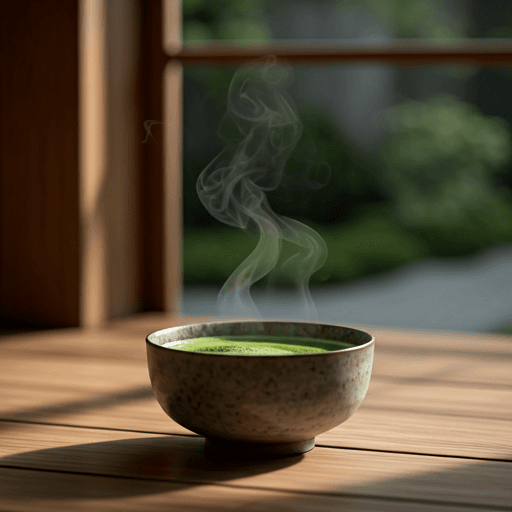
The short answer to how to make green tea iced tea is straightforward: brew green tea in cooler water and for a shorter time than you would black tea, so it stays smooth and sweet instead of turning bitter, then chill it and pour it over ice. Serve it plain, or with a little honey, lemon or fresh mint. Hot-brewing then chilling is the fast route; brewing it cold in the fridge gives the smoothest, sweetest glass of all.
What green tea iced tea is
Green tea iced tea is exactly what it sounds like: green tea, brewed and then served cold over plenty of ice. The flavour is fresh, grassy and lightly vegetal, with a clean finish that is far more refreshing on a hot afternoon than a heavy, sugary bottled drink. Made well, iced green tea is bright and a touch sweet on its own, so you can drink it unsweetened or add just a whisper of honey or syrup.
Cold, unsweetened green tea is an everyday drink across much of East Asia. In Japan it is poured from the fridge and sold chilled in every convenience store; in China and Korea a cool, plain cup of green is the default thirst-quencher rather than a sweetened soft drink. That tradition is a useful reminder that green tea iced tea does not need sugar to taste good — the tea itself is the point. If you want to master the hot cup first, our guide to how to make green tea covers the basics, and this page takes that same leaf and turns it into a cold-glass recipe.
The key technique: cooler water, shorter steep
Here is the one thing that separates a smooth iced green tea from a harsh one. Green tea is delicate, and boiling water scorches it — the result is bitter, astringent and mouth-drying. Instead, brew green tea in water around 70 to 80 C (about 160 to 175 F) and keep the steep short, roughly 1 to 3 minutes. That gentler treatment pulls out the sweet, grassy notes without the bitterness. The same rule applies to white and Darjeeling teas, which also turn harsh in water that is too hot.
You have two good routes to a cold glass. The fast one is to hot-brew in cooler water, then chill the tea or flash-chill it straight over ice. The smoothest one is to skip the heat entirely and cold-brew the leaves in the fridge, which pulls almost none of the bitter compounds and leaves the tea naturally sweet. For a full deep-dive on the no-heat method, see our dedicated guide to cold-brew green tea; below you will find a working version of both so you can choose by how much time you have.
Leaf choice matters too. A good Japanese sencha gives a vivid, grassy cup; a Chinese green such as dragonwell (longjing) is a little nuttier and rounder; and a jasmine green makes a beautifully fragrant, floral version that needs almost no sweetening. Any of them work — pick the one you enjoy hot.
What you need
- About 4 cups (roughly 1 litre) of fresh water, heated to about 75 C (170 F) for the hot method, or cold from the tap for the cold-brew method
- 4 to 5 green tea bags, or about 4 teaspoons (roughly 8 g) of loose-leaf green tea — sencha, a Chinese green, or jasmine green
- Plenty of ice
- Optional: honey or simple syrup, to taste
- Optional: a squeeze of lemon and a sprig of fresh mint
How to make green tea iced tea, two ways
Both methods below make about 4 servings. Method one is quick; method two is the smoothest. Whichever you choose, do not leave the tea to sit in warm water at room temperature for hours — brew it hot then chill it, or cold-brew it in the fridge, so it stays food-safe.
Method 1: hot-brew, then chill or pour over ice
- Heat your 4 cups of water and let it drop to about 75 C (170 F) — a minute or two off the boil, or roughly the point where steam is rising but the water is not bubbling.
- Add the tea bags or loose leaves and steep for just 1 to 3 minutes. Taste at the 1-minute mark and stop before it turns bitter; over-steeping is the most common mistake.
- Remove the bags or strain out the leaves right away. If you want it sweet, stir in honey or simple syrup while the tea is still warm so it dissolves.
- Cool it down. Either refrigerate the brewed tea until cold, or fill a glass or pitcher with ice and pour the hot tea straight over it to flash-chill. Flash-chilling over ice locks in the fresh flavour and dilutes it slightly, so brew a touch stronger if you go that way.
- Serve over more ice, with a squeeze of lemon and a mint sprig if you like.
Method 2: fridge cold-brew (the smoothest)
- Put the tea bags or loose leaves straight into a jug or pitcher with the 4 cups of cold water — no heat at all.
- Cover it and refrigerate for 2 to 6 hours. Two hours gives a light cup; four to six hours gives a fuller, still-smooth one. Because the water is cold, it is almost impossible to make it bitter, so timing is forgiving.
- Strain out the leaves or lift out the bags once it tastes right — leaving them in much longer can eventually make it cloudy.
- Sweeten with a little simple syrup if you want (honey does not dissolve as easily in cold liquid, so a syrup is easier here), and serve over ice.
Hot-brew-then-chill vs cold-brew at a glance
| Factor | Hot-brew, then chill | Fridge cold-brew |
|---|---|---|
| Speed | Fast — minutes to a short chill | Slow — 2 to 6 hours in the fridge |
| Smoothness | Smooth if you keep the water cool and the steep short | Smoothest and sweetest, very low bitterness |
| Caffeine | Full extraction from a caffeinated leaf | Slightly less — cold water pulls a little less caffeine |
| Best for | When you want a glass now | When you can plan ahead for the smoothest result |
Storage and a make-ahead pitcher
Either method scales up neatly into a pitcher. Keep the finished tea covered in the fridge and drink it within about 2 days — green tea fades faster than black, losing its fresh, grassy brightness quickly, so it is honestly at its best the same day you make it. Store it cold the whole time; the food-safe rule is to hot-brew then chill, or cold-brew in the fridge, and never to leave tea steeping in warm water on the counter for hours, where bacteria can grow. If you are building a big batch for a crowd, our general guide to how to make iced tea walks through pitcher ratios and dilution.
Serving ideas
Plain over ice is a genuinely good drink and the most traditional way to enjoy iced green tea. From there, a squeeze of lemon and a sprig of mint make it brighter and more aromatic — if you love that combination, the technique carries straight over to lemon iced tea. For a green-tea fruit cooler, muddle a few slices of peach, a handful of berries, or some cucumber and ginger into the pitcher, or top each glass with a splash of fruit juice. Jasmine green with a little honey and lemon is especially good this way.
Caffeine and a quick food-safety note
Be honest with yourself about caffeine: green tea contains it, so green tea iced tea is a caffeinated drink, though a gentler one than coffee or black tea. Cold-brewing pulls a little less caffeine than a hot brew, but it is not caffeine-free — if you want a zero-caffeine glass you would need a caffeine-free herbal base instead. For food safety, keep the tea cold from brew to glass and drink it within a couple of days. If you sweeten with honey, note that honey should never be given to infants under 12 months. Everyone responds to tea and caffeine differently, so let your own tolerance guide you — this is general information, not medical advice.