
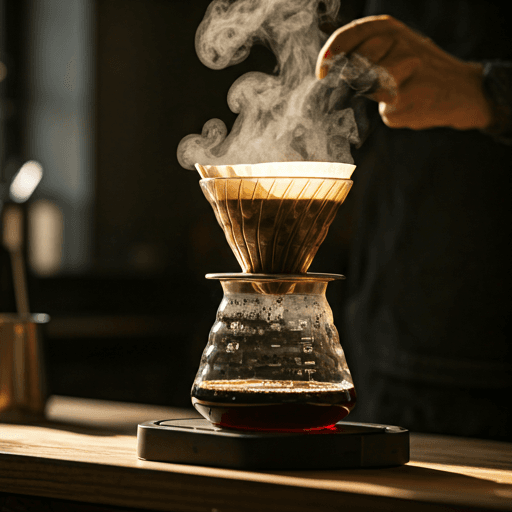
Want a natural, whole-fruit sweetener that pours straight into your cup? Here is how to make date syrup at home: soften pitted dates in hot water, blend them completely smooth, then simmer and strain the puree into a thick, glossy, caramel-brown liquid. Unlike a plain sugar syrup, date syrup draws all of its sweetness — and its deep toffee-and-raisin flavor — from the whole fruit, and because it is already a pourable liquid, it stirs neatly into hot or iced coffee, cold brew, a latte or a pitcher of steamed milk.
Below you will find what date syrup actually is, a simple step-by-step recipe, a quick table for dosing it into different drinks, and how to keep it fresh. If you like the idea of sweeteners that carry their own flavor, it sits comfortably alongside the other options in our guide to coffee syrups.
What date syrup is
Date syrup is exactly what it sounds like: dates cooked down into a thick, pourable syrup. Sometimes called date molasses or silan, it is a traditional whole-fruit sweetener with long roots across the Middle East and North Africa, where dates have been a staple for thousands of years. Cooks there have long simmered dates into a dark, glossy syrup for drizzling over bread and yogurt, folding into desserts, and sweetening drinks — well before refined sugar was widely available.
The flavor is the whole point. Where refined sugar is simply sweet, date syrup tastes of toffee, caramel, brown sugar and raisins, with a faint fig-like richness. That is because you are not extracting sugar and throwing the fruit away — you are keeping the entire date, so its character comes along for the ride. The color lands somewhere between deep amber and dark treacle, and the texture is closer to warm honey than to thin sugar water. Those toffee-caramel notes are what make it such a natural fit for coffee.
Why date syrup makes a nice natural coffee sweetener
There are two practical reasons date syrup for coffee works so well. First, it is already a liquid, so it dissolves instantly — even in cold brew or iced coffee, where granulated sugar just sinks and sits at the bottom of the glass. Second, it brings its own flavor rather than only turning up the sweetness, so a spoonful adds a toffee-caramel note that suits dark roasts, milky drinks and lightly spiced coffees especially well.
In that sense it belongs to the same family as other whole-food sweeteners — if you enjoy the way maple syrup works in coffee, date syrup gives you a similar pour-and-stir convenience with a deeper, drier, more raisiny character. It is still a sweetener made of sugars, so use it the way you would any sweetener: to taste, and no more than you enjoy.
How to make date syrup, step by step
This is a two-ingredient date syrup recipe at heart: dates and water. A squeeze of lemon or a pinch of salt is optional but rounds out the flavor. The method is simply soften, blend, simmer, strain — and it takes about half an hour, most of which is hands-off soaking time.
Ingredients
- Pitted soft dates — about 250 g (roughly 1.5 cups, packed). Medjool are plump, soft and rich; Deglet Noor are firmer and a touch less sweet. Both work well, so use whichever you have.
- Hot water — around 500 ml (2 cups), plus a little extra held back to thin the syrup at the end.
- Optional: a squeeze of lemon juice — brightens the flavor and helps it keep a little longer.
- Optional: a small pinch of salt — sharpens and rounds out the caramel notes.
Method
- Pit and chop. Make sure every date is fully pitted, then roughly chop them so they soften and blend more easily.
- Soak. Put the chopped dates in a bowl, pour over the hot water, and leave them for 20-30 minutes until plump and very soft. Do not drain them — that soaking water is now full of flavor and forms the body of your syrup.
- Blend. Tip the dates and their soaking water into a blender and blend until completely smooth, scraping down the sides once or twice. You want no lumps left at all.
- Simmer (optional). For a thicker, richer syrup, pour the puree into a saucepan and simmer gently for 5-10 minutes, stirring often so it does not catch on the base. Add the lemon and salt at this stage if you are using them.
- Strain. Pass the syrup through a fine sieve, pressing the pulp with the back of a spoon to push through as much as you can. This is the step that turns a rough puree into a smooth, pourable syrup. Save the leftover pulp — it is lovely stirred into porridge or spread on toast.
- Cool and bottle. Let the syrup cool, then pour it into a clean, sealed jar or bottle.
Adjusting the thickness
Date syrup thickens as it cools, and thickens further the longer you simmer it. If yours comes out too thick to pour comfortably, simply stir in a little hot water, a tablespoon at a time, until it flows the way you like. If it is thinner than you want, return it to the pan and simmer for a few more minutes. There is no single correct consistency — aim for something a touch thinner than honey so it blends easily into a drink and pours cleanly from the bottle.
How to use date syrup in coffee
Because it is already liquid, date syrup needs no dissolving. Stir a spoonful into a hot black coffee, swirl it through iced coffee or cold brew, or build a date-sweetened latte by stirring it into the espresso before you add the milk — the same order you would use for any flavored milk drink in our at-home latte guide. Start small: it is sweeter and more assertive than plain sugar, so a little goes a long way.
| Use case | How much date syrup | Tip |
|---|---|---|
| Hot black coffee | 1 to 2 teaspoons | Stir while the coffee is hot so it disperses evenly. |
| Iced coffee or cold brew | 1 to 2 teaspoons | Mix into the coffee before adding ice so it does not sink. |
| Date-sweetened latte | 2 to 3 teaspoons | Stir into the espresso first, then pour in the milk. |
| Steamed milk or cortado | 1 teaspoon | Add before steaming for an even toffee note throughout. |
Beyond coffee it is just as happy over pancakes and porridge, whisked into a salad dressing, or drizzled on yogurt — so a jar rarely goes to waste.
Date syrup vs plain simple syrup
The core difference is flavor and origin. A classic simple syrup is just sugar dissolved in water — clean, neutral sweetness with no color and no flavor of its own, which is exactly why it is the go-to for cocktails and iced drinks where you want the other ingredients to shine. If that neutral sweetness is what you are after, follow our simple syrup recipe instead. Date syrup is the opposite choice: it trades that neutrality for deep, whole-fruit character, so it is the one to reach for when you actually want to taste the sweetener. Spoon for spoon, date syrup also tends to feel sweeter and thicker, so you usually need a little less of it.
How to store date syrup
Keep date syrup in a clean, sealed jar in the refrigerator and use it within about two weeks. Always use a clean spoon rather than dipping a used one into the jar, since crumbs and moisture from a used spoon shorten its life. Because this is a home-made, preservative-free syrup, trust your senses: if it smells sour or yeasty, tastes fizzy, or shows any sign of fermenting or mold, discard it. When in doubt, throw it out. For longer keeping, you can freeze it in an ice-cube tray and thaw a cube at a time.
One gentle reminder: date syrup is still a sweetener made of sugars, so treat it as one and use it to taste rather than by the ladle. Responses to sweeteners vary from person to person, and this is not medical advice — but as a natural, liquid, whole-fruit way to sweeten your cup, it is a lovely thing to have waiting in the fridge.