
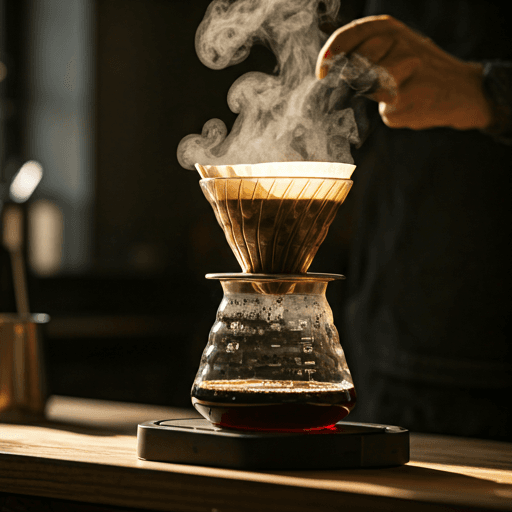
Maple syrup for coffee is one of the easiest natural swaps you can make for sugar. Because it is already a pourable liquid, real maple syrup dissolves instantly into hot or iced coffee with no need to cook up a simple syrup first, and it brings its own round, caramel-woody sweetness along with it. Start with about 1 to 2 teaspoons per cup, stir well, and adjust to taste. That is the whole trick, and everything below is just refinement.
Maple has quietly become a barista favorite because it plays two roles at once: it sweetens and it flavors. Where a spoon of white sugar just makes coffee sweeter, maple layers in a gentle toffee-and-wood note that flatters darker roasts and milky drinks especially well. Here is how to use it across every style of cup, plus a quick way to stretch it into a proper maple coffee syrup.
What makes maple syrup a good coffee sweetener
Two things set maple apart. First, it is liquid, so it mixes into cold coffee where granulated sugar simply will not. Anyone who has watched sugar sink and sit in the bottom of an iced coffee knows the problem: cold liquid cannot dissolve crystals quickly, so you get a puddle of syrupy grit at the bottom and a watery drink on top. Maple skips that entirely because there is nothing to dissolve. Give it one stir and it is evenly distributed, hot or cold.
Second, maple brings flavor. Its character comes from the sap being boiled down, which develops caramel and toasted notes far beyond plain sweetness. That means a spoonful does more work than the same sweetness in sugar, and it pairs naturally with the roasty, chocolatey side of coffee.
A quick word on grades, which is a product fact worth knowing. Lighter, golden maple is delicate and subtle, so it sweetens without shouting. Darker, amber and richer grades are more maple-forward, with a deeper, almost molasses-edged flavor that stands up to milk and to bolder brews. Neither is better; golden is lovely when you want the coffee to lead, while darker grades are the pick when you want the maple to be obvious. If you are new to it, a medium amber is the forgiving middle ground.
How to use maple syrup for coffee, cup by cup
The method changes slightly depending on how you are drinking it, so here is the practical breakdown.
In a hot coffee. Pour your brewed coffee, add 1 to 2 teaspoons of maple, and stir. Because the coffee is hot, the syrup thins and blends in a second. If you take milk, add it after the maple so you can taste and adjust the sweetness first.
In iced coffee or cold brew. This is where maple syrup in coffee really shines. Add it straight to the cold liquid and stir; there is no separate step and no grainy residue. Cold brew in particular, with its low-acidity, chocolatey profile, takes to maple beautifully. Start on the lower end, around 1 teaspoon, since chilled drinks can taste less sweet than they actually are and it is easy to overshoot.
In a latte or milky coffee. Stir the maple into your hot espresso or strong coffee base first, so it dissolves fully, then add your steamed or frothed milk on top. Doing it in that order means the sweetness is evenly through the drink rather than pooling under the foam. That base-first habit is the key move behind the maple latte below.
How to make a maple latte, step by step
A maple latte is simply a latte sweetened and lightly flavored with maple instead of a bottled syrup. If you want the full milk-steaming and pouring technique, that lives in our guide on how to make a latte at home; here is the short version focused on the maple part.
- Brew a shot or two of espresso, or a small amount of very strong coffee, into your cup or a small jug.
- While it is still hot, stir in 1 to 2 teaspoons of maple syrup until fully dissolved. Add a tiny pinch of cinnamon here if you like a spiced edge.
- Steam or froth your milk (dairy or a barista-style oat or soy work well with maple's caramel notes).
- Pour the milk over the sweetened espresso base, holding back the foam with a spoon, then top with the foam.
- Taste and adjust. If it needs more, drizzle a little extra maple on top rather than stirring more in, which also looks the part.
Serve it iced by stirring the maple into the espresso, letting it cool briefly, then pouring over ice and cold milk.
A quick maple coffee syrup you can keep on hand
Straight maple works perfectly well, but making a simple maple coffee syrup gives you a thinner, faster-pouring version that stretches further and dissolves into anything in an instant. Gently warm equal-ish parts maple syrup and water in a small pan (or in short bursts in the microwave) until just combined, then stir in a pinch of cinnamon or a few drops of vanilla. Let it cool and it is ready. The splash of water loosens the syrup so it flows even more easily and gives you more drinks per bottle, while the spice or vanilla adds a coffee-shop finish.
| Use case | How much maple | Tip |
|---|---|---|
| Hot brewed coffee | 1-2 tsp per cup | Add before milk so you can taste as you go. |
| Iced coffee or cold brew | 1 tsp to start | Cold mutes sweetness; add more only after tasting. |
| Maple latte | 1-2 tsp in the espresso base | Dissolve into the hot shot first, then add milk. |
| Batch maple coffee syrup | Equal maple and water + pinch spice | Warm gently to combine; keep chilled and shake before use. |
How maple compares to simple syrup and to plain sugar
Compared with plain sugar, maple wins on two fronts for cold drinks and for flavor: it never leaves undissolved grit, and it adds a caramel character sugar cannot. The trade-off is that it is not neutral, so if you want pure, flavorless sweetness, sugar or a plain sugar syrup is the better tool.
Compared with a homemade sugar syrup, maple is the no-cook shortcut: you skip the step of dissolving sugar in water entirely because maple is already liquid. A classic simple syrup is completely flavor-neutral, which is why bars keep it around; if you want that neutral base or the exact ratios, see our guide on how to make simple syrup. Maple sits somewhere between a plain sweetener and a flavored one, which is also where a good vanilla syrup for coffee lives, and it is worth knowing the wider family in our overview of coffee syrups explained. Reach for maple when you want sweetness plus a little flavor with zero effort.
Pure maple syrup versus pancake syrup
One thing worth flagging: pure maple syrup and pancake or table syrup are not the same product. Pure maple is boiled-down tree sap and nothing else. Pancake syrup is usually corn or cane syrup colored and flavored to imitate it, sometimes with a touch of real maple, sometimes none at all. For coffee you want the pure stuff, because that is where the genuine caramel-woody flavor comes from; the imitation tends to taste flatly sweet with an artificial edge. Check the label reads simply maple syrup.
How to store maple syrup
Unopened, pure maple syrup keeps for a long time in the cupboard. Once you open it, keep it in the fridge. Cold storage slows any surface mold and keeps the flavor fresh, and chilled syrup is perfectly happy stirred into hot coffee anyway. If you made the watered-down maple coffee syrup above, treat it like any fresh mix: keep it refrigerated, give it a shake before pouring, use it within a couple of weeks, and when in doubt, throw it out.
One honest note on maple as a sweetener
Maple is a lovely, natural way to sweeten coffee, but it is still a sugar. Swapping it in changes the flavor, not the fact that you are adding a sweetener, so think of it as a nicer-tasting sugar rather than a health food. Responses vary and this is not medical advice; the pleasure here is simply in the flavor. Start light, let the maple and the coffee meet in the middle, and you will land on a cup that tastes like autumn in the best way.