
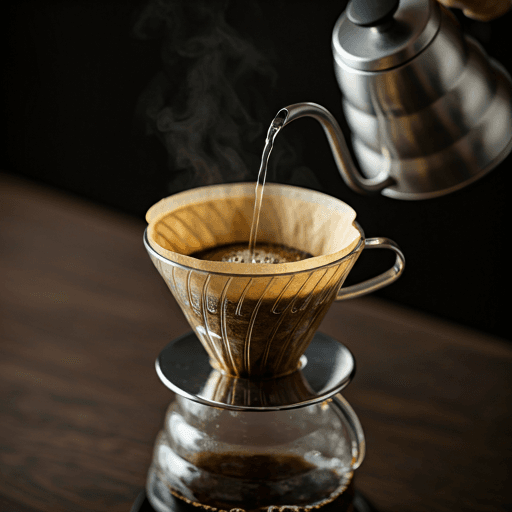
If you want to know how to make a latte macchiato, the short answer is that you build it in the reverse order of a latte: fill a tall glass with steamed, foamy milk first, then slowly pour a shot of espresso through the foam so it marks the milk with a dark stripe. Because the milk goes in first and the espresso second, a latte macchiato is milkier and more gently layered than an espresso macchiato. The word macchiato means stained or marked, and that dark stain sitting in pale foam is the whole point of the drink.
What a latte macchiato is, in one line
A latte macchiato is a tall, milk-forward drink where a single shot of espresso is poured into a glass already full of steamed, airy milk, so the coffee stains the milk rather than the other way around. That milk-first order is the defining move, and it is the one thing to keep in your head: milk goes in first, espresso goes in second. It is easy to mix up with its cousins, so a full side-by-side of the latte macchiato against a plain latte lives in its own comparison. Here we are focused on actually building one.
Why the layers form
The stripe is not a trick of special equipment; it is physics you can lean on. When you steam milk well, you create a stable cushion of microfoam sitting on top of warmer liquid milk. If you pour a shot of espresso gently onto that foam, the coffee is slightly denser than the foam but does not have enough energy to crash all the way down and blend. It slips through the top layer and settles as a band in the middle, held between the foam above and the milk below. Pour too fast or too hard and you knock all the layers together into a flat, uniform tan. Still tasty, just not layered. Patience and a slow pour are what give you the visible stripe.
Equipment you need
- A way to pull a shot of espresso. An espresso machine is ideal, but a strong stovetop moka pot shot or a concentrated brew works too. Our guide to making espresso at home walks through the options.
- A way to steam or froth milk. A steam wand, a handheld frother, a French press, or even a jar you shake and warm. The technique matters more than the tool; see how to make steamed milk for getting that light, airy foam.
- A tall, clear glass. Clear is not optional if you want to see the layers. A narrow, tall glass shows off the stripe far better than a wide mug.
- A spoon. Optional, for pouring the espresso over the back of it to slow the stream.
Ingredients
- Milk — roughly 180 to 240 ml (6 to 8 oz), enough to nearly fill your glass.
- Espresso — one shot, about 25 to 30 ml. A double works if you want it stronger.
- Optional syrup — a small amount of vanilla, caramel, or hazelnut syrup if you like it sweet. Add it to the milk before you pour the espresso so it blends in.
Getting the milk and foam right
Milk does most of the work in a latte macchiato, so it is worth a little care. Whole dairy milk gives the richest, most stable foam, while barista-formulated oat and soy hold air well and pour cleanly. Skim milk froths into big, dry bubbles that collapse fast, so it is harder to get a clean stripe. Whatever you use, stop steaming while the jug is still comfortable to hold. Overheated milk goes thin and loses its natural sweetness, and scalded milk can taste flat. If you are frothing by hand, froth a little longer than you think you need, since you want a generous, airy foam for the espresso to sit in.
How to make a latte macchiato, step by step
- Steam the milk to a light, airy foam. You want more foam than you would for a flat white — aim for a soft, glossy foam with plenty of body. Steam or froth until the milk is hot but not scalding, around 60 to 65 C (140 to 150 F).
- Pour the milk into a tall glass and let it settle. Fill the glass most of the way and wait 30 to 60 seconds. The foam rises and separates slightly from the liquid milk below, giving the espresso a cushion to land on. If you are adding syrup, stir it in now, before the coffee.
- Pull your shot of espresso. Brew it fresh so it is hot and carries a good crema. Pour it into a small jug or cup you can control.
- Pour the espresso slowly through the foam. Send it down in a thin, steady stream straight down the center, or over the back of a spoon to slow it further. Go gently — you are letting the coffee slip through the foam and settle as a band, not blast to the bottom.
- Serve without stirring. The stripe only survives if you leave it alone. Hand it over with the layers intact and let whoever is drinking it stir when they are ready.
The layered look and why a clear glass matters
Half the appeal of a latte macchiato is visual: a band of espresso suspended between white milk and pale foam. A clear glass is what turns a nice drink into the thing people photograph, so a layered latte macchiato really does belong in glass rather than a mug. Warm the glass first if you can, so the layers hold their heat and their shape a little longer. If your layers blur together, it is almost always because the pour was too fast, the foam was too thin, or the milk had not settled — none of which ruins the flavor, so treat a blended cup as practice for the next one.
Latte macchiato vs latte vs espresso macchiato
These three drinks get confused constantly because the names overlap. The quickest way to keep them straight is to ask what goes into the glass first and how much milk is involved. A fuller comparison of the latte macchiato against a standard latte has its own guide; the caffe, or espresso, macchiato — mostly espresso with just a dot of foam — is covered in our macchiato recipe. Here is the short version:
| Drink | What goes in first | Milk level |
|---|---|---|
| Latte macchiato | Milk (foamy), espresso poured in after | High — mostly milk, left layered |
| Latte | Espresso, then milk poured in and gently mixed | High — mostly milk, blended |
| Espresso (caffe) macchiato | Espresso, then a small dot of foam on top | Very low — just a mark of milk |
So a latte is espresso-first and gently mixed, a latte macchiato is milk-first and left layered, and an espresso macchiato is almost all coffee. If you decide you prefer the milk-forward, fully blended version, our latte at home guide is the natural next step.
Make it your own
Once you have the basic layered latte macchiato down, the variations are easy. Stir a small measure of vanilla, caramel, or hazelnut syrup into the milk before the coffee for a sweeter cup. Dust the foam with cocoa or cinnamon. Swap in a double shot when you want more coffee character to push up through the milk. This latte macchiato recipe scales up neatly too — steam a larger jug of milk and split it between two glasses before pulling and pouring two shots. The order never changes: milk first, then the espresso poured slowly through.
Tips and easy fixes
- No stripe? Your pour was likely too fast or your foam too thin. Steam more air into the milk and pour slower next time.
- Layers collapsed? Let the milk rest longer before the espresso, and keep the stream thin and controlled.
- Too weak? Use a double shot, or slightly less milk.
- Want it iced? Fill the glass with cold milk and ice, then pour cooled espresso over the top. The layers form the same way, and the contrast is even easier to see.
A quick note on caffeine
A latte macchiato is a caffeinated milk drink — a single shot of espresso carries roughly 60 to 80 mg of caffeine, give or take, depending on the beans and how it is pulled. That is gentle for most people, but caffeine late in the day can nudge sleep for some, so it is worth going easy in the evening. Responses vary from person to person, and this is not medical advice; if caffeine affects you strongly or you have any concerns, follow what works for your own body.