
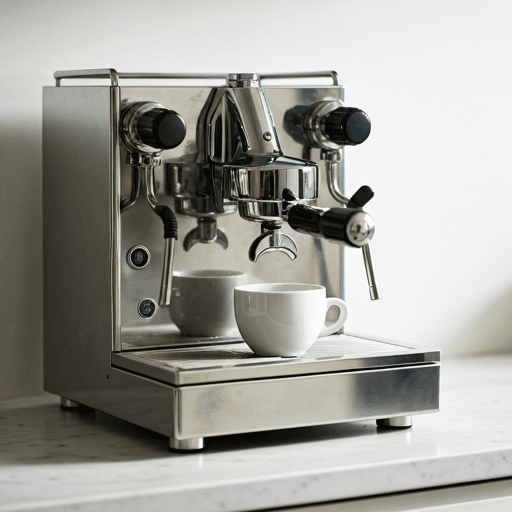
Frothing and steaming milk just means adding air and heat until the milk turns glossy, sweet and foamy enough to crown a latte or cappuccino. You can do it with a proper steam wand or an electric milk steamer, with a cheap battery milk foamer, or with no gadget at all. This guide covers the technique first, then walks through every tool that gets you there, so you can pick whatever you already own and start pouring better milk today.
The two moves behind frothed milk
Good barista milk comes down to two separate actions, and understanding them is the whole game.
- Stretching (adding air). This is where you introduce air into cold milk so it grows in volume and builds foam. On a steam wand you hear a gentle hissing or tearing sound. Most of the air goes in during the first few seconds, while the milk is still cool.
- Texturing (heating and swirling). Once you have the foam you want, you stop adding air and instead spin the milk into a smooth, paint-like whirlpool as it heats. This folds the big bubbles down into tiny, uniform ones and leaves you with glossy microfoam rather than dry, stiff bubbles.
Stretch too long and you get airy, meringue-like foam. Skip the stretch and you get flat hot milk. The sweet spot for a silky drink is a short stretch followed by a longer swirl. That same principle applies whether you are learning how to steam milk with a professional wand or how to froth milk with a two-dollar whisk.
How hot should steamed milk be?
Aim for hot but not scalded, roughly 140-155F (about 60-68C). In that band the milk proteins hold structure and the natural sugars taste their sweetest. Push much past about 160F (70C) and the milk scalds: it loses sweetness, picks up a papery or burnt note, and the foam turns coarse and unstable.
If you do not have a thermometer, the classic test is your hand on the side of the pitcher or jug. When it becomes too hot to hold comfortably for more than a couple of seconds, you are there. Plant milks tend to prefer the lower end of the range, so ease off the heat a touch with oat or almond.
Steam wand vs electric milk steamer
The two most powerful tools both use steam, but they ask very different things of you. A steam wand gives you full manual control and the best microfoam; an electric milk steamer trades some control for push-button convenience.
Using a steam wand
A steam wand is the pressurized nozzle on an espresso machine. It makes cafe-quality microfoam once you get the feel for it.
- Fill a cold metal pitcher no more than a third to halfway, so the milk has room to grow.
- Purge the wand for a second to blow out any condensed water, then wipe it.
- Set the tip just under the surface and open the steam fully. You should hear a light hiss as air feeds in. This is the stretch.
- Once the foam looks right, lower the pitcher slightly so the tip submerges and creates a spinning vortex. Hold there to texture and heat.
- Cut the steam at 140-155F, set the pitcher down, then purge and wipe the wand immediately so milk never dries on it.
- Swirl the pitcher and give it a firm tap on the counter to knock out any large bubbles before you pour.
For the espresso side of the drink, see our guide on how to make a latte at home.
Using an electric milk steamer
A standalone electric milk steamer (sometimes sold as an automatic milk frother) heats and foams in one step. You add cold milk to the fill line, drop in the whisk disc for foam or the flat disc for plain hot milk, press a button, and walk away. Models from brands like Breville, Nespresso Aeroccino, and many supermarket units all work this way. The foam is more uniform and hands-off than a wand, though usually a touch drier, and you have less say over exactly how much air goes in. It doubles neatly as a milk warmer when you just want hot milk with no foam at all.
No steam wand? Froth milk with these
You absolutely do not need an espresso machine. Here is how to froth milk with tools most kitchens already have. With all of these, heat the milk first (stovetop or microwave to about 140-150F), then add the air.
Handheld milk foamer (NanoFoamer style)
A handheld, battery-powered milk foamer is a little wand with a spinning coil head. Warm your milk, submerge the head just under the surface, and buzz it for 15-30 seconds, lifting slightly to pull in air. Basic ones make light cappuccino froth; a specialist tool like the NanoFoamer adds a fine mesh that spins the bubbles down into genuine latte-style microfoam. Cheap, fast, and easy to clean.
French press
Pour warm milk into a French press, filling no more than a third. Plunge the mesh up and down briskly for 20-40 seconds. The screen shears the milk into foam surprisingly well. Great for cappuccinos when you want volume.
Jar and microwave
The true no-gadget method. Half-fill a screw-top jar with cold milk, seal the lid, and shake hard for 30-60 seconds until it doubles. Take the lid off and microwave for 30-45 seconds; the heat sets the foam so it clings to the top. Spoon it onto your coffee. Never microwave with the lid on.
Whisk and milk warmer
Heat milk in a small pan and whisk hard by hand, or with an electric mini whisk, tilting the pan to whip in air. It takes elbow grease and makes a looser foam, but it works in a pinch. If foam is not the goal, a dedicated milk warmer (or just the pan) gives you gently heated milk for a cafe au lait or hot chocolate.
Milk-frothing tools at a glance
| Tool | How to use it | Foam it makes |
|---|---|---|
| Steam wand | Stretch tip near surface, then submerge and swirl to 140-155F | Best microfoam; latte-grade |
| Electric milk steamer | Fill to line, pick foam or flat disc, press start | Even foam, hands-off; slightly drier |
| Handheld milk foamer / NanoFoamer | Buzz just under the surface of pre-heated milk | Light froth; microfoam with a mesh head |
| French press | Plunge warm milk up and down briskly | Airy cappuccino-style foam |
| Jar + microwave | Shake cold milk, then microwave lid off | Quick medium foam; no gear |
| Whisk / milk warmer | Whisk heated milk by hand; warmer for plain hot milk | Loose foam, or none (just warm milk) |
Which milk froths best?
The liquid matters as much as the tool. Fat and protein are what let milk hold air.
- Whole dairy milk froths richest and most forgiving, with creamy, stable microfoam.
- Skim milk whips up fast into a large volume of stiff, dry foam. Good for a picture-perfect cappuccino cap, less silky for a latte.
- Plant milks vary a lot. Look for cartons labelled barista: barista oat and barista soy are formulated with extra protein and stabilizers and behave closest to dairy. Standard almond and coconut are thinner and harder to texture.
- Fresh and cold beats old and warm. Start with cold milk (except when a method tells you to heat first) and it will stretch further before it hits temperature.
Match the foam to the drink
How much air you add decides which coffee you are actually making. Wetter, thinner microfoam pours and blends into the espresso for a latte or flat white, and it is what lets you pour latte art. Stiffer, airier foam sits up in a taller cap for a cappuccino. So stretch a little longer and texture less for a cappuccino, and stretch briefly with a long swirl for a latte. Same milk, same tool, different ratio of air to liquid.
Frothing and steaming milk is a skill, not a purchase, and every method here gets better with a few tries. Start with whatever you own, chase that glossy, tap-and-swirl finish, and only upgrade once the technique feels natural. When you do decide to buy, our milk frother buying guide walks through the types and what to look for, so you can match a tool to the drinks you actually make.