
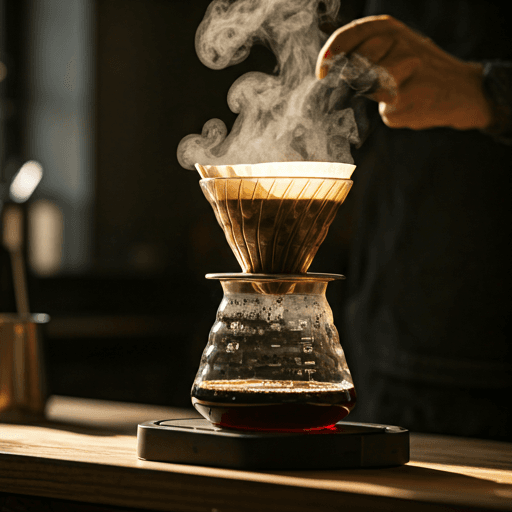
If you are wondering how much caffeine in a cafe con leche you have just poured, the honest starting point is that the number tracks the coffee, not the milk. A cafe con leche pairs a shot or two of strong coffee with a roughly equal pour of hot or steamed milk, so a single-shot cup lands near 63 mg of caffeine, while a double shot or a strong stovetop moka-pot base pushes it closer to 125 mg. Those are rough averages, and the real amount shifts with how the coffee is brewed and how much of it goes in.
Below we cover where that caffeine comes from, how the brew method moves the needle, and how the drink stacks up against a latte. For the full story of what the drink is and how it is built, see our guide to the cafe con leche.
How Much Caffeine in a Cafe con Leche: the Short Answer
So does a cafe con leche have caffeine? Yes, and almost all of it comes from the coffee shot at its base. Milk, however much you add, contributes essentially none. The mental model is simple: count the coffee, ignore the milk.
- Single espresso base: roughly 63 mg, give or take, matching a standard single shot.
- Double espresso base: roughly 125 mg, since two shots roughly double the dose.
- Strong moka-pot or stovetop base: often somewhere in the 100 to 130 mg range, depending on the pot size and how much you pour.
Treat these as ballpark figures. Real cups vary with the beans, the roast, the grind and the exact volume of coffee that goes in, so the cafe con leche caffeine content in your cup is a guide rather than a lab reading.
Where the Caffeine Actually Comes From
Whether your cafe con leche starts with a pulled espresso shot, a moka-pot brew or a strong drip, the caffeine rides in on that coffee. A typical single espresso shot carries somewhere around 63 mg, though the real figure swings with the dose of grounds, the bean type — robusta runs noticeably higher than arabica — and how long the shot runs. Our explainer on caffeine in espresso digs into why one shot can range from roughly 60 to 80 mg.
The milk is caffeine-free, so a cafe con leche with a generous splash of milk is not any weaker in caffeine than one with less — it just tastes milder and looks paler. Adding milk changes the flavor and the strength on the palate, but the total caffeine stays tied to the coffee you started with. That is worth remembering, because a big, milky cup can feel gentle while still carrying a full double shot's worth of caffeine. In other words, the cafe con leche caffeine in mg is set the moment you decide how much coffee to brew, long before the milk goes in.
How the Brew Method Changes the Number
The single biggest lever is how much coffee you brew and how strong it is — the same idea whether you are making Spain's classic espresso-based version or a Latin American stovetop cup.
A cafe con leche built on one espresso shot sits near the low end. Make it with a double shot — common in cafes that want a bolder cup, and standard for many people at home — and you are roughly doubling the caffeine. A stovetop moka pot, the everyday tool for home cafe con leche across Spain, Cuba and much of Latin America, brews a concentrated coffee that can land anywhere from about 100 to 130 mg for a typical single-serve pot, depending on the pot's size and how full you pack the basket. A larger moka pot, or one filled to a bigger cup, carries more.
The milk-to-coffee ratio, by contrast, barely touches the caffeine. A cafe con leche is traditionally close to equal parts coffee and milk, but pouring extra milk to soften it does not remove caffeine — it only spreads the same amount across a larger, milder drink. If you want less caffeine, change the coffee (fewer shots, a smaller pot, or a decaf base), not the milk.
| Cafe con leche version | Rough caffeine |
|---|---|
| Single espresso base | ~63 mg |
| Double espresso base | ~125 mg |
| Strong moka-pot / stovetop base | ~100-130 mg |
| Decaf coffee base | ~2-10 mg (trace only) |
Every figure in that table is hedged on purpose. Two cafes can both call their drink a cafe con leche and pour meaningfully different amounts of caffeine, simply because one uses a single shot and the other a double, or because one brews a small moka pot and the other a large one. If you want to nudge the number down without giving up the ritual, a decaf or half-caf base keeps the taste while dropping the caffeine to a trace.
Does a Bigger Cup Mean More Caffeine?
A common worry is that a large, cafe-sized cafe con leche must be loaded with caffeine. Usually it is not the cup size that matters but the shot count. A big cup often just means more milk stretched over the same one or two shots, which makes it taste milder, not stronger. The exception is the stovetop version: if a larger moka pot is used to fill a bigger cup, more coffee is actually brewed, so the caffeine does climb. When in doubt, ask how many shots went in, or how large the pot was — that tells you far more than the size of the cup.
How a Cafe con Leche Compares to a Latte
A latte runs on the same principle — espresso plus a large pour of steamed milk — so for the same number of shots, its caffeine sits in the same ballpark as a cafe con leche. A single-shot latte and a single-shot cafe con leche land in roughly the same range, and the same goes for their double-shot versions. The visible difference is mostly the milk texture, the froth and the ratio, not the caffeine. For the milk-drink side of the math, see how much caffeine sits in a latte.
The practical takeaway: if you know the shot count, you roughly know the caffeine, whichever of the two you order. A larger, milkier cup does not add caffeine on its own; the shots do.
How It Fits a Daily Caffeine Limit
As a loose guide, many health authorities note that a lot of healthy adults tolerate up to about 400 mg of caffeine a day. A single-shot cafe con leche of around 63 mg leaves plenty of room; a double-shot or strong moka-pot cup of roughly 125 mg adds up faster, so two or three of those can approach that ceiling once you count any other coffee, tea or cola across your day. Our overview of how much caffeine per day puts these numbers in context.
Responses to caffeine vary a lot from person to person, and this is general information, not medical advice. If you are especially sensitive to caffeine, are pregnant or breastfeeding, or take medication that may interact with it, it is worth asking your own healthcare provider what fits you. A late-day cafe con leche can also linger longer than you expect, so timing matters if caffeine affects your sleep.
The Quick Recap
A cafe con leche carries the caffeine of the coffee at its base and none from the milk: figure on roughly 63 mg for a single-shot cup and around 125 mg for a double-shot or strong moka-pot version, with real cups sliding either way based on the beans, the dose and the brew. Count the shots, and you have your answer.