
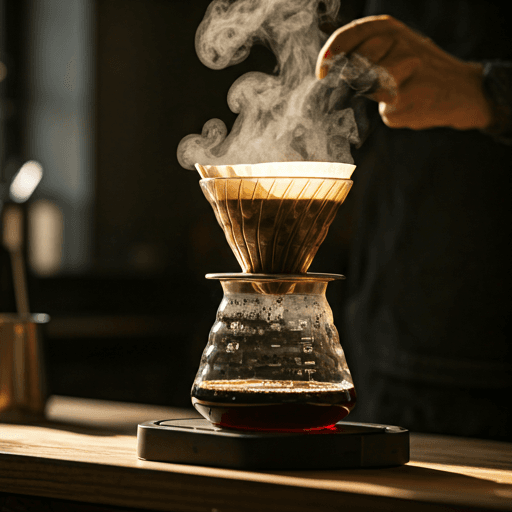
Cafe con leche literally means "coffee with milk," and that plain name is the whole idea: it is a strong coffee — an espresso shot or dark, stovetop moka-pot coffee — combined roughly half-and-half with hot, often scalded milk. This Spanish coffee with milk is a morning ritual across Spain, Cuba and much of Latin America, poured into a wide cup or a tall glass and sipped alongside toast or pastry. It is bolder and far less foamy than a cafe latte, and it is one of the simplest café drinks you can build at home.
What is cafe con leche?
At its core, cafe con leche is a one-to-one marriage of strong coffee and hot milk. The coffee side is meant to be assertive — in Spain that usually means espresso, while in Cuba and the Caribbean it is often dark, finely ground coffee brewed in a stovetop moka pot. The milk is heated until it is steaming and just below a boil, a step called scalding, then combined with the coffee so the two arrive in the cup at the same temperature. Sugar is common and frequently added to taste, sometimes stirred into the coffee before the milk goes in.
Because the coffee is concentrated and the milk is generous, the drink lands somewhere between an espresso and a milky café latte: creamy and smooth, but with the coffee still clearly in charge. There is little or no dense foam cap — this is a stirred, drink-it-warm cup, not a latte-art canvas.
Origins across Spain, Cuba and Latin America
Cafe con leche is a shared inheritance of the Spanish-speaking world rather than the invention of any single place. In Spain it is the default breakfast coffee, ordered in cafes and made at home with a moka pot and a saucepan of milk. Across Latin America and the Caribbean it took on local textures: Cuban cafe con leche leans sweeter and is traditionally built on café cubano — moka-pot coffee whipped with sugar into a light foam called espumita — before the hot milk is poured in. Puerto Rican, Dominican and other regional versions follow the same half-coffee, half-milk logic with their own preferences for sweetness and strength. Wherever it is served, it is a comfort-and-breakfast drink first, an afternoon pick-me-up second.
The 1:1 ratio and how a cafe con leche recipe is built
The signature of the drink is that roughly equal ratio of coffee to milk. A classic cafe con leche recipe pours about half strong coffee and half scalded milk into the cup, though many people nudge it milkier (closer to one part coffee to two parts milk) for a gentler morning cup. Unlike a latte, the milk is heated but not aggressively aerated into stiff microfoam, so the texture stays velvety rather than fluffy.
Here is the shape of it, without turning it into a fussy formula:
- Brew strong coffee. Pull an espresso shot, or brew a small, concentrated pot of moka-pot coffee. The point is intensity — a weak drip base will get lost under the milk.
- Scald the milk. Heat whole milk gently until it steams and is just short of boiling. A steam wand works, but a saucepan or a microwave is perfectly traditional at home. For the technique itself, see our guide to steaming and scalding milk.
- Sweeten if you like. Stir sugar into the coffee first (Cuban style whips a little coffee and sugar into a foam), or simply sweeten the finished cup.
- Combine one-to-one. Pour the hot milk into the coffee in roughly equal measure, stir, and drink it warm.
Whole milk gives the richest result, but the drink adapts happily to any milk you prefer; the ratio matters far more than the dairy.
Choosing your milk, sugar and cup
Whole dairy milk is the traditional choice because its fat carries the coffee and gives the drink its signature velvety body, but cafe con leche is forgiving: oat and other barista-style plant milks scald and combine well if you prefer them. What matters most is heating the milk properly — steaming, just short of a boil, rather than a rolling boil — so it stays sweet and silky instead of developing a burnt, scalded-skin taste. Sugar is a matter of habit rather than a rule: many drinkers take it lightly sweetened, some take none, and Cuban-style versions lean noticeably sweeter thanks to the whipped espumita. Serve it in a warmed wide cup or a tall glass so the generous volume has room, and stir before the first sip so the coffee and milk are fully married rather than sitting in layers.
Cafe con leche vs latte vs cafe au lait
These three "coffee and hot milk" drinks look like cousins because they are, but they split on the coffee base, the milk texture and the ratio. The quick version: cafe con leche is the strongest and least foamy, the latte is the milkiest and silkiest, and the cafe au lait sits in between on a softer, brewed-coffee base.
On cafe con leche vs latte specifically: a latte is an Italian café drink built on espresso with a much larger volume of steamed milk and a thin layer of microfoam, so it tastes milder and creamier. Cafe con leche uses a tighter one-to-one ratio and skips the foamy cap, letting the coffee read louder. We keep the full latte breakdown in our guide to what a latte is, and the cafe au lait story — a French drink traditionally made with drip or French-press coffee rather than espresso — lives in our cafe au lait explainer.
| Drink | Coffee base | Milk and ratio | Character |
|---|---|---|---|
| Cafe con leche | Espresso or moka-pot coffee | Scalded milk, about 1:1 | Strong, smooth, little foam; breakfast staple |
| Cafe au lait | Brewed drip or French-press coffee | Scalded milk, about 1:1 | Milder, softer base (French tradition) |
| Latte | Espresso (1–2 shots) | Steamed milk plus thin microfoam, roughly 1:3 | Milkiest and silkiest; foam cap |
| Spanish latte | Espresso | Steamed milk plus sweetened/condensed milk | Sweet and creamy |
One easy point of confusion is the Spanish latte, which despite the name is not the same as cafe con leche — it is sweeter, usually made with a dose of sweetened condensed milk. If that is the cup you are after, follow our dedicated Spanish latte recipe instead.
Iced cafe con leche
The warm version is the classic, but an iced cafe con leche is an easy summer variation and a common café order in hotter regions. The trick is to keep the coffee strong so it does not get watered down: pull the espresso or brew the moka-pot coffee a little more concentrated than usual, sweeten it while it is still hot if you want sugar to dissolve properly, then combine it with cold milk and plenty of ice. Some people build it in a tall glass by pouring the coffee and milk over ice for a layered look before stirring; others shake it briefly to chill it fast. Either way, keep the roughly equal coffee-to-milk balance so it still tastes like cafe con leche and not just iced milky coffee.
The takeaway
Cafe con leche endures because it is honest and unfussy: strong coffee, hot milk, roughly half and half, sweetened to taste. It asks for no barista tricks and no special foam, which is exactly why it has stayed a breakfast fixture from Madrid to Havana for generations. Master the one-to-one ratio and a properly strong coffee base, and you have a cup that is richer than an espresso, bolder than a latte, and ready in the time it takes to warm the milk.