
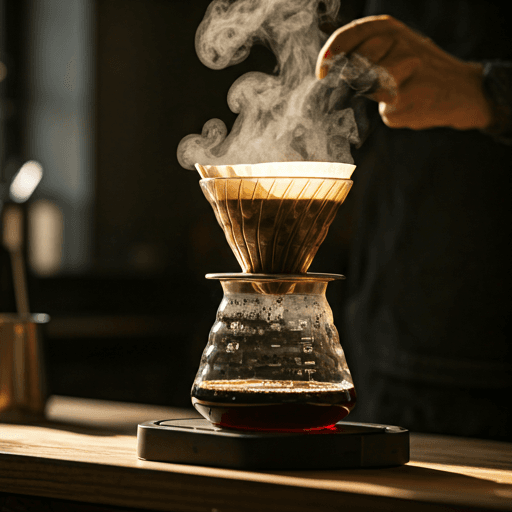
So how much caffeine in a cafe au lait? The short, hedged answer: a cafe au lait is roughly equal parts brewed coffee and steamed milk, so almost all of its caffeine comes from the coffee, not the milk. A drip-based cup usually lands somewhere around 80 to 120 mg, while an espresso-based version tracks how many shots go in. Treat those as ballpark figures, because your cup can easily sit above or below them.
Since the drink is built on a coffee base rather than one fixed recipe, the caffeine in a cafe au lait is really a question about the coffee underneath. Below we walk through the two common builds, why the coffee sets the number, how the milk fits in, and how the drink stacks up against a latte or a plain cup of drip.
How much caffeine in a cafe au lait?
Here is the direct version. The caffeine comes from the coffee, and the steamed milk adds essentially none of its own. Made the traditional way with strong brewed coffee, a standard cafe au lait tends to land around 80 to 120 mg. When a cafe builds the drink on espresso instead, the cafe au lait caffeine follows the shot count: roughly 60 to 80 mg for a single shot and about 120 to 160 mg for a double. We are keeping the definition itself brief on purpose; for the full picture of what the drink is and how it is assembled, see our guide to what a cafe au lait is.
| Version | Approx. caffeine |
|---|---|
| Drip-based cafe au lait | ~80-120 mg |
| Espresso-based (1 shot) | ~60-80 mg |
| Espresso-based (2 shots) | ~120-160 mg |
Read these as rough bands rather than precise measurements. Beans, roast level, grind, brew strength and cup size all nudge the total, so two cafes can pour noticeably different cups under the very same name. If you want an exact number, the cafe that made your drink is the only reliable source.
The key fork: drip coffee or espresso base
The single biggest reason the numbers wander is that there is no universal recipe. Traditionally, the French-style cafe au lait pairs strong brewed coffee with an equal pour of hot or steamed milk, a morning-bowl ritual long associated with France. Built this way, the caffeine is essentially that of a modest serving of brewed coffee, softened by an equal measure of milk.
Plenty of modern cafes, though, build their version on one or two espresso shots topped with steamed milk, which blurs the line with a latte. That single choice is why one cafe au lait can carry noticeably more caffeine than another poured a block away. If you care about the number, the most useful question to ask is simply whether the drink starts from brewed coffee or from espresso, and how many shots went in. Everything else is a smaller adjustment on top. Because both builds are common and rarely spelled out on a menu, it is safest to treat any single figure as an estimate rather than a promise.
Why the coffee base sets the number
Whichever way it is made, the coffee is doing all of the caffeinated work, so the same things that move caffeine in any cup move it here too. Brew strength matters most: a concentrated, longer extraction pulls more caffeine than a weak, quick one. Cup size matters because a bigger bowl usually means more coffee, not just more milk. Roast level plays a smaller role than many people expect, and grind and brew time mostly interact with strength rather than acting on their own.
For the brewed-coffee side of the equation, our explainer on how much caffeine is in a cup of coffee covers the typical ranges in detail. For the espresso side, caffeine in espresso breaks down how much a shot really carries. Put those two together and you can estimate almost any cafe au lait: work out the base first, then remember the milk is only along for the texture. All of these ranges are approximate and shift from cafe to cafe and cup to cup.
The milk point: creaminess, not caffeine
It is worth stating plainly because it surprises people: the steamed milk in a cafe au lait changes the taste, body and temperature, but not the caffeine. Whether you use whole dairy, skim or a plant-based alternative, the milk contributes creaminess and a softer, rounder flavor while adding none of its own caffeine. So a milkier, gentler-tasting cup is not automatically a lower-caffeine cup, unless the barista also used less coffee to make room for it. The dilution you taste is flavor dilution, not a meaningful cut to the stimulant itself.
How it compares to a latte and plain drip
Against a latte, the comparison hinges on the base. A latte is espresso-based by definition, so its caffeine comes from one or two shots stretched with a larger volume of steamed milk. An espresso-built cafe au lait therefore sits close to a latte in caffeine, cup for cup. A drip-built cafe au lait instead reflects whatever brewed coffee went into it, which can land in a similar range or a little higher, depending on how strong that coffee was pulled.
Against a plain cup of drip coffee, a cafe au lait made from the same volume of coffee carries broadly similar caffeine, because the milk does not remove any. What changes is the flavor: the milk rounds off the edges and mellows the coffee rather than trimming the caffeine hit. In other words, the milk is a taste decision, not a caffeine decision, and the coffee underneath is still calling the shots.
What changes the caffeine in your cup
A few levers move the number up or down. How strong the coffee is brewed is the big one, followed closely by the size of the serving. Switching to a decaf base is the most reliable way to cut caffeine sharply, though decaf still carries a small residual amount rather than a true zero. Ordering a single espresso shot instead of a double roughly halves the espresso-side contribution. And asking for extra milk mainly changes the texture, not the caffeine, unless the coffee is scaled back at the same time. So does cafe au lait have caffeine when it tastes mild and milky? Yes, essentially as much as its coffee base holds, however smooth the milk makes it feel.
How a cafe au lait fits your daily caffeine
For most healthy adults, general guidance puts a moderate daily caffeine ceiling at around 400 mg, which usually leaves comfortable room for a cafe au lait or two alongside other drinks. Our guide to how much caffeine per day puts that figure in context with everything else you might sip through the day. Keep in mind that sensitivity varies widely: caffeine can affect sleep, jitteriness and heart rate differently from one person to the next, and pregnancy, breastfeeding, certain medications and some health conditions can all lower the amount that feels comfortable. If any of those apply to you, it is worth asking your own healthcare provider where your personal line should sit.
Responses vary, and this is general information rather than medical advice. The caffeine ranges above are estimates, not exact measurements; if you need a precise figure for a specific reason, check with the cafe that made your drink or with your provider instead of relying on an average.