
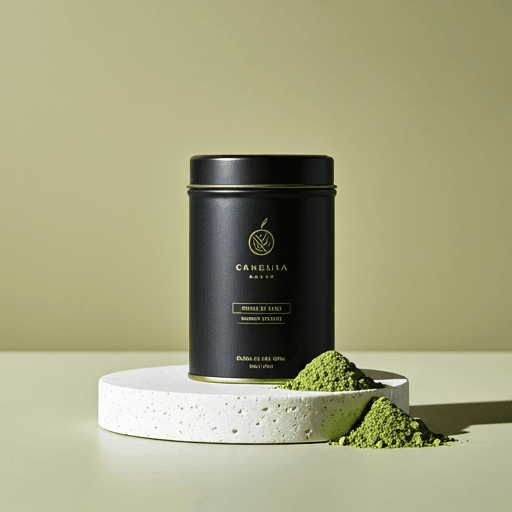
How long does matcha last? Unopened, a sealed tin or pouch keeps its best quality for roughly a year from the date it was packed. Once you open it, the clock speeds up: matcha starts to fade within a few weeks to a couple of months. The reassuring part is that matcha rarely turns unsafe to drink — but this fine green powder loses its colour, flavour and antioxidants quickly, because it oxidises fast when exposed to air, light, heat and moisture.
That is the short answer. The longer one is worth knowing, because a tin that is technically "fine" can still taste flat, dull and hay-like long before it would ever make you ill. If you want a refresher on what matcha actually is — stone-ground whole green tea leaf rather than a steeped infusion — that is why it behaves so differently from a jar of loose leaf or a box of tea bags.
Does matcha expire or go bad?
It helps to separate two different questions: does matcha expire (as in lose quality), and does matcha go bad (as in become unsafe)? For a dry, well-stored powder, quality fades long before safety is ever an issue. A matcha that is past its prime will look duller and taste flatter, but it is not dangerous — it is just disappointing.
The exception is moisture. Matcha is hygroscopic, meaning it readily pulls water out of the air. If damp gets in — a wet spoon, a lid left off in a steamy kitchen, storage in a humid cupboard — the powder can clump, and in the worst case grow mould. That is the one scenario where matcha genuinely goes bad and should be thrown out. A musty, mildewy or sour smell, visible clumping that will not break up, or any specks of mould are all clear signs to bin it rather than brew it.
Rule of thumb: dry matcha "expires" as flavour and colour; wet or mouldy matcha has gone bad. Keep water out and you are almost always dealing with the first kind, not the second.
How long does matcha last, unopened and opened?
How long matcha lasts depends almost entirely on whether the seal is intact. Sealed away from air, matcha is fairly stable; opened, it is racing against oxidation. These are general guidelines rather than hard rules — the exact matcha shelf life varies by harvest, grade, packaging and how carefully you store it, so treat the numbers below as approximate.
- Unopened: roughly 12 months from production for peak quality. Many tins carry a best-by date around a year out. Vacuum-sealed or nitrogen-flushed pouches can hold a little longer, but fresher is always better with matcha.
- Opened: best within about one to two months for vivid colour and full flavour. It will still be drinkable after that, but the bright grassy character starts to slip into something duller and more astringent.
- Lower "culinary" grade: more forgiving. Because it is designed for lattes, smoothies and baking — where milk, sweetness and heat mask small changes — a culinary-grade tin tolerates a longer, looser timeline than a delicate ceremonial one.
Grade matters here because the higher, more delicate grades are the ones you notice fading first. If you are unsure which you have, our guide to matcha grades and types breaks down the differences and where each one shines.
| State | Rough shelf life | Tip |
|---|---|---|
| Unopened, sealed tin or pouch | ~12 months from packing (best quality) | Check the production or best-by date and buy a size you will actually finish. |
| Opened, for a whisked bowl | ~1-2 months for peak colour and flavour | Reseal tightly after every scoop; keep it dark and cool. |
| Opened, for lattes and baking | A few months, more forgiving | Milk, sweetener and heat hide fading, so small quality dips matter less. |
| Culinary / cooking grade | Generally the most forgiving | Made for blending, so a slight loss of brightness is barely noticeable. |
| Damp, clumped or musty | Discard | Moisture invites mould; if it smells off or will not loosen, throw it out. |
Signs your matcha is past its best
You do not need a lab to tell whether matcha has faded — your eyes and nose do most of the work. Watch for these signs:
Colour
Fresh matcha is a vivid, almost electric green. As it oxidises, that green drifts toward a dull, yellowish or brownish tone. Colour is one of the quickest quality clues, and it is worth learning to read; our matcha colour guide explains what different shades signal about freshness and grade.
Smell
Good matcha smells sweet, grassy and fresh, sometimes almost marine. Faded matcha smells flat, dusty or a little like dry hay. If the aroma is muted or slightly stale when you open the tin, the flavour will follow.
Taste
A bright matcha has a savoury, umami depth with only gentle bitterness. As it ages it tends to taste thin, papery or harshly bitter, with the natural sweetness stripped out. If your usual bowl suddenly tastes weak or unpleasantly sharp, age is a likely culprit — assuming your water temperature and whisking are unchanged.
How to store matcha so it lasts
Knowing how to store matcha is really about defending it from its four enemies: air, light, heat and moisture. Get those under control and you stretch the useful life considerably.
- Airtight: keep it in its original tin with the lid firmly on, or decant into a small airtight caddy. The less headroom and trapped air, the slower it oxidises. The same instincts that keep loose leaf fresh in a sealed caddy apply to powdered matcha too.
- Opaque and dark: light degrades the chlorophyll and antioxidants, so favour an opaque container and a dark cupboard over a clear jar on the counter.
- Cool: a stable, cool spot away from the stove, oven or a sunny windowsill. Heat accelerates every kind of staleness.
- Dry: always use a dry spoon, and never let steam or splashes near the tin. Moisture is the one thing that turns "faded" into "spoiled".
Should you refrigerate or freeze matcha?
The fridge or freezer can slow ageing, but only if you handle condensation carefully. Cold storage works if — and only if — the tin stays fully sealed, so that no humid air reaches the powder. The classic mistake is opening a cold tin in a warm room: moisture condenses straight onto the matcha and undoes the benefit. Let a chilled tin come all the way back to room temperature before you open it, and keep it well away from strong-smelling foods, since matcha readily absorbs odours. For many people at home, a cool, dark cupboard and simply buying smaller amounts more often is easier and just as effective.
If you tend to lose track of a tin before you finish it, buying in smaller quantities is the simplest fix of all. Our guide to buying matcha powder covers how to choose a size and freshness that match how quickly you actually drink it.
What to do with older matcha
Matcha that is past its brightest is not waste — it is just better suited to bolder company. Rather than a straight whisked bowl, where every nuance shows, fold slightly tired matcha into drinks and food where other flavours carry it:
- Lattes: milk, a touch of sweetener and a little warmth smooth over dullness beautifully.
- Smoothies: blended with banana, mango or berries, faded matcha adds colour and a caffeine lift without needing to taste pristine.
- Baking and cooking: matcha cookies, cakes, pancakes, energy balls or a swirl into yoghurt all forgive a less-than-vivid powder.
The one thing to avoid is trying to rescue a genuinely stale, brownish matcha in a formal whisked preparation — no amount of technique brings back what oxidation has taken. Save your freshest tin for the bowl and let the older one earn its keep in the blender.
A quick note on the antioxidants people prize matcha for: research suggests they are most abundant in fresh, vividly green powder and gradually decline as it ages, which is another reason freshness is worth chasing. This is general information about a tea, not medical or dietary advice, and individual responses vary.
The bottom line on matcha's shelf life
Matcha lasts about a year unopened and is at its best within a month or two of opening, but it stays safe far longer than it stays good — the real limit is flavour and colour, not spoilage, unless moisture gets in. Store it airtight, opaque, cool and dry; trust your eyes and nose over the printed date; and when a tin drifts past its prime, pour it into a latte or a batch of cookies rather than a ceremonial bowl. Buy what you will finish, keep it sealed, and your matcha will reward you with that bright, grassy green cup for as long as it should.