
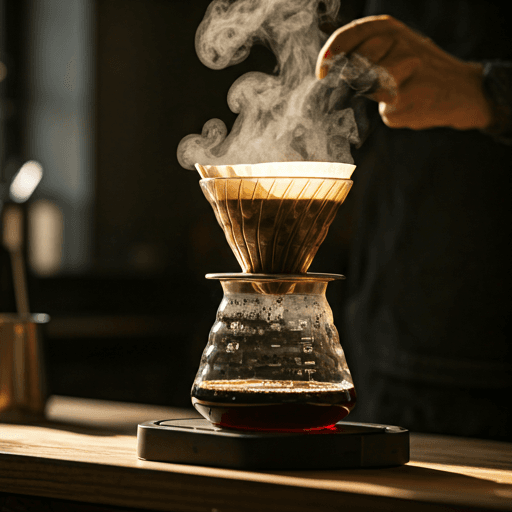
How long does caffeine last? For most people, caffeine kicks in within about 15 to 45 minutes, peaks somewhere around 30 to 60 minutes after your cup, and keeps doing its job for several hours after that. The reason the buzz has such a long tail is that caffeine has a "half-life" of roughly four to six hours, which means about half of it is still circulating in your body that many hours later. That is exactly why an innocent mid-afternoon coffee can still be quietly working against your sleep at bedtime.
Below we walk through the whole arc, from first sip to full clearance, and the many things that stretch or shorten it. If you want the deeper primer on what the molecule actually does, see our companion guide to caffeine explained. Here we stay focused on the clock.
How long does caffeine last, minute by minute
Caffeine is absorbed quickly. Once it reaches your bloodstream it crosses into the brain and blocks adenosine, the chemical that builds up over the day and makes you feel sleepy. That blocking action is what you experience as alertness, and it follows a fairly predictable curve, though the exact minutes vary from person to person.
- Onset (roughly 15-45 minutes): you start to feel more awake and focused as blood levels climb.
- Peak (roughly 30-60 minutes): concentration in the blood is near its highest, and so is the effect. This is when the lift feels strongest.
- Plateau and slow decline (a few hours): the effect eases off gradually rather than switching off. How long do the effects of caffeine last at a noticeable level? For many people, about four to six hours, though some feel it far longer.
Here is a rough map of what tends to be happening after a standard cup. Treat every number as a hedge, not a promise, because bodies differ enormously.
| Time after your cup | What is likely happening |
|---|---|
| 0-15 min | Caffeine is being absorbed; you may not feel much yet. |
| 15-45 min | Onset: alertness rising as blood levels climb. |
| 30-60 min | Peak effect for most people; sharpest focus and energy. |
| 1-3 hours | Still clearly active; the lift plateaus, then eases. |
| ~5 hours | Roughly half is still in your system (one half-life). |
| ~10 hours | Roughly a quarter remains; effects usually mild by now. |
| ~24 hours | Typically fully cleared for most people. |
What caffeine's half-life actually means
The single most useful idea for understanding how long caffeine stays in your system is its half-life. A half-life is simply the time it takes your body to eliminate half of what is present. For caffeine, research suggests that average is around five hours, though studies put the realistic range anywhere from about one and a half to more than nine hours depending on the person.
Play that forward with a simple example. Say you drink a cup with 100 mg of caffeine at noon. Using an average five-hour half-life:
- By around 5 p.m., roughly 50 mg is still in you.
- By around 10 p.m., roughly 25 mg remains.
- By around 3 a.m., roughly 12 mg is still circulating.
Notice how slowly it tails off. That is the key insight the caffeine half life gives you: caffeine does not vanish when the alert feeling fades. Long after you stop noticing it, a measurable amount is still on board, which is why complete clearance can take the better part of a day.
What changes how long caffeine lasts
The averages above hide a huge amount of individual variation. Research suggests several factors can meaningfully speed up or slow down how quickly you clear caffeine.
Genetics and metabolism
Much of caffeine is broken down in the liver by enzymes whose activity is partly genetic. Some people are naturally fast metabolizers who clear it quickly and can drink coffee late with little consequence; others are slow metabolizers who feel one cup for most of the day. This is largely why two people can react so differently to the same drink.
Pregnancy
During pregnancy the body clears caffeine much more slowly, so it can linger for far longer than usual. Anyone who is pregnant or nursing should follow their own healthcare provider's guidance rather than any general timeline.
Some medications
Certain medicines can slow caffeine breakdown, effectively stretching its half-life, while others may speed it up. If you take regular medication and notice caffeine hitting harder or lasting longer than it used to, that is worth raising with your pharmacist or doctor.
Smoking and liver health
Smoking tends to speed up caffeine metabolism, so smokers often clear it faster. Because the liver does most of the work, general liver health can also influence how quickly caffeine is processed. Age and overall physiology play a role too.
Responses vary a great deal from person to person, and none of this is medical advice; treat the ranges here as general context, not a personal prescription.
Why late-day caffeine disturbs sleep
Put the timeline and the half-life together and the sleep problem becomes obvious. If you have a coffee at 4 p.m. and your half-life is five hours, a solid chunk of that caffeine is still active at 9 or 10 p.m., quietly blocking the adenosine your brain is trying to use to wind down. Even if you fall asleep, studies suggest caffeine still in your system can reduce deep sleep and make rest feel less restorative, sometimes without you connecting the two.
This is the practical answer to "when does caffeine wear off enough to sleep well?" For many people, it simply has not fully worn off by bedtime if the last cup was in the afternoon. The lift you barely notice at 6 p.m. can still be measurably present at midnight.
How to time your last cup of the day
A common, sensible rule of thumb is to leave a generous window between your last caffeinated drink and bed, often cited as roughly six to eight hours, and longer if you are caffeine-sensitive or a slow metabolizer. There is nothing magic about a specific number; the point is to give your body enough half-lives to bring levels low before you try to sleep.
- Anchor to your bedtime. Count back several hours and make that your soft cutoff for coffee, strong tea, energy drinks and cola.
- Switch to low- or no-caffeine drinks later in the day. Decaf, herbal infusions or water let the ritual continue without the clock cost.
- Watch total daily intake, not just timing. How much is reasonable in a day is its own question, covered in our guide to how much caffeine per day.
- Adjust to your own body. If afternoon coffee wrecks your sleep, move your cutoff earlier and see what changes.
The mild crash when caffeine wears off
As caffeine levels drop, some people feel a dip, often described as a crash: a stretch of tiredness, lower focus or a slight headache. Part of the explanation is that the adenosine caffeine was holding back is now free to act again, sometimes all at once, so the sleepiness you postponed can arrive together. A crash is usually brief and mild, and it is not the same as anything harmful.
The most reliable ways to soften a crash are unglamorous: stay hydrated, eat something, and avoid stacking cup after cup to chase the fading lift, which mainly pushes caffeine later into your evening. There is also a well-known trick that pairs a small coffee with a short rest to blunt the dip, which we cover separately in what is a coffee nap. And if it is calm, steady focus you are after rather than a spike, the amino acid pairing explained in caffeine and L-theanine is worth a read.
The short version
Caffeine starts working within roughly 15 to 45 minutes, peaks around the half-hour to one-hour mark, and has effects that many people feel for four to six hours, with traces lingering far longer thanks to a half-life of about five hours. How long it truly lasts for you depends on your genetics, life stage, medications and habits, so the smartest move is to notice your own patterns and set your last cup accordingly. Enjoy the ritual, respect the clock, and let your evenings, and your sleep, get the quiet they deserve. Responses vary, and this article is general information, not medical advice.