
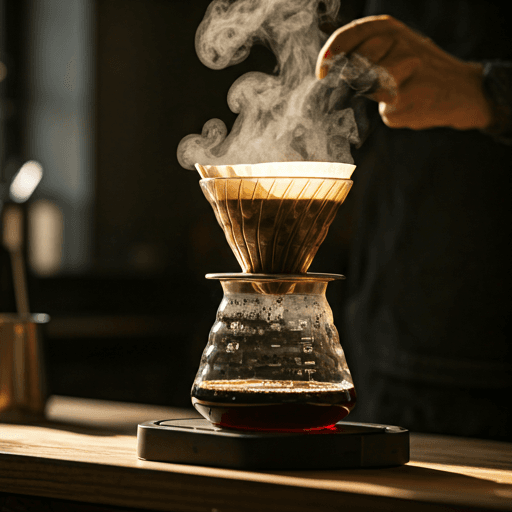
Hot coffee is simply coffee that has been brewed and served warm rather than chilled or poured over ice. That one plain phrase covers an enormous range, from a mug of black filter coffee to a milky cappuccino to a spoon of instant stirred into a cup. Getting hot coffee right is mostly about two things: brewing at the correct water temperature, and serving the cup hot but not scalding.
Below we map the whole world of hot coffee drinks: what counts, the temperatures that matter, the main styles, what separates a good cup from a mediocre one, how to keep a cup hot, and how hot coffee vs iced coffee actually differ in the glass.
What counts as hot coffee
Hot coffee is defined by temperature and serving style, not by any single brewing method. If it is coffee and it reaches you warm, it is hot coffee. That makes it a huge umbrella. A plain cup of drip, a hand-poured pour-over, a stovetop moka brew, a shot of espresso, a foamy latte and a mug of instant are all hot coffee. The only real dividing line is against the chilled category, which is where iced coffee and cold brew live.
Because the term is so broad, it helps to think in three families: brewed or filter coffee, espresso and espresso-based milk drinks, and instant. Almost every hot cup you will ever order or make sits in one of those three. We break down the wider drinks catalog in types of coffee drinks, and the plainest version of the whole thing in what is black coffee.
The temperatures that matter: brewing vs serving
The single most useful thing to understand about hot coffee is that the temperature you brew at is not the temperature you drink at. They are two different numbers.
Brewing. Most guidance, including the widely cited Specialty Coffee Association standard, puts the ideal brew-water temperature at roughly 195 to 205 F (about 90 to 96 C) — just off a full boil. Water in that band extracts the coffee evenly. Cooler water tends to under-extract and taste weak or sour; water at a hard rolling boil can scorch the grounds and add harshness. This is why so many recipes say to boil the kettle, then let it rest for about thirty seconds before pouring.
Serving. A freshly brewed cup is too hot to enjoy right away. Coffee is generally served and comfortably sipped a good deal cooler than it is brewed — very roughly 155 to 175 F (about 68 to 80 C), and it keeps cooling in the cup from there. Taste research actually suggests many people prefer their coffee cooler than piping hot, often somewhere around 145 to 155 F (about 63 to 68 C), with cups much above roughly 175 F frequently rated as too hot. Ordering a drink "extra hot" pushes the milk hotter than standard, while letting any cup rest a couple of minutes lets more flavor come through, since a scalding cup mostly tastes of heat. Treat these as ranges, not rules: the right serving temperature is the one that tastes good and does not burn your mouth.
The main types of hot coffee
Here is a scannable map of the main types of hot coffee and how each is typically served. None of these need a ranking; they are simply different shapes the same drink can take.
Brewed and filter coffee
This is hot brewed coffee in its most familiar form: ground coffee steeped or passed through water, then poured. It includes automatic drip machines, hand pour-over cones such as a V60 or Chemex, the full-immersion French press, and the stovetop moka pot. Brewed coffee tends to be lighter in body and easy to drink by the mug. A plain brewed cup taken without milk is black coffee; add hot water to a shot of espresso and you get an Americano, which drinks much like a brewed coffee.
Espresso and espresso-based milk drinks
Espresso is a small, concentrated shot forced through finely ground coffee under pressure. On its own it is an intense hot coffee served in a demitasse. It is also the base of the classic cafe menu: an espresso plus steamed milk and foam becomes a latte, a cappuccino, a flat white, a cortado or a mocha, depending on the ratio of milk to foam to coffee. These milky hot coffee drinks are served warm, usually between about 150 and 170 F for the milk, so it is sweet and silky rather than scalded.
Instant coffee
Instant is soluble coffee that dissolves straight into hot water — no brewing gear required. Just-boiled water that has rested briefly (again, off the boil, not at a violent boil) gives the smoothest cup. It is the fastest hot coffee there is, which is exactly why it remains popular worldwide.
| Style | What it is | How it is served |
|---|---|---|
| Drip / filter | Ground coffee brewed by machine or pour-over | By the mug, plain or with milk |
| French press | Full-immersion steeping, then plunged | Heavier-bodied mug, usually black |
| Moka pot | Stovetop brew, richer than filter | Small strong cup, often with milk |
| Espresso | Concentrated pressurized shot | Tiny demitasse, sipped neat |
| Americano | Espresso lengthened with hot water | Mug, black or with a splash of milk |
| Latte / cappuccino / flat white | Espresso plus steamed milk and foam | Warm cup, milk around 150-170 F |
| Mocha | Espresso, chocolate and steamed milk | Warm, often topped with whipped cream |
| Instant | Soluble coffee dissolved in hot water | Quick mug, plain or with milk and sugar |
What makes a good hot cup
Whatever style you choose, the same handful of fundamentals separate a great hot coffee from a forgettable one. Run down this checklist:
- Fresh beans. Coffee is at its best within a few weeks of its roast date. Stale beans taste flat no matter how carefully you brew.
- The right grind. Match grind size to the method — coarse for French press, medium for drip, fine for espresso. Grinding just before brewing makes an outsized difference.
- A sensible ratio. A common starting point for brewed coffee is about 1 part coffee to 15 to 17 parts water by weight. Too little coffee tastes thin; too much tastes harsh.
- Water temperature. Stay in that 195 to 205 F (90 to 96 C) band. Filtered water helps too, since coffee is mostly water.
- A clean, warm cup. Rinse the mug with hot water first so it does not steal heat from your drink, and keep your gear clean so old coffee oils do not turn bitter.
Dialing in those five variables matters far more than any single piece of equipment. Get the beans, grind, ratio, temperature and cup right, and even a basic drip machine makes a genuinely good hot coffee.
How to keep coffee hot
Hot coffee starts cooling the moment it hits the cup, and a thin ceramic mug loses heat fast. A few simple habits keep it warmer for longer, without any special gadget:
- Pre-warm the vessel. Fill the mug, carafe or press with hot water for a minute, then tip it out before you brew or pour. A cold cup can drop your coffee several degrees instantly.
- Use a thermal carafe. Insulated stainless carafes hold brewed coffee hot for hours without a hotplate, which can otherwise stew the coffee and make it taste burnt.
- Reach for an insulated travel mug. Double-walled mugs keep a cup drinkably hot far longer than an open one — handy for slow sippers and commutes.
- Brew what you will drink. The freshest, hottest coffee is the cup you make and drink now. Large batches left sitting fade in both heat and flavor.
Hot coffee vs iced coffee
Hot coffee vs iced coffee is not just a question of temperature — the two genuinely taste different from the same beans. Heat lifts aromatics and makes acidity and bitterness more pronounced, so a hot cup reads brighter, more fragrant and more intense. Chilling mutes those same qualities: iced coffee, and especially cold brew steeped in cold water for many hours, tastes smoother, rounder and less acidic, which is why some people who find hot coffee sharp enjoy it cold.
Neither is better; they are different experiences. Hot coffee shows off aroma and complexity and warms you up, while iced coffee is refreshing and forgiving. For the whole chilled side of the story, see what is iced coffee.
The bottom line
Hot coffee is a small phrase covering a big world — plain filter, concentrated espresso, foamy milk drinks and quick instant, all served warm. Nail the brew temperature, serve it hot but not scalding, start with fresh beans and a clean cup, and almost any style rewards you. From there it is all exploring: try a new brewing method, compare hot against iced, or wander the wider world of coffee drinks to find your next favorite cup.