
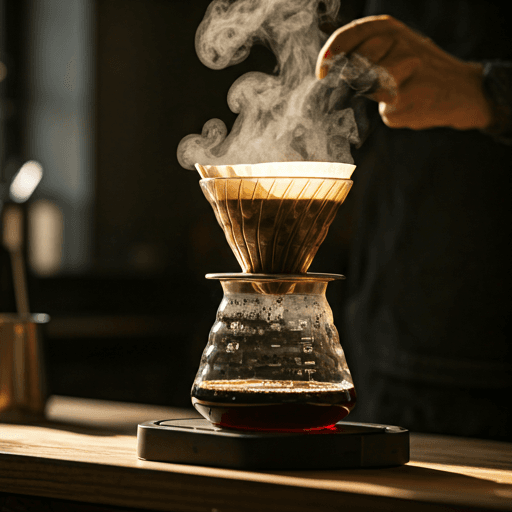
Galao vs latte is a coffee comparison between two close cousins. A galao is a tall Portuguese coffee of espresso topped with a lot of hot foamed milk, served in a glass and usually lighter on coffee, while a latte is the familiar Italian-derived espresso-and-steamed-milk drink finished with a thin layer of microfoam. Both are espresso plus plenty of milk, so the difference between galao and latte really comes down to the glass, the texture of the milk, and the ratio of coffee to milk.
Galao vs latte: the short answer
The quick version: a galao (pronounced roughly "gah-LOWNG") is Portugal's take on a milky coffee. It is usually a single shot of espresso in a tall glass, topped up with hot, airy foamed milk until the glass reads as mostly milk. The name itself hints at its generous, glass-sized serving. A latte starts from the same idea of espresso and steamed milk, but it tends to carry one or two shots and a smoother, more liquid body under a thin cap of microfoam.
Neither drink is complicated, and neither is inherently "better." We keep the full walkthroughs on their own pages: for the Portuguese classic, see what is a galao, and for the worldwide cafe standard, see what is a latte. Here we are only setting the two side by side.
What each drink is
A galao is built for a glass. The classic version is roughly one espresso to three parts hot foamed milk, which is why it often reads as about a quarter coffee to three-quarters milk. That high proportion of milk, plus the airy foam on top, is what gives a galao its pale color and gentle, milk-forward taste. Portuguese cafes even distinguish a galao claro, made lighter with more milk, from a galao escuro, made darker with more coffee, which shows how flexible the ratio can be. In Lisbon it is a morning and afternoon staple, sipped slowly from the glass rather than knocked back like a short espresso.
A latte is espresso plus steamed milk, finished with a thin layer of microfoam. It is typically built on one or two shots and served in a cup or, in many modern cafes, a glass. The milk is steamed to be silky and pourable rather than stiff, so a latte tastes rounded and creamy with the coffee still clearly present. Because baristas pour lattes worldwide, the exact ratio varies from place to place, but the drink is always milk-forward with espresso as the base. In practice, a latte usually feels a little more coffee-forward than a classic galao simply because it can carry a second shot and less foam, though a lightly built latte and a strong galao can land in almost the same place.
Milk and foam: where they part ways
The clearest split in a galao vs latte matchup is the milk. A galao leans on frothier, airier milk, closer to the fluffy foam you would see on a cappuccino, just in a taller, milkier glass. That foam sits on top and gives the drink a lighter, more aerated feel, and it is a big part of why a galao looks so pale.
A latte, by contrast, is built around silkier microfoam: tiny bubbles folded into steamed milk so the texture is glossy and almost paint-like. The result is a denser, creamier mouthfeel and the smooth surface that latte art is poured onto. Both drinks use milk generously; they simply aerate it differently. Exact textures vary by barista and cafe, so treat these as general tendencies rather than strict rules.
Strength and caffeine
Both drinks track the espresso underneath them, so caffeine mostly depends on how many shots go in. A classic single-shot galao in a big glass will taste milder and more diluted simply because there is so much milk around one shot. A latte built on a double shot will read as stronger, even though the total milk volume can be similar. The milk itself does not change the coffee's strength; it just softens and stretches it.
None of this changes the caffeine in the shot itself, which is set by the espresso rather than the milk. For the usual numbers and ranges, see our note on caffeine in espresso. As a rough guide, a single shot carries less caffeine than a double, and adding milk neither adds nor removes any. Caffeine responses vary from person to person, and this is general information rather than medical advice.
How it compares to a cafe au lait
Galao and latte both sit in the wider family of milky coffees, alongside the French cafe au lait, the Italian caffe latte, and the Spanish cafe con leche. What separates them is usually the coffee base and the milk texture: a cafe au lait traditionally uses brewed coffee rather than espresso plus lots of hot milk, while a latte and a galao both start from espresso. If you want that particular contrast unpacked, our cafe au lait vs latte guide walks through it. The short takeaway is that a galao is closer to a latte than to a cafe au lait, because both a galao and a latte are espresso-based.
How each is served
A galao is almost always served in a tall glass, sometimes one set in a metal holder, and it is strongly associated with Portugal. Order one at a Lisbon pastelaria and it arrives as a warm, pale glass of coffee and milk, and it pairs naturally with a custard tart and an unhurried morning.
A latte is served just about everywhere. You will find it in a ceramic cup in Italy, a tall glass in specialty bars, and a paper cup at chains across the globe. That ubiquity is part of why the latte is the reference point most people reach for, and why "is a galao the same as a latte?" is such a common question. The two overlap heavily, but the vessel and the foam usually give a galao away. If a milky coffee arrives in a tall clear glass, pale and topped with a fluffy layer of foam, there is a good chance you are looking at a galao rather than a cafe latte, especially in a Portuguese setting.
Galao vs latte at a glance
Here is the quick side-by-side of the two drinks.
| Attribute | Galao | Latte |
|---|---|---|
| Origin | Portugal, a Lisbon cafe staple | Italy, now poured worldwide |
| Vessel | Tall glass | Cup or glass |
| Milk and foam | Lots of hot, airy foamed milk | Steamed milk under thin microfoam |
| Coffee to milk | Often about 1/4 coffee to 3/4 milk | Milk-forward, usually one to two shots |
Which one to choose
If you want a tall, gentle, milk-forward glass that stretches one shot of espresso into a long, comforting drink, reach for a galao. If you want a creamier, denser cup with a bit more coffee presence and that smooth microfoam surface, a latte is the pick. In a latte vs galao decision it often comes down to mood: a galao is the leisurely glass, while a latte is the everyday cup.
You can also nudge either drink toward the other. Ask for a double-shot galao and it will taste stronger; ask for a latte in a tall glass with a touch more foam and it edges toward galao territory. They are cousins, after all, so the labels matter less than the glass in your hand and how milky you like your coffee.