
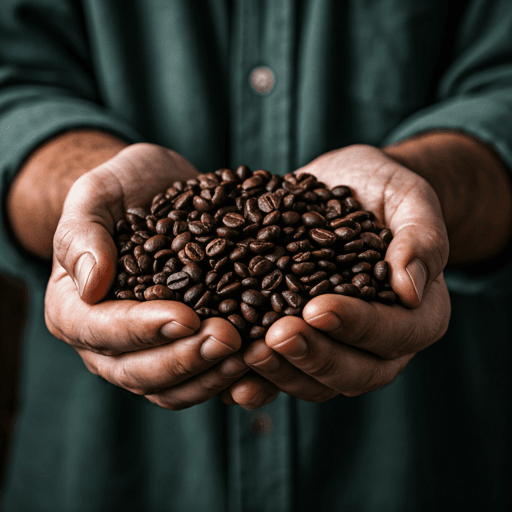
Fresh ground vs pre-ground coffee is one of those debates that is easy to argue about and even easier to taste. The honest answer: grinding your beans fresh, just before you brew, almost always makes a noticeably better cup than pre-ground coffee, because whole beans keep their aromatic oils and gases locked inside. But pre-ground coffee is far more convenient, needs no grinder, and can still be genuinely enjoyable, especially when it is fresh, well-packaged and matched to your brewer.
So the real question is not "which is objectively perfect," but "how much does the difference matter to you, and what is it worth." This guide explains why freshly ground coffee tends to win, where pre-ground earns its place, and how to get the best out of whichever you choose.
Fresh ground vs pre-ground coffee: the honest answer
Coffee's flavor lives in hundreds of volatile aromatic compounds and in the oils and dissolved gases trapped inside a roasted bean. A whole bean protects all of that. The moment you grind, you shatter the bean into thousands of small particles with a huge exposed surface area, and the clock starts. Aroma escapes, oxygen rushes in, and the trapped carbon dioxide vents off almost immediately.
That is the core of the ground coffee vs whole bean question. Whole beans are a sealed package; ground coffee is an opened one. Roasters and brewers widely agree that much of coffee's most delicate aroma is lost within the first hour after grinding, and a good deal more over the following day or two, even in a sealed bag. Whole beans, by contrast, hold a stable character for weeks. So is fresh ground coffee better? For flavor and aroma, yes, clearly. For everyday convenience, pre-ground often wins.
Why grinding coffee fresh wins
Aroma and oils stay locked in
Grinding dramatically increases surface area. A single whole bean exposes very little of itself to the air; the same bean ground for a pour-over exposes thousands of times more area per gram. That is wonderful for extraction in the brewer, but terrible for storage, because the same surface that lets water pull out flavor also lets aroma evaporate and oxygen oxidize the oils. Grinding coffee fresh means those compounds are still in the cup when you drink it, not stuck to the inside of a bag from last month.
You can match grind size to your brewer
This is the underrated reason freshly ground coffee wins, and it has nothing to do with freshness at all. Different brewers need different grinds. Get this wrong and even great beans taste sour and weak, or bitter and harsh.
- Coarse grind for French press and cold brew, so the long contact time does not over-extract.
- Medium grind for drip and pour-over, the all-purpose middle ground.
- Fine grind for espresso and moka pots, where water passes through quickly under pressure.
When you grind your own, you can dial the grind to your exact method, and adjust it if the cup tastes off. Pre-ground coffee gives you one fixed grind, usually a medium aimed at drip machines, that may not suit how you actually brew. Our guide to grinding coffee beans walks through the grind sizes in detail.
Freshly ground vs pre-ground coffee: a side-by-side
| Factor | Freshly ground coffee | Pre-ground coffee |
|---|---|---|
| Flavor & aroma | Fuller, brighter, more aromatic; oils and gases intact at brew time | Flatter and duller, especially after the bag is opened; aroma fades fast |
| Convenience | Extra step and a few seconds of grinding before every brew | Scoop and brew; no grinder, no noise, no mess |
| Grind control | You match grind to French press, drip or espresso and fine-tune the taste | One fixed grind; may not suit your brewer |
| Shelf life once opened | Whole beans stay good for weeks if stored well | Stales within days of opening; best used quickly |
| Upfront cost | Needs a grinder (a one-time purchase) | No equipment needed |
The case for pre-ground coffee
None of this means pre-ground coffee is bad. For a lot of people it is the sensible, realistic choice, and a fresh bag of good pre-ground coffee will beat stale beans ground with a cheap, uneven grinder any day.
The advantages are real. It is faster and quieter in the morning. It needs no equipment, counter space or maintenance. It travels well for offices, hotels and camping. And because a factory grinds it on consistent commercial machinery, the particle size is often very uniform, which matters for even extraction. If you brew with a drip machine and buy a brand whose standard grind suits it, pre-ground can be a perfectly happy setup.
The trade-offs are equally real: that single fixed grind, and the faster staling once the bag is open. The fix is simple. Buy pre-ground in smaller amounts so you finish it while it is still lively, rather than one giant tub that goes flat halfway through.
Ground coffee vs whole bean: how fast does it go stale?
Three things age coffee after it is ground: oxygen, moisture and the loss of carbon dioxide and aroma. Grinding accelerates all of them because of that exposed surface area. As a rough mental model:
- Within an hour of grinding, much of the most volatile, fragrant aroma has already escaped.
- Within a few days of opening, ground coffee noticeably flattens, losing brightness and sweetness.
- Whole beans, kept airtight, cool and dark, hold their character for several weeks after roasting.
Storage helps but cannot stop the clock. Keep coffee, whole or ground, in an airtight container away from heat, light and humidity. Skip the fridge, where moisture and food odors do more harm than good, and only freeze coffee if it is truly sealed and you take out what you need without thawing and refreezing. Our guide to buying and storing fresh coffee beans covers this in depth, and pairs naturally with the roast-date question if you want to go deeper on freshness.
The biggest single upgrade: a burr grinder
If you decide grinding coffee fresh is for you, the tool you use matters as much as the decision. There are two kinds of grinder, and they are not equal.
- Blade grinders chop the beans with a spinning blade, like a tiny propeller. They are cheap, but they produce an uneven mix of dust and chunks, which extracts unevenly and tastes muddy. They also heat the grounds.
- Burr grinders crush the beans between two abrasive surfaces set a fixed distance apart, producing uniform particles and letting you choose a precise, repeatable grind size.
For most home brewers, a burr grinder is the single biggest upgrade you can make to your coffee, ahead of a new brewer or fancier beans. Even a modest one transforms consistency. See our explainer on burr coffee grinders for how they work, and the coffee grinder buying guide for how to choose between hand and electric models.
How to choose: a quick checklist
- Be honest about your mornings. If an extra 30 seconds will make you skip coffee or resent it, pre-ground may simply fit your life better.
- Match the grind to your brewer. If you use a French press, espresso machine or moka pot, fresh grinding pays off most, because the right grind size matters so much.
- If you buy pre-ground, buy small and fresh. Choose a recent roast date, a well-sealed bag, and a grind labeled for your method; then use it up within a couple of weeks of opening.
- If you grind fresh, invest in a burr, not a blade. The grinder does more for your cup than almost anything else.
- Store it properly either way. Airtight, cool, dark, and bought in amounts you will finish while it is still fresh.
So, does it matter?
Yes, and no, which is the genuinely useful answer. Freshly ground coffee tastes fuller and more aromatic because whole beans protect their oils and gases until the moment you brew, and because you can tune the grind to your method. Pre-ground coffee trades some of that flavor for real convenience and consistency, and a fresh, well-stored bag matched to your brewer can still make a lovely cup. If you want the biggest possible jump in quality at home, a burr grinder and a bag of whole beans is the move. If you want easy and good-enough, buy good pre-ground in small batches and drink it quickly. Either way, freshness and storage are what really decide what lands in your cup.