
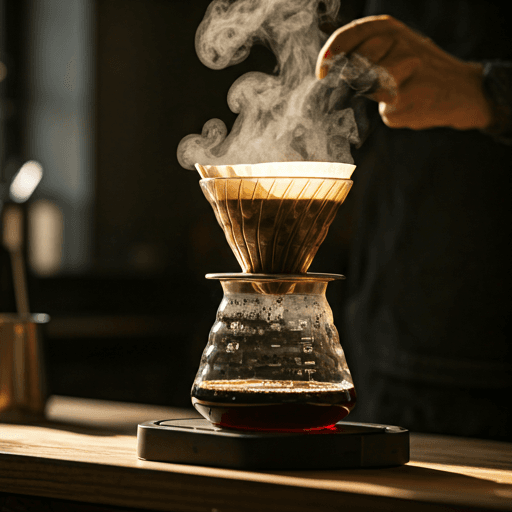
If you have hesitated at the counter over flat white vs espresso, the difference comes down to milk. An espresso is the small, concentrated shot of coffee pulled under pressure, while a flat white is a milk drink built on that very shot: one or two espressos topped with a modest amount of steamed milk and a thin layer of silky microfoam. The espresso is the intense heart of the cup; the flat white is a smaller, stronger, more coffee-forward milk drink built around it.
The short answer: flat white vs espresso
Put plainly, a flat white is espresso plus a little steamed milk and microfoam. So the honest reply to "is a flat white just espresso with milk?" is basically yes, with one caveat: it is espresso with a modest pour of steamed milk and a thin, glossy layer of microfoam, not a big milky drink. The shot does the flavor work; the milk softens and rounds it without burying it. If you want the full definitions rather than the contrast, each drink has its own home. Read what a flat white actually is and what an espresso shot is for the deep dives. Here we stay focused on how the two line up, side by side.
What is in each
Both drinks begin in exactly the same place. A barista forces hot water through finely ground, tightly packed coffee under pressure, and out comes espresso: a small, intense pour with a caramel-colored crema on top. That is the whole drink when you order espresso on its own, usually a single (roughly 30 ml, about 1 oz) or a double (roughly 60 ml, about 2 oz). Nothing is added; the shot is the drink. Espresso took shape in Italy, and it remains the base of nearly every coffee on the menu.
A flat white takes those same one or two shots and adds a modest amount of steamed milk, finished with a thin layer of microfoam rather than a thick foam cap. The drink itself grew up in Australia and New Zealand, where a smaller, stronger, milk-forward cup became the everyday order. The result is compact, commonly around 150 to 165 ml (about 5 to 6 oz), and the coffee stays firmly in charge: the milk is there to smooth the shot, not to drown it. In other words, the espresso does not disappear in a flat white; it stays the foundation the whole cup is built on.
Size, strength and taste
This is where the espresso vs flat white contrast is easiest to feel in the cup. Espresso is tiny and bold. A double shot fits in a small demitasse, and each sip is concentrated, slightly syrupy and sharp, with bright acidity and a lingering bitterness that shifts with the beans and the roast. It is coffee at its most direct and undiluted.
A flat white is bigger and softer, but it stays deliberately coffee-forward. Because it uses only a modest amount of milk, the espresso still comes through clearly; the milk mostly rounds the edges and adds a velvety body and a touch of natural sweetness, even with no sugar added. Compared with a straight shot it reads gentler and creamier, yet next to milkier drinks it tastes noticeably strong. None of this changes the coffee inside; it changes how that coffee lands on your palate. Your own taste and preferences will vary, so treat these as gentle tendencies rather than hard rules.
Flat white vs espresso at a glance
Here is the difference between flat white and espresso laid out in one place. Treat the sizes and caffeine figures as typical ranges rather than fixed values, since they shift from bar to bar.
| Feature | Espresso | Flat white |
|---|---|---|
| What it is | The concentrated coffee shot itself | A milk drink built on one or two espresso shots |
| Milk & foam | None: coffee, crema and body only | A modest pour of steamed milk with a thin layer of microfoam |
| Size | Small: about 30 ml single, 60 ml double (1-2 oz) | Compact: roughly 150 to 165 ml (about 5 to 6 oz) |
| Strength & flavor | Tiny, bold, sharp and intense | Small, velvety and coffee-forward (varies) |
| Caffeine per typical serve | Around 60 to 80 mg per single shot (varies) | Similar: tracks the same 1 to 2 shots (varies) |
Caffeine: very close per serving
Because a flat white is built on the same one or two espresso shots, the caffeine in the two drinks is usually very similar. The milk adds volume and creaminess, not caffeine. A single shot tends to land somewhere around 60 to 80 mg of caffeine, and a double roughly twice that, though the real figure depends on the beans, the grind, the roast and how the shot is pulled, so treat any number as a ballpark rather than a promise.
The practical takeaway is that caffeine tracks shot count, not cup size. A flat white made with a double shot and a straight double espresso are close to each other, because the extra milk in the flat white does not carry meaningful caffeine of its own. These figures are general estimates and individual responses vary. This is not medical advice, and if caffeine affects your sleep, or you are pregnant, breastfeeding or taking medication, it is worth checking with your own healthcare provider about what suits you.
Milk and texture
Texture is the clearest dividing line between the two. Espresso has no milk at all; it is pure coffee, crema and body, and its weight comes entirely from the concentrated brew. A flat white is defined by its milk work, but with a lighter touch than a big milky cup: milk is warmed and aerated with steam into fine microfoam, then poured so only a thin, glossy layer of foam sits over the steamed milk. That thin, silky microfoam is the signature. It gives the drink a smooth, velvety body and a flat surface, which is where the name comes from, without the tall, airy dome you get on a foamier drink. Good microfoam is glossy and paint-like rather than large-bubbled and soapy, so the milk steaming matters just as much as the shot underneath it.
How a flat white relates to its cousins
Once you see a flat white as espresso plus a little steamed milk and microfoam, its relatives fall into place. The closest cousin is the latte, which uses the same espresso base but a lot more steamed milk and a thicker foam layer, so it drinks bigger, milkier and mellower; the flat white, by contrast, is smaller with less milk and a thinner cap, which is why it tastes stronger. That milk-to-foam ratio is the whole story, and you can explore it in flat white vs latte. Both drinks, of course, lean entirely on the shot underneath, and if you want to understand why that little pour of espresso is the anchor for so much of the coffee menu, start with espresso explained, the base of every coffee.
Which to choose, and when
Choose based on what you actually want from the cup in that moment:
- Reach for espresso when you want a quick, pure hit of coffee: a fast, no-fuss jolt of flavor, an after-dinner finish, or the honest taste of the beans with nothing standing in the way.
- Reach for a flat white when you want a small, strong, creamy cup you can sip a little longer: enough steamed milk to soften the shot and add a velvety body, but not so much that the coffee fades into the background.
Neither one is objectively better. They serve different moments and moods. Espresso is intensity in miniature, over in a few sips; a flat white is the smooth, coffee-forward version of that same shot, where a modest amount of silky milk mellows the edges without ever hiding the espresso at its heart. Understand that one idea, that the flat white is simply espresso wearing a thin coat of steamed milk, and the rest of the cafe board suddenly reads much more clearly.