
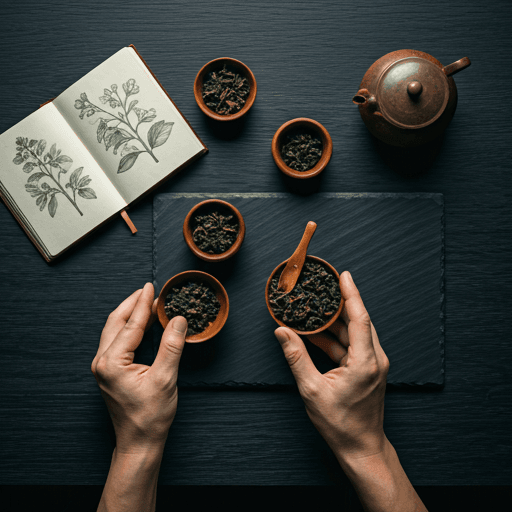
To make a good cup with dried chamomile flowers, use roughly 1 to 2 teaspoons of loose flowers per cup, pour fresh just-boiled water over them, cover while it steeps for about 5 minutes, then strain. That is the whole method in one sentence. Below is everything around it: which chamomile to use, how to dry your own, how loose flowers compare with chamomile tea bags, how to store them, and a few variations worth trying.
What dried chamomile flowers are
Chamomile tea is an infusion of the small daisy-like flower heads of a chamomile plant. Two species do most of the work. German chamomile (Matricaria chamomilla, sometimes called Matricaria recutita) is the common tea flower, with a sweet, apple-honey aroma. Roman chamomile (Chamaemelum nobile) is a low-growing relative with a slightly more bitter, herbaceous note. Either makes tea, but most loose chamomile and most chamomile tea bags use German chamomile. If you want the full background on the plant and the drink, see our chamomile tea explained guide.
Dried chamomile flowers come two ways. You can buy them loose from tea shops, herbalists and grocers, or you can dry your own from a homegrown or garden plant. Drying simply removes the moisture so the flowers keep for months without spoiling, while concentrating the aroma into those papery little heads.
How to make chamomile tea with dried chamomile flowers
This is the core method. Dried chamomile flowers are very light, so a teaspoon holds less than you might expect; use a generous measure rather than a stingy one.
- Measure. Add about 1 to 2 teaspoons of dried chamomile flowers per 8 oz (240 ml) cup into an infuser, teapot or directly into the cup. Use closer to 2 teaspoons, or a loose tablespoon, for whole uncrushed flowers.
- Heat the water. Bring water to a boil, then use it fresh at around 200 to 212 F (95 to 100 C). Chamomile is forgiving and likes near-boiling water, unlike delicate green teas.
- Pour and cover. Pour the water over the flowers and cover the cup or pot with a lid or small saucer. Covering traps the aromatic oils that would otherwise escape with the steam, which is the single easiest way to get a more fragrant cup.
- Steep. Let it sit about 5 minutes. Steep longer, up to 8 to 10 minutes, for a stronger, more soothing brew; very long steeps can turn slightly bitter, so taste as you go.
- Strain and serve. Lift out the infuser or pour through a strainer so you are not drinking the flowers. Add honey, a squeeze of lemon or a slice of fresh ginger if you like.
If you steep loose flowers free in the pot rather than in a basket, a fine mesh strainer or a roomy infuser makes cleanup easy. Our roundup of the best loose leaf tea infusers covers the styles that suit fluffy, small botanicals like chamomile, and the general technique is the same one we cover in how to brew loose leaf tea.
Ratio and method at a glance
| Cup or method | Dried flowers | Water | Temp | Steep |
|---|---|---|---|---|
| Standard cup | 1-2 tsp | 8 oz / 240 ml | 200-212 F (95-100 C) | ~5 min, covered |
| Stronger / bedtime cup | 2-3 tsp | 8 oz / 240 ml | 200-212 F (95-100 C) | 8-10 min, covered |
| Teapot (3-4 cups) | 4-6 tsp | 24-32 oz / 700-950 ml | 200-212 F (95-100 C) | 5-7 min, covered |
| Iced / cold brew | 3-4 tsp | 32 oz / 950 ml | Cold (fridge) | 4-8 hours |
Drying your own chamomile flowers
If you grow chamomile, drying it is straightforward. Harvest on a dry day, picking the open flower heads when the white petals are fully out and just starting to relax back from the yellow center. Pinch or snip the heads off, leaving the stems.
- Air dry. Spread the flowers in a single layer on a tray, mesh screen or paper somewhere warm, dark and airy with good airflow. They are ready when papery and crisp, usually several days to about a week depending on humidity.
- Dehydrator. Use the lowest setting, roughly 95 to 115 F (35 to 46 C), for about 1 to 4 hours. Low and slow protects the delicate volatile oils that carry the flavor; high heat drives them off.
Dry the flowers fully before storing, or trapped moisture will cause mold. Keep them whole rather than crumbled, and only break them up just before brewing to release the aroma at the last moment.
Loose chamomile vs chamomile tea bags
Both work; the honest trade-off is freshness versus convenience. Loose chamomile, especially whole dried flowers you have bought recently or dried yourself, tends to be more aromatic and gives the leaves room to expand and release their oils. Chamomile tea bags are quicker and tidier with nothing to strain, and the quality varies: some bags hold whole or large flower pieces, while cheaper ones use finely cut "dust" that brews fast but loses fragrance sooner. A good rule is to use loose flowers when you want the best cup and bags when you want speed.
| Factor | Loose chamomile flowers | Chamomile tea bags |
|---|---|---|
| Aroma and flavor | Usually fuller, especially whole flowers | Good to fair; depends on grade inside |
| Convenience | Needs an infuser or strainer | Drop in, lift out, done |
| Control over strength | High; adjust the spoonful | Fixed per bag |
| Freshness over time | Best within a few months | Fine, but cut flowers fade faster |
Storing dried chamomile flowers
Store dried chamomile flowers in an airtight container, kept cool, dark and away from light, heat and moisture. A sealed glass jar in a cupboard is ideal; light and air are the main enemies of aroma. Properly stored, they stay usable for up to a year, but the fragrance is at its best within the first several months, so buy or dry in amounts you will actually drink. Keep the flowers whole until you brew for the freshest cup.
Easy variations
- Iced chamomile. Brew a strong hot batch (use extra flowers), let it cool, then pour over ice. Or cold brew: steep the flowers in cold water in the fridge for 4 to 8 hours and strain.
- Calming blends. Chamomile pairs naturally with lavender, lemon balm or mint. A pinch of dried lavender with your chamomile makes a classic floral bedtime cup; a few mint leaves brighten it.
- A stronger bedtime brew. Use 2 to 3 teaspoons, cover, and steep 8 to 10 minutes for a deeper, more soothing cup. For more on what the drink may do for you, see chamomile tea benefits.
- Add-ins. Honey rounds out the natural floral sweetness, lemon adds lift, and a slice of fresh ginger gives gentle warmth.
A note on safety
Chamomile is widely enjoyed and generally well tolerated, but a few cautions are worth knowing. Chamomile belongs to the Asteraceae (daisy) family, so people with a known allergy to ragweed, marigolds or related plants may react to it; start small if you are unsure. As with any herb, this is general information and not medical advice, so it is sensible to consult a doctor or pharmacist if you are pregnant, breastfeeding, or taking medication before drinking chamomile regularly.
The takeaway
Dried chamomile flowers reward a little care: a generous spoonful, water just off the boil, a lid on while it steeps, and a quick strain. Whether you buy loose flowers or dry your own, store them airtight and away from light, and they will give you fragrant, calming cups for months. From here, it is worth reading what chamomile actually is, then exploring more relaxing brews and brewing methods across the rest of our tea guides.