
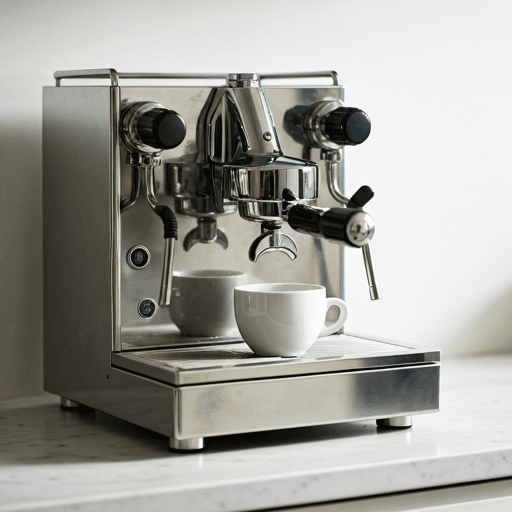
Demitasse cups are the small cups built for espresso and other short, strong coffees. The word is French for "half cup," and that is exactly what it is: a little cup holding roughly 2 to 3 fluid ounces (about 60 to 90 ml), traditionally served on a matching saucer with a tiny spoon. If you have ever been handed an espresso in a thick little cup after dinner, you have used a demitasse.
Below we cover what a demitasse actually is, how its size compares to a cappuccino cup or a mug, the materials that matter, the design details worth noticing, and how to choose and care for a set. We also clear up the most common confusion: the difference between a "demitasse" and an "espresso cup" is mostly a matter of naming.
What demitasse cups are
A demitasse (pronounced "DEM-ee-tass") is a small coffee cup paired with its own saucer. The French coined the term in the 18th century, inspired by the strong after-meal coffee of the Ottoman world, and it has meant "small, strong-coffee cup" ever since. A standard full coffee cup, a tasse a cafe, runs around 4 ounces; the demitasse is the half-size version, which is where the name comes from.
In practical terms, a demitasse is the classic vessel for a single shot of espresso. It is also the cup of choice for Turkish and Greek coffee, Cuban cafecito, and similar concentrated drinks served in small measures. The small size is not just tradition. A short drink loses heat fast and oxidizes quickly, so a small, often thick-walled cup keeps the liquid warm and the flavor fresh from the first sip to the last.
Demitasse cup size and capacity
Most demitasse cups hold somewhere between 2 and 3 ounces (60 to 90 ml). Anything in that range comfortably holds a single or double espresso with room for crema. The Italian Espresso National Institute suggests serving espresso in a small china cup of roughly 50 to 100 ml, and competition rules typically call for a 2-3 oz demitasse with a handle, so that window is well established.
The easiest way to understand the size is to compare it to the cups beside it on the shelf. A cappuccino cup is roughly double the volume to make room for milk and a pillow of foam, and an everyday mug is larger still.
| Cup type | Rough capacity | Best for |
|---|---|---|
| Demitasse / espresso cup | 2-3 oz (60-90 ml) | Single or double espresso, ristretto, espresso macchiato |
| Turkish coffee cup | 2-3 oz (60-90 ml) | Turkish and Greek coffee, Cuban cafecito (often no handle) |
| Cappuccino cup | 5-6 oz (150-180 ml) | Cappuccino, flat white, cortado in a larger version |
| Standard coffee cup | ~4 oz (120 ml) | A short black coffee, traditional cafe service |
| Mug / latte cup | 8-12 oz+ (240-350 ml) | Latte, cafe au lait, long milky or filter coffee |
If you mostly pull double shots, lean toward the upper end of the demitasse range (around 3 oz) so the crema is not crowded out. For single shots and ristrettos, a smaller 2 oz cup looks and pours better.
What demitasse cups are made of
Material affects how a small shot tastes, because the cup itself draws heat from the coffee. The traditional and still most common choices are:
- Porcelain and bone china: The classic pick. Both are dense, smooth, and good at holding heat, and bone china in particular feels delicate while staying surprisingly durable. This is what most cafe espresso cups and after-dinner demitasse sets are made from.
- Thick-walled ceramic and stoneware: Heavier and more rugged. A thick wall acts as insulation, which is exactly why busy espresso bars favor sturdy ceramic cups that have usually been warmed on top of the machine.
- Glass: Double-walled glass demitasse cups show off the layers of crema and coffee and stay cool to the touch, though single-wall glass loses heat faster.
- Metal: Common in traditional Turkish coffee sets, often as a decorative cup-and-holder (zarf) or alongside the small copper pot used to brew. Metal is more about presentation and tradition than heat retention.
For everyday espresso at home, porcelain or a thick ceramic is the safe choice. Pre-warmed, either one will hold a shot's temperature well.
The design details that matter
Beyond size and material, a few design points separate a good demitasse from a merely small cup:
- Wall thickness: A thicker wall stores heat and releases it slowly, protecting a tiny shot from cooling the moment it lands. This matters far more for 2 ounces than it does for a big latte.
- Inner shape: A rounded or slightly tapered interior helps the espresso pour into a tidy pool and supports an even layer of crema, rather than splashing it thin against a flat bottom.
- A comfortable handle: Demitasse handles are small by nature, but a well-shaped one still lets you pick the cup up cleanly. Turkish-style cups sometimes skip the handle entirely.
- The saucer: A proper demitasse cup and saucer is not just decoration. The saucer catches drips, gives you somewhere to rest the spoon, and is where you place a sugar cube, a square of chocolate, or a small biscuit served alongside.
What demitasse cups are used for
The demitasse is built for short, intense drinks. The usual line-up includes:
- Espresso in all its forms: a single or double shot, a ristretto (a shorter, more concentrated pull), or a doppio. If you want a refresher on the drink itself, see our guide to espresso, the base of every coffee.
- Espresso macchiato: a shot "stained" with a small spoon of foamed milk, which still fits a demitasse.
- Turkish and Greek coffee: finely ground coffee simmered in a small pot and poured, grounds and all, into a small cup. Our explainer on what Turkish coffee is covers the method.
- Cuban cafecito and similar: sweetened, concentrated coffees served in small measures.
- After-dinner service: the old-fashioned role of the demitasse, bringing a small strong coffee to the table at the end of a meal.
Milk-forward drinks like a cappuccino or flat white do not belong in a demitasse; they need the extra room of a larger cappuccino cup for the milk and foam.
Demitasse cups vs espresso cups: is there a difference?
For most people, no. "Demitasse" and "espresso cup" describe the same small cup, and the terms are used interchangeably. If there is a shade of difference, it is one of tradition: "demitasse" is the older, broader word for a small after-dinner coffee cup with a saucer, while "espresso cup" simply names what most people use it for today. The vast majority of cups sold as espresso cups are demitasse-sized, holding that familiar 2-3 ounces.
One genuine distinction worth knowing: a Turkish coffee cup is often called a demitasse too, but it tends to be shaped a little differently and may come without a handle, designed for the unfiltered, grounds-in-the-cup style of Turkish coffee rather than for espresso and its crema.
How to choose demitasse cups
Use this quick checklist when picking small coffee cups for espresso at home:
- Size to your shot. Mostly single shots? A 2 oz cup is plenty. Pulling doubles? Choose around 3 oz so the crema is not squeezed out.
- Favor heat-holding materials. Porcelain, bone china, or a thick ceramic will keep a small shot warm; thin single-wall glass will not.
- Check the wall thickness. A slightly heavier cup insulates better, which is exactly what a tiny volume of coffee needs.
- Decide on the saucer. A demitasse cup and saucer is the classic format for serving guests; if you only ever drink solo at the counter, a stackable handleless cup may suit you.
- Sets vs singles. A matching set of four or six is tidy for entertaining and after-dinner service. Buying singles lets you mix styles and replace breakages without redoing the whole set.
- Confirm dishwasher and stack safety. If decorated with metallic trim, hand washing is usually safer; plain porcelain is typically dishwasher friendly. Stackable shapes save cupboard space.
For the bigger picture across every cup format, our guide on how to choose coffee cups walks through sizes, shapes, and materials for the whole shelf.
How to care for demitasse cups
Small cups reward small habits:
- Pre-warm before pulling a shot. Rinse with hot water or rest the cups on the machine's warming top. A cold cup can drop an espresso's temperature noticeably the instant it pours.
- Rinse promptly. Espresso oils and crema stain over time, so a quick rinse after use keeps the inside bright.
- Wash gently if decorated. Gold or metallic rims and hand-painted designs do best with hand washing; check the maker's guidance before putting fine china in the dishwasher.
- Store carefully. Stack only cups designed to stack, and use felt or paper between stacked fine china to prevent scratches and chips.
The small cup, settled
A demitasse is simply the right-sized cup for a small, strong coffee: half a cup by name, 2 to 3 ounces by volume, ideally warmed, and traditionally paired with a saucer. Whether you call it a demitasse or an espresso cup, the job is the same, to keep a short shot hot and its crema intact. If you are building out your coffee shelf, read on about cappuccino cups for the milk-drink side of the equation, which need the extra volume that a demitasse deliberately leaves out.