
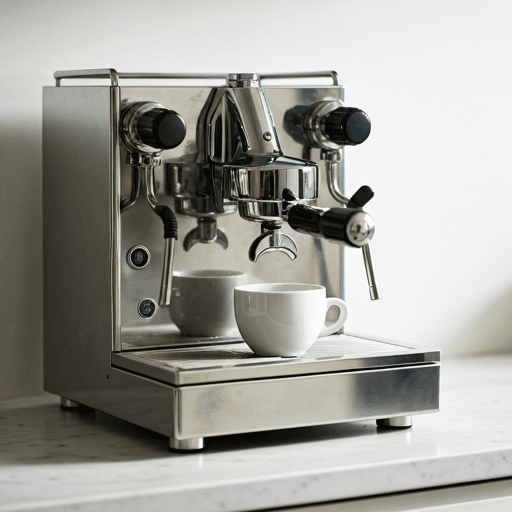
A coffee urn is a tall, large-capacity coffee maker and dispenser built for crowds. It brews a big batch by percolation, keeps it hot, and serves through a spigot near the base, so guests pour their own. If you are feeding an office, a church hall, a wedding, a fundraiser, or a catering line, this guide shows how to choose the right one and how to use it well, without turning fresh coffee into something bitter and stewed.
Urns are sized in "cups," but that cup is small, usually around 5 to 6 ounces (roughly 150 to 180 ml). A "100-cup" urn does not hold 100 mugs. Keep that in mind as you read, because it changes the maths on how many people you can actually serve.
What is a coffee urn?
A coffee urn is essentially a household percolator scaled up to serve tens or hundreds of small cups at once. Cold water goes in the main chamber. A central hollow stem carries water up to a basket of grounds, where it filters down and cycles back through until the batch is brewed. A heating element then holds the finished coffee at serving temperature for hours, and a spigot (sometimes called a faucet) lets people fill a cup without lifting the whole vessel. Most are stainless steel, with two handles and a lid.
The mechanics are the same as a stovetop or electric percolator, just much larger. If you want the full story on how percolation works and why it tastes the way it does, our coffee percolator guide covers the household version in detail. An urn is what happens when you need that process to fill a banquet table instead of a breakfast nook.
Types of coffee urn
Not every "urn" actually brews. There are three broad categories, and choosing the wrong one is the most common mistake.
Percolating (brew-and-hold) urns
This is the classic large coffee urn. You add water and grounds, plug it in, and it brews the whole batch, then automatically switches to a keep-warm setting. These are ideal when you want fresh coffee made on site and do not have a separate brewer. Capacities commonly run 30, 55, and 100 cups, with commercial models going higher.
Hold-only dispensers and airpots
A hold-only coffee urn dispenser does not brew at all. You fill it from another machine, then it keeps the coffee hot and dispenses through a spigot or pump. Insulated stainless airpots are the smaller cousin: vacuum-walled thermal carafes (often 2 to 3 litres) that hold heat for hours with no electricity at all. Hold-only gear is the better choice if you already brew coffee elsewhere, because gentle insulation preserves flavour far better than sitting on a hot element. For batch brewing into airpots, see how batch brew coffee works.
Single-spigot vs dual-spigot
Larger urns sometimes offer two spigots so two people can pour at once, which matters when 200 guests hit the coffee station during a 10-minute break. A single spigot is fine for smaller groups and steady trickle service. A good spigot is the unsung hero here: look for a drip-free design that does not leave a puddle on the tablecloth.
How to choose a coffee urn
Work through these in order. The first two questions decide almost everything else.
1. Size it by headcount
Estimate how many cups each guest will drink across the event, not just one. A morning meeting often runs closer to 1.5 to 2 cups per person over a couple of hours. Then match the urn's "cup" rating, remembering that rating is in small cups. As a rough planning guide:
| Urn type and size | Realistic guests served | Best for |
|---|---|---|
| Airpot (2-3 L, ~10-16 cups) | 6-12 people | Small meetings, a buffet table, hold-only |
| 30-cup urn | 15-25 people | Family gatherings, small offices, classes |
| 55-cup urn | 30-45 people | Mid-size events, clubs, places of worship |
| 100-cup urn | 50-80 people | Weddings, conferences, fundraisers, catering |
| Multiple urns / 100+ cup | 100+ people | Large venues, all-day service, two-spigot flow |
When in doubt, choose slightly larger or run two urns. Two smaller urns let you brew fresh batches in waves and keep one in reserve, which beats one giant urn slowly going stale.
2. Brew-and-hold or hold-only?
If you need coffee made on the spot, pick a percolating urn. If you brew elsewhere and just need to keep it hot and serve it, a hold-only dispenser or airpot will protect the flavour better. Some operations do both: brew with a drip coffee maker and decant into insulated airpots for self-serve.
3. The keep-warm element
A reliable thermostat that holds coffee at serving temperature (not boiling) is what separates a good urn from a bad one. Look for an automatic switch from brew to warm, and an indicator light that signals when brewing is done. Avoid models that keep cycling the heat aggressively, because that is what scorches coffee over a long event.
4. A drip-free spigot and sturdy build
Test the spigot action if you can. It should open and close cleanly, lock for continuous pour, and not dribble. Heat-resistant handles and a stable base matter when the urn is full and heavy. Stainless steel is the standard for durability and easy cleaning.
5. A removable basket and easy cleaning
You will clean this thing repeatedly, so a removable brew basket and stem, a lid that comes off fully, and a wide opening make a real difference. Some urns are dishwasher-friendly in part; check before you buy.
What to look for: a quick checklist
- Capacity matched to your headcount, sized in small cups, with a little headroom.
- Brew-and-hold vs hold-only matched to whether you brew on site.
- Automatic keep-warm with a thermostat and a "ready" indicator light.
- Drip-free spigot (single or dual) that locks for continuous pour.
- Sturdy stainless body, cool-touch handles, stable base.
- Removable basket and stem for fast, thorough cleaning.
- Cord and power suited to your venue; commercial sizes may need a dedicated outlet.
Cost tends to track capacity and build quality. Entry-level home urns are inexpensive; insulated commercial dispensers and large two-spigot stainless models sit at the premium end. Buy for the largest event you realistically host, not the average one.
How to use a coffee urn (brewing a big batch)
Using a percolating urn is straightforward once you know the rhythm. Here is the method.
- Rinse and assemble. Lift out the basket and stem, give them a quick rinse, and seat the stem firmly in the base. A clean urn is the single biggest flavour upgrade you can make.
- Fill with cold water. Pour cold, fresh water into the chamber up to the line for your batch size. Do not overfill past the maximum mark, and do not run it below the minimum, both cause problems.
- Add the grounds. Use a medium-coarse "percolator grind" (think the texture of coarse sand or sea salt). Put the grounds in the basket and slide it onto the stem. A paper liner is optional but makes cleanup easier.
- Get the ratio right. A workable starting point is roughly 1 to 2 tablespoons of grounds per small "cup" of water, leaning to the higher end for stronger coffee. Brew a test batch before the big day and adjust to taste.
- Plug in and let it finish. Brewing runs about 40 seconds per cup, so a 30-cup urn takes around 20 minutes and a 100-cup urn can take an hour. Let the full cycle complete; the indicator light or switch to "warm" tells you it is done.
- Remove the basket. Once it is safe to handle, lift out the basket and stem with the spent grounds. Leaving them sitting in the brewed coffee makes it taste bitter and over-extracted over time.
- Serve and refresh. Hold the batch on the warm setting and serve through the spigot. For long events, brew fresh batches rather than letting one sit for hours.
| Detail | Rule of thumb |
|---|---|
| Grind | Medium-coarse "percolator grind" (coarse sand / sea salt) |
| Ratio | About 1-2 tbsp grounds per small cup of water (taste and adjust) |
| Brew time | ~40 seconds per cup (30-cup ~20 min, 100-cup ~1 hour) |
| Water | Cold and fresh; fill between min and max lines, never overfill |
| Holding | Keep warm a few hours; remove grounds; brew fresh for long events |
The "do not stew it" rule
The most important habit is not letting coffee sit on the heating element for hours. Percolation already pushes water through the grounds repeatedly, and prolonged heat after brewing turns the coffee flat and bitter. Remove the spent grounds promptly, and if you need coffee available all day, brew in smaller waves or move finished coffee into insulated airpots, which hold flavour better than constant heat. The same logic that keeps brewed coffee fresh applies to hot water, too; if you are serving tea or instant alongside coffee, a separate hot-water source like one of the units in our electric water boilers and warmers guide keeps the urn dedicated to coffee.
Caffeine and crowd planning
Because an urn brews real coffee, every cup carries caffeine, so it is not a caffeine-free drink. A standard 8-ounce brewed coffee runs roughly 80 to 100 mg; an urn's smaller 5- to 6-ounce cup carries proportionally less, though guests often drink several over an event. If you are catering a long or evening gathering, it is courteous to run a decaf urn alongside the regular one so people can pace themselves.
Bringing it together
A coffee urn earns its place the moment you need to serve more people than a regular brewer can handle. Choose the size by realistic headcount, decide whether you need brewing or just holding, insist on a clean-tasting result by removing the grounds and not letting it stew, and you will pour coffee that guests actually enjoy. From there, the natural next step is dialling in your grind and strength, so it is worth getting comfortable with how everyday percolation behaves before your next big pour.