
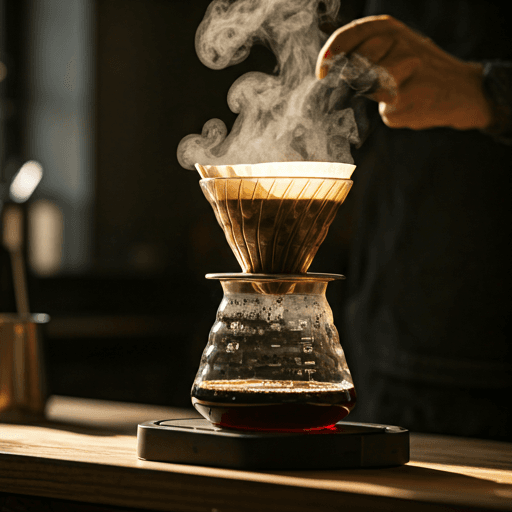
Coffee and tea are the two beverages that run India, and the honest answer to "which is better" is: it depends on your cup, your morning, and your mood. Coffee gives you a faster, stronger lift and a wider world of espresso drinks; tea (chai, mostly) gives you a gentler, steadier rhythm that fits the Indian day. This guide explains how the two compare, what the "third wave" coffee movement actually means, what's really inside the coffee cup, and how to make better versions of both at home, in the office, or in a cafe.
Coffee vs tea in India: the short version
India has always been a tea-first country. Roughly two-thirds of households reach for chai every day, and tea still wins on volume by a wide margin. But coffee is the fastest-growing cup, especially in cities, offices, and among people in their twenties and thirties. Coffee shop chains crossed 5,300+ outlets and grew by double digits in a single year, led by Tata Starbucks, Barista, and Cafe Coffee Day, with specialty players like Blue Tokai and Third Wave Coffee expanding hard.
Here is the simplest way to think about it:
- Tea / chai is the default, social, all-day drink. Cheap, fast, milky, spiced, and emotionally tied to home, the office break, and the roadside tapri.
- Coffee is the focus drink and the aspirational drink. Stronger caffeine, more brewing styles, and the centre of India's growing cafe culture.
Most Indians don't actually choose one forever. They drink chai at home and coffee at work, or filter kaapi in the morning and a cold coffee in the evening. You don't have to pick a side. You just have to know how to make each one well.
What's actually in the coffee cup
When people argue about coffee, they're usually arguing about three different things at once: the bean, the roast, and the brew. Get these three right and almost any coffee tastes better.
The bean: arabica vs robusta
Arabica is smoother, sweeter, and more aromatic; robusta is stronger, more bitter, and higher in caffeine. India grows both, and a lot of Indian coffee is a blend. South Indian filter coffee traditionally adds chicory (a roasted root, not a coffee) for body and that classic kaapi bite, which is why about three-quarters of coffee consumed in India is chicory-mixed.
The roast: light, medium, dark
Lighter roasts keep more of the bean's natural fruitiness and acidity; darker roasts taste bolder, more bitter, and "roasty." Instant coffee and most vending-machine coffee sit at the dark, commodity end. Specialty cafes lean lighter to show off origin character. Neither is wrong, they're different goals.
The brew: where most of the flavour is decided
The same beans can taste like three different drinks depending on how you brew. The big methods you'll meet in India:
- Espresso — pressurised, concentrated, the base of cappuccino, latte, and Americano. See espresso explained.
- South Indian filter — the metal davara-tumbler drip that makes strong, milky kaapi. See filter coffee (kaapi).
- French press, moka pot, pour-over — manual home methods that reward fresh grounds.
- Instant — fast and affordable; close to 65% of Indian coffee consumption is instant.
If you only fix one thing, fix freshness: whole beans ground just before brewing beat stale pre-ground powder every time.
Where India's coffee and tea actually come from
Geography explains a lot of the flavour. India's coffee grows almost entirely in the south on shaded hill estates: Karnataka (Chikmagalur, Coorg), Kerala (Wayanad), and Tamil Nadu, with exciting newer single-origin lots from Koraput in Odisha and the Araku Valley. That shade-grown style is part of why Indian arabica tastes mellow and chocolatey rather than sharp. Tea is the mirror image, grown in the north and east: Assam (bold, malty, the backbone of everyday chai), Darjeeling (light and floral), and the Nilgiris in the south. So the cup in your hand is usually a very local product, which is one more reason buying fresh and Indian pays off.
3rd wave coffee, explained without the jargon
You'll see "3rd wave coffee" on cafe boards and bean bags all over urban India. It's not a marketing word, it's a way of describing how the world started treating coffee. The easiest way to understand it is as three waves:
| Wave | Roughly when | The idea | India example |
|---|---|---|---|
| First wave | Early 1900s onward | Coffee as a cheap commodity. Convenience over quality. | Instant coffee at home; office vending coffee. |
| Second wave | 1990s–2000s in India | Coffee as an experience. The rise of the cafe, espresso, latte, "let's catch up over coffee." | Cafe Coffee Day, Barista, early Starbucks. |
| Third wave | 2010s onward | Coffee as craft. Single-origin beans, traceable farms, lighter roasts, careful brewing. | Blue Tokai, Third Wave Coffee, Indian single-origin from Koraput and Chikmagalur. |
So 3rd wave coffee simply means coffee treated like wine: where the bean came from, who grew it, how it was roasted, and how carefully it's brewed all matter and all show up on the menu. If you've ever seen a cafe list the farm, altitude, and tasting notes ("chocolate, orange, jaggery"), that's the third wave. India has become one of Asia's most exciting specialty markets because of it. Want the cafe side of this story? Read about third wave and aesthetic coffee shops in India.
Caffeine: coffee vs tea, head to head
This is the question we get most. Coffee has more caffeine per cup, but the way you feel it differs because of how tea releases it.
| Drink | Caffeine (approx, per cup) | How it feels |
|---|---|---|
| Espresso (single shot) | 60–80 mg | Fast, sharp |
| South Indian filter coffee | 80–100 mg | Strong, milky lift |
| Brewed / drip coffee | 90–120 mg | Quick, intense |
| Masala chai | 30–50 mg | Gentle, steady |
| Green tea | 20–35 mg | Very mild |
Tea's caffeine is bound up with tannins and paired with an amino acid called L-theanine, so it's absorbed more slowly. That's why a cup of chai gives steady energy without the jolt (or the crash) that strong coffee can. If you're caffeine-sensitive in the evening, tea, or decaf coffee, is the smarter call.
Rule of thumb: need a fast, strong push before a meeting? Coffee. Want a calm, all-day rhythm? Tea. Both are perfectly fine daily drinks in moderation.
Is one healthier than the other?
For most healthy adults, both coffee and tea are fine in moderation, and the sensible middle is easy to remember: keep total caffeine modest and don't overload the cup with sugar. The rough comfortable ceiling for most adults is about 400 mg of caffeine a day, which is roughly three to four cups of filter coffee or noticeably more cups of chai. A few practical pointers for the Indian kitchen:
- Sugar is usually the real problem. A sweet cutting chai or a blended cold coffee can carry far more sugar than the caffeine is worth worrying about. Cutting sugar matters more than switching drinks.
- Tea with milk and food is gentle on the stomach; very strong black coffee on an empty stomach can feel harsh for some people.
- Green tea and decaf coffee are easy evening swaps if caffeine keeps you up.
None of this is medical advice, just the practical balance that suits most homes and offices.
Taste, ritual, and where each one fits
Beyond chemistry, coffee and tea play different roles in the Indian day, and that's really why we drink both.
Tea / chai: the social default
Chai is made with milk, sugar, and spices simmered together, not just leaves in hot water. It's the drink of welcome, of the 4 pm office break, of the railway platform. Regional styles run deep, from Irani chai to homemade masala chai. If you want the full picture, start with what is chai.
Coffee: the focus and the occasion
Coffee splits into two worlds in India. There's the deep South tradition of filter kaapi, milky and strong, served in a steel tumbler. And there's the cafe world of cappuccinos, lattes, cold coffee, and Americanos. The drinks themselves are easy once you know the base, and they nearly all start from espresso:
- Cappuccino — espresso, steamed milk, thick foam.
- Latte — more milk, thin foam, mellow.
- Americano — espresso plus hot water, black and clean.
- Cold coffee — India's beloved sweet, blended, milky favourite.
What it costs in India
Money matters, so here's a rough, honest map of what you'll spend per cup in 2026 terms.
| Where | Coffee | Tea |
|---|---|---|
| Roadside / tapri | ₹10–₹30 | ₹8–₹20 |
| Office vending machine | ₹5–₹15 per cup | ₹5–₹12 per cup |
| Standard cafe chain | ₹150–₹280 | ₹120–₹220 |
| Specialty / 3rd wave cafe | ₹250–₹450 | ₹180–₹350 |
| At home, per cup (own machine) | ₹8–₹25 | ₹6–₹15 |
The big takeaway for homes, offices, and cafes: the per-cup cost collapses once you own the right machine. A good tea-coffee vending machine for an office can serve quality cups for a few rupees each, and a home espresso setup pays for itself fast if you were buying two cafe coffees a day.
How to make better coffee and tea where you are
At home
Start with fresh, whole beans and a decent grinder; that single change beats almost any machine upgrade. For coffee, a moka pot, French press, or a compact espresso machine covers most needs. For tea, the trick is technique, not gadgets: simmer, don't boil to death, and add spices early. Our buying guides break down the choices: coffee machine buying guide and best espresso machine in India.
At the office
Offices want consistency, hygiene, and low cost per cup, which is exactly what a fresh-milk or premix vending machine delivers. One machine can pour espresso-based coffee and masala tea side by side, so the chai drinkers and the coffee drinkers are both happy.
In a cafe
Cafes live or die on repeatability. Great espresso is repeatable, which means a reliable machine, a consistent grind, and trained hands. That's where commercial-grade equipment and on-site service matter most.
So, coffee or tea? Drink both, drink them well
There is no real winner in the coffee vs tea debate, only the right cup for the moment. Tea keeps India steady through the day; coffee, especially in its 3rd wave form, brings focus, craft, and a fast-growing cafe culture. The thing that actually changes your daily cup isn't choosing a side, it's the freshness of your ingredients and the quality of your machine.