
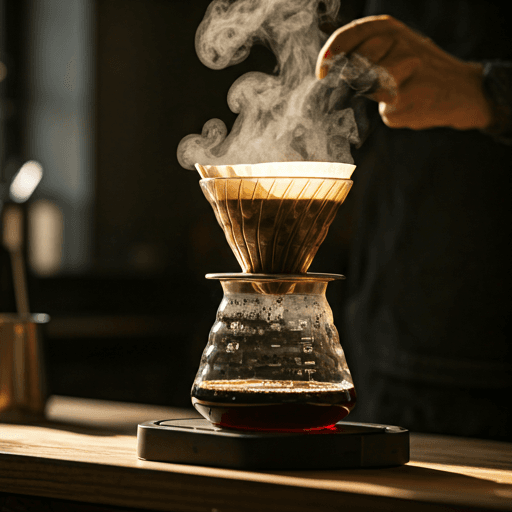
Chicory coffee is a coffee-like brew made from the roasted, ground taproot of the chicory plant, a blue-flowered relative of the dandelion. It is naturally caffeine-free, tastes dark, woody and gently sweet, and has been used for centuries as both a coffee substitute and a coffee extender. New Orleans turned the coffee-and-chicory blend into a signature drink, and you can brew chicory coffee at home much like you brew the real thing.
This guide is the plain-English hub for what chicory coffee is, where it comes from, how it tastes, the forms you can buy, and how to make a good cup. For the wellness side of the story, we link the dedicated chicory coffee benefits guide rather than repeating it here.
What chicory coffee is
Chicory coffee starts with the coffee chicory plant, known botanically as Cichorium intybus. It is a hardy perennial with bright blue flowers and a thick taproot, and it is a close cousin of endive and a relative of the dandelion. The drink does not use the leaves or flowers. It uses that fleshy taproot, which is cleaned, dried, roasted until dark, and then ground into granules.
Once roasted, the coffee chicory root looks and smells remarkably like ground coffee. Brew it with hot water and you get a dark, aromatic cup. The crucial difference is what is missing: there is no caffeine in chicory at all. Coffee from chicory gives you the roasty ritual and much of the flavor without the stimulant, which is why it has long appealed to people cutting back on caffeine.
One quirk is worth knowing: roasted chicory root yields far more soluble matter than coffee does (roughly 45 to 65 percent versus coffee's 20 to 25 percent). In plain terms, a little chicory goes a long way and brews up looking strong, which is exactly why it works so well as an extender.
The chicory plant, briefly
The same plant gives us several foods. The young leaves show up in salads as chicory or radicchio, the forced shoots are sold as Belgian endive, and the root is the part roasted for the drink. Chicory grows widely across Europe, North America and beyond, often along roadsides, which is part of why it became such a reliable, low-cost stand-in for coffee beans.
Where chicory coffee comes from
Roasting roots to mimic or stretch coffee is an old habit. Europeans leaned on chicory heavily whenever coffee was scarce or expensive, most famously during blockades and shortages in the 18th and 19th centuries, when imported beans were hard to get. France developed a particular taste for the blend and never fully let it go, even after supply recovered.
The best-known chapter belongs to New Orleans. During the American Civil War, naval blockades choked off the port and locals stretched their dwindling coffee with roasted chicory root. The flavor stuck. Today the city's cafe au lait, a roughly equal pour of dark coffee-and-chicory blend and hot milk, is an icon, and a cup at a long-standing New Orleans institution such as Cafe du Monde, which opened as a coffee stand in 1862, is a rite of passage for visitors. None of this is an endorsement of any brand; it is simply where the tradition lives.
What chicory coffee tastes like
Expect a cup that is dark, roasty and full-bodied, with woody and nutty notes and a gentle, almost caramel-like sweetness underneath. There is a mild natural bitterness, but it tends to read as softer and rounder than coffee, with less of the bright acidity and none of the caffeine jolt. Many drinkers describe a faint cocoa or chocolate undertone, which is exactly why chicory pairs so well with dark-roast coffee and a splash of hot milk.
On its own, pure chicory is a touch earthier and less complex than a great coffee. Blended with coffee, it does something clever: it deepens the body, smooths the edges, and adds that cocoa-ish richness. That balancing act is the whole reason the coffee-and-chicory blend has outlived the shortages that created it.
The forms of chicory coffee
You will find coffee from chicory sold in three main formats. Knowing which is which makes shopping far easier.
| Form | What it is | Best for |
|---|---|---|
| Pure roasted chicory | Roasted, ground chicory root with no coffee at all | A fully caffeine-free cup, or blending to your own taste |
| Instant chicory | Soluble chicory granules that dissolve in hot water or milk | The fastest cup; no brewer needed |
| Coffee-and-chicory blend | Ground coffee mixed with roasted chicory, often around 70/30 coffee to chicory | The classic New Orleans-style cafe au lait; some caffeine, smoother body |
Blends vary widely. A light touch of chicory just rounds out the coffee; a heavier hand (some traditional blends push toward 30 to 40 percent chicory) gives a darker, sweeter, lower-caffeine cup. If you want zero caffeine, reach for pure or instant chicory rather than a blend.
How to make chicory coffee
The good news: if you can make coffee, you can make chicory coffee. Treat ground roasted chicory almost exactly like ground coffee.
- Ground chicory, drip or steep: Use roughly one to two tablespoons of ground roasted chicory per cup. Brew it in a drip machine, pour-over, or French press the same way you would coffee. Chicory is finer and can over-extract, so start on the lighter side and adjust.
- Instant chicory: Stir about a teaspoon of soluble chicory into hot water or hot milk, then taste and add more. This is the quickest route and needs no equipment.
- Coffee-and-chicory blend: Brew it like ordinary coffee. A starting ratio of about 70 percent coffee to 30 percent chicory is the traditional benchmark; tweak to taste.
- Make it a cafe au lait: Brew a strong, dark cup, then pour in an equal amount of hot, gently steamed or scalded milk. This is the New Orleans way and the best showcase for the blend's cocoa notes.
Tip: chicory dissolves and extracts faster than coffee, so if your cup turns muddy or harsh, use slightly less, brew a little shorter, or coarsen the grind.
Quick ratio guide
| Cup style | Starting ratio | Caffeine |
|---|---|---|
| Pure chicory | 1-2 tbsp ground chicory per cup | None |
| Classic blend | ~70% coffee : 30% chicory | Reduced vs straight coffee |
| Cafe au lait | 1 part brewed blend : 1 part hot milk | Reduced and mellowed |
Chicory coffee vs regular coffee, decaf and other alternatives
Chicory sits in a crowded field of coffee alternatives, and each one solves a slightly different problem. Here is how it stacks up.
| Aspect | Note |
|---|---|
| Caffeine | Pure chicory is caffeine-free; blends carry whatever caffeine the coffee portion adds. |
| vs regular coffee | Softer, sweeter, less acidic, no caffeine on its own; lacks coffee's full aromatic complexity. |
| vs decaf coffee | Decaf is still real coffee with the caffeine removed, so it tastes more like coffee; chicory is a different plant with its own woody-cocoa profile. See decaf coffee explained. |
| vs mushroom coffee | Mushroom blends mix coffee or extracts with functional fungi for an earthy cup; chicory leans sweet and roasty. See mushroom coffee explained. |
| vs instant coffee | Instant chicory works just like instant coffee, dissolving in seconds, but with no caffeine. |
| Cost | Chicory is generally inexpensive, which is exactly why it became a coffee extender in the first place. |
Is chicory coffee good for you?
Chicory root is rich in inulin, a prebiotic fiber, and being caffeine-free makes it an easy evening or low-caffeine swap. There are real trade-offs too, including the fact that inulin can cause gas or bloating for some people. We keep the full picture, including who should be cautious, on the chicory coffee benefits page. As a general note: this is information, not medical advice, so check with a clinician if you have specific health concerns.
The bottom line
Chicory coffee is one of the oldest and most charming coffee alternatives: a caffeine-free, cocoa-tinged brew made from a humble roadside root that history kept turning to when beans ran short. Whether you sip it pure, stir an instant cup, or pour a New Orleans-style cafe au lait from a coffee-and-chicory blend, it rewards a little experimenting with grind and ratio. If you are exploring the wider world of coffee and its many cousins, browse the coffee guides next and see where your cup takes you.