
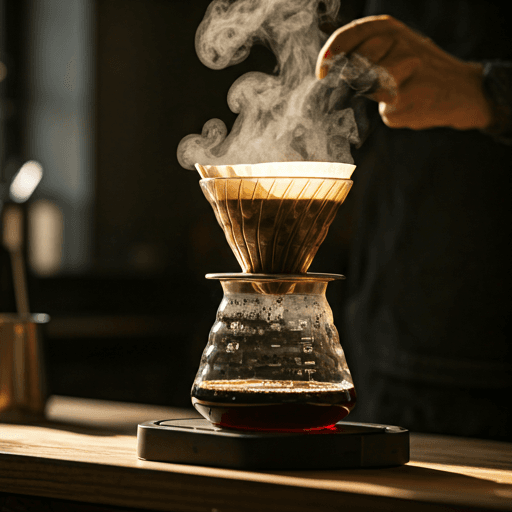
When you put a cappuccino vs americano side by side, both drinks start from the exact same place: a shot of espresso. What happens next is where they split. A cappuccino folds steamed milk and a thick cap of foam into that espresso to make something creamy and soft, while an americano simply tops the espresso with hot water for a black, milk-free cup that drinks a lot like brewed coffee. So the real contrast is milky-and-foamy versus black-and-diluted.
Both belong to the wider world of espresso drinks, and both turn up on almost every coffee menu. Once you know what each one adds to the base shot, choosing between them gets easy. For the full definitions, see what a cappuccino is and what an americano is — this guide stays focused on how the two compare.
The short answer: cappuccino vs americano
Here is the whole difference in one line. A cappuccino is espresso plus steamed milk plus foam. An americano is espresso plus hot water. Same starting shot, two very different finishes.
The cappuccino uses milk to build body, sweetness and a soft, airy cap. The americano uses water to stretch the shot into a longer, blacker cup without adding anything creamy at all. If you want a milky, comforting drink, reach for the cappuccino. If you want black coffee with an espresso backbone, reach for the americano. Everything else below is just detail on top of that split.
What is in each cup and typical proportions
The difference between cappuccino and americano comes down to what you pour on top of the espresso.
A traditional cappuccino is built in roughly equal thirds: about one third espresso, one third steamed milk, and one third foam. That balance is what gives it its signature dense, spoonable cap. Many cafes serve it in a 150 to 180 ml cup, and it is classically an Italian drink — the name and the balanced style both trace back to Italy. The foam sits high and holds its shape, which is why a well-made cappuccino can carry latte art or a dusting of cocoa.
An americano flips the logic. You pull one or two shots of espresso, then top the cup up with hot water — often two to three parts water to one part espresso, though the ratio is flexible. There is no milk and no foam unless you add them yourself. The result is a longer black coffee, usually 150 to 240 ml, with a strength and color close to drip coffee but built on the concentrated flavor of espresso. Some people pour the water first and the shot on top, which is closer to how a long black is made — a small distinction we come back to below.
| Feature | Cappuccino | Americano |
|---|---|---|
| Added to espresso | Steamed milk plus a thick layer of foam | Hot water only |
| Milk | Yes — steamed milk and foam | None |
| Texture | Creamy, velvety, airy foam cap | Clean, thin, watery-light body |
| Strength and flavor | Softer and sweeter — milk mellows the espresso | Bold and black — diluted but clearly coffee-forward |
| Best for | Anyone who wants a comforting, milky drink | Black-coffee drinkers who want a long espresso-based cup |
Taste and texture: creamy versus clean
This is where the two drinks feel most different in the cup. A cappuccino tastes sweet, creamy and velvety. The steamed milk rounds off the sharp edges of the espresso, and the foam gives each sip a light, almost dessert-like softness. It is a drink you sip slowly, and the foam keeps the coffee warm as you go.
An americano tastes clean, bold and black. Because it is only espresso and water, nothing hides the coffee — you get the roast, the origin character and any bitterness or brightness in the beans, just in a longer and less concentrated form than a straight shot. It is closer to a mug of brewed coffee in feel, but with the rounder body that espresso extraction tends to give. If you like tasting the coffee itself, the americano delivers it; if you like coffee softened by milk, the cappuccino wins.
Is a cappuccino stronger than an americano?
People often ask whether a cappuccino is stronger than an americano, and the honest answer is that it usually comes down to the number of espresso shots, not the milk or the water. Both drinks are typically built on one or two shots, so their caffeine tends to track the shot count rather than the drink style. A single-shot cappuccino and a single-shot americano carry broadly similar caffeine, because adding steamed milk or adding hot water does not change how much caffeine the shot brought with it.
What differs is the perception of strength. An americano tastes stronger and more bitter because the coffee is undiluted by milk, while a cappuccino tastes mellower because the milk softens it — but that is flavor, not caffeine. As a rough guide, a typical espresso shot lands somewhere in the region of 60 to 80 mg of caffeine, though this varies a lot with the beans, the roast, the grind and the cafe. Treat any number as an estimate, not a promise, and if you are watching your caffeine for sleep, sensitivity, pregnancy, breastfeeding, medication or any health reason, check with your own healthcare provider — responses vary, and this is not medical advice.
Milk versus no milk: who each drink suits
The clearest way to choose in the americano vs cappuccino decision is to ask one question: do you want milk or not?
The cappuccino suits anyone who finds straight espresso too sharp and wants a warm, creamy, comforting cup. The milk and foam make it approachable, mildly sweet even without sugar, and satisfying as a slow morning drink or an afternoon treat. It is a natural pick if you like the idea of coffee but prefer it soft.
The americano suits the black-coffee drinker who wants the depth of espresso in a longer format. If you normally reach for brewed or drip coffee, or you want something you can sip over a longer stretch without milk, the americano fits neatly. It is also the go-to when you want to taste the beans clearly, or when you simply do not want dairy in the cup. Neither drink is better — they answer two different cravings.
How each drink relates to its cousins
Both of these drinks have close relatives that are easy to mix up, and knowing the neighbors helps the comparison make sense.
On the cappuccino side, the obvious cousin is the latte. The two share the same espresso-and-steamed-milk base, but a cappuccino carries more foam and less milk, so it drinks lighter and airier, while a latte carries more milk and only a thin layer of foam, so it drinks smoother and creamier. If that distinction interests you, our cappuccino vs latte guide goes deeper.
On the americano side, the closest cousin is the long black, and the difference there is mostly about pour order — a long black pours the water first and the espresso on top to preserve more crema, while an americano typically pours the shot first and adds water. The americano is also often compared to milk drinks; if you want to see how it stacks up against a milky cup, our americano vs latte guide covers that pairing. Together, these comparisons map out most of the espresso-drink menu: start from a shot, then decide whether to add milk, foam, water — or nothing at all.
The takeaway
Line them up one more time. A cappuccino is espresso made creamy with steamed milk and a thick foam cap — sweet, soft and comforting. An americano is espresso stretched with hot water into a clean, bold, black cup that drinks like a richer version of brewed coffee. They share a shot and split on everything after it: milk and foam versus water, creamy versus clean, and a similar caffeine load that follows the number of shots rather than the style. Pick the cappuccino when you want milk and comfort, and the americano when you want your coffee black and long.