
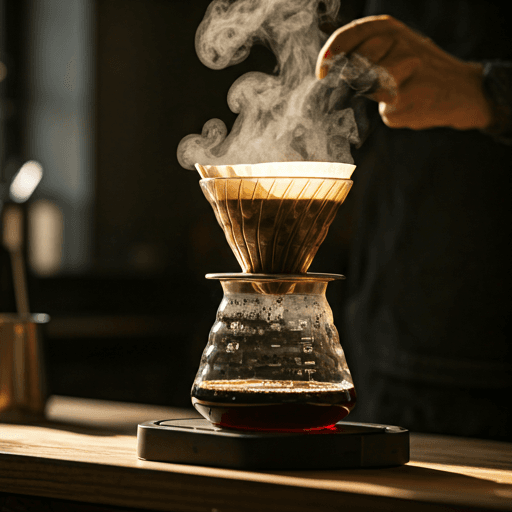
The caffeine in drip coffee usually lands around 80 to 100 mg for a standard 8 oz (about 240 ml) cup, though the honest range is wider — very roughly 70 to 140 mg depending on the beans, roast, grind, dose and how strong the pot is brewed. Drip (also called filter or brewed) coffee is one of the more caffeinated everyday brew methods per serving, mostly because a full cup simply holds a lot of liquid coffee. Treat every number here as a ballpark, not a lab reading.
The short answer: how much caffeine in drip coffee
For a plain 8 oz cup, most estimates put the caffeine in drip coffee at roughly 80 to 100 mg, and a sensible working range to keep in mind is about 70 to 140 mg. The spread is real: two cups poured from different beans, roasts or recipes can differ by a lot, so any single figure is an average rather than a promise. If you want the bigger-picture view across espresso, instant, tea and more, that broader breakdown lives in our overview of how much caffeine is in a cup of coffee.
One catch worth flagging early: an "8 oz cup" is a measuring convention, not the mug on most desks. Plenty of people drink 12 to 16 oz at a sitting, which pushes the total higher — more on that just below.
Why drip coffee lands where it does
Drip brewing works by letting hot water (typically around 90 to 96 C, or 195 to 205 F) sit in contact with a medium grind for a few minutes as it filters through. That combination — heat, time and a fairly large dose of grounds — tends to extract a good amount of caffeine into the cup. Because the finished drink is mostly water, a single serving carries a lot of volume, and the caffeine in brewed coffee tracks closely with how much liquid you actually drink and how strongly it was made.
This is why serving size matters so much. If an 8 oz cup sits near 80 to 100 mg, a 12 oz mug might land somewhere around 120 to 165 mg, and a 16 oz travel cup could reach roughly 160 to 220 mg, assuming similar strength. These are estimates — a weaker brew or a smaller dose of grounds can pull the whole range down — but the pattern holds: more cup, more caffeine. It is easy to under-count when the mug is bigger than the textbook cup.
What moves the caffeine number
Several everyday variables nudge the drip coffee caffeine content up or down. None of them act alone, which is another reason the range is so wide.
Bean type
Robusta beans tend to carry noticeably more caffeine than arabica — often close to double, though it varies by lot. Most specialty coffee leans arabica, while many supermarket and instant blends include some robusta, so the beans in the bag matter before you ever brew.
Roast level
Here is the myth worth busting gently: dark roast is not automatically lower in caffeine. Roasting does change the beans, but the differences between a light and a dark roast are modest and depend on how you measure the dose. If you scoop by volume, darker (puffier) beans can even give you slightly less coffee per scoop; if you weigh by grams, the gap is small. Roast is a flavor decision far more than a caffeine lever.
Dose and ratio
The single biggest dial is how much ground coffee you use per cup of water. A stronger coffee-to-water ratio means more extractable caffeine, and a generous scoop can shift a cup well toward the top of the range. Common guidance hovers around 55 to 65 g of grounds per litre of water, but home pots vary a lot from that.
Grind
A finer grind exposes more surface area and can raise extraction, while a very coarse grind can leave some behind. Most drip setups use a medium grind, which is part of why the method lands in a fairly consistent band rather than swinging wildly.
Brew strength
Longer contact time and a fuller basket generally give a stronger, more caffeinated cup, while a quick, thin brew sits lower. All of this is approximate — machines, filters and water chemistry each add their own wobble — so treat the numbers as a guide, not a guarantee.
Caffeine by serving: a quick table
Here is a rough, hedged look at how typical servings compare. Every figure is an approximate range, not a fixed value.
| Serving | Typical caffeine (approximate, hedged) |
|---|---|
| 8 oz (240 ml) drip coffee | ~80-100 mg (can range ~70-140 mg) |
| 12 oz (355 ml) drip coffee | ~120-165 mg |
| 16 oz (475 ml) drip coffee | ~160-220 mg |
| Single espresso (1 oz / 30 ml) | ~60-80 mg |
| Instant coffee (8 oz cup) | ~30-90 mg (often near 60 mg) |
The espresso and instant lines are there for context; the sections below explain why they sit where they do.
Drip coffee vs espresso
People often assume espresso is the caffeine heavyweight because it tastes so intense. Per millilitre, that is true — a 1 oz shot is far more concentrated than drip. But a single espresso is tiny, usually landing somewhere around 60 to 80 mg in that one small shot, while a mug of drip spreads a similar or larger caffeine load across much more liquid. The practical upshot: a typical mug of drip usually delivers more total caffeine than one espresso shot, even though the shot is stronger sip for sip. For the concentrated view, see caffeine in espresso, and for a fuller head-to-head on strength, body and how each is made, our guide to espresso vs drip coffee digs in. As always, these are averages and your own cups may differ.
Drip coffee vs instant coffee
Instant coffee is usually a touch lower in caffeine per cup than a comparable drip, though the two overlap and a strong spoonful of instant can close the gap. If you are weighing the two, the specifics live in our note on how much caffeine is in instant coffee. For most people the takeaway is simple: instant sits a little below drip on average, but neither is caffeine-free unless it is labeled decaf.
Managing your intake
Because drip is easy to drink by the mug and easy to refill, the numbers add up faster than a single-cup figure suggests. Two 12 oz mugs before lunch can quietly total more caffeine than four small servings sound like they should. If you are keeping an eye on your intake, counting real cup sizes — not the 8 oz convention — gives a more honest picture.
A couple of practical notes: decaf drip is not zero. It still carries a small amount of caffeine, often just a handful of milligrams per cup, which can matter if you are very sensitive. And caffeine tolerance genuinely varies from person to person — the same mug that barely registers for one drinker can feel like a lot to another. Responses vary, and this is general information, not medical advice. If you have questions about caffeine and sleep, sensitivity, medications, pregnancy or breastfeeding, those are best raised with your own healthcare provider.