
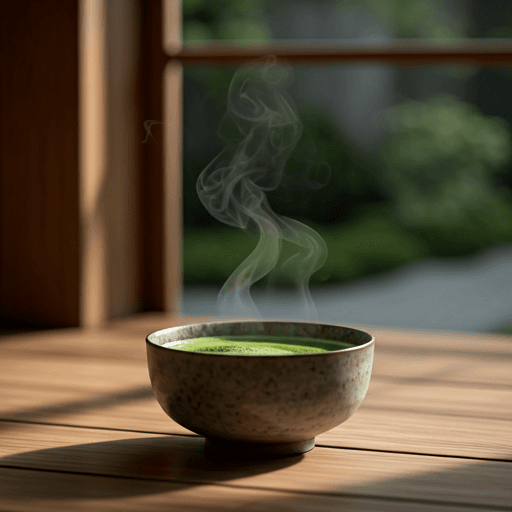
Boseong green tea is the nokcha (Korean green tea) grown in Boseong County, a mist-wrapped fold of hills in South Jeolla province at the southern tip of South Korea. It is the country's largest and most iconic tea region, and the source of those sculpted, contour-planted terraces that have become a national landmark. Here is what makes Boseong distinctive: its stair-stepped landscape, the pluck-date grading ladder that runs from ujeon to daejak, and the quiet Korean tea culture the leaf belongs to.
What is Boseong green tea?
Boseong green tea is not a single cultivar or one fixed flavor. It is a place name: green tea harvested and made in Boseong County (보성군), which produces close to 40% of South Korea's tea and is, for most people, the face of the whole industry. The Korean word for green tea is nokcha (녹차), and Boseong is its capital. Like all true tea it comes from Camellia sinensis — here almost entirely the cold-hardy small-leaf variety, C. sinensis var. sinensis, rather than the broad-leaf assamica used for most robust black teas.
Boseong sits inside a small but distinctive national tradition. Korea grows far less tea than its neighbours, and what it makes leans green, delicate and understated. For the wider story — the six styles, the history, the ceremony — see our guide to Korean tea explained. This piece stays on Boseong: the land, the terraces and the harvest calendar that make its cup its own.
Where Boseong grows, and why the land matters
Boseong lies at roughly 34–35 N, near the southern coast, where the peninsula reaches toward the sea. Three things about that geography shape the leaf. First, the maritime setting: sea fog and near-daily morning mists roll off the water and settle in the valleys, softening sunlight and slowing the leaf's growth so it accumulates sweetness and amino acids. Second, the mild winters — gentler here than in Korea's cold interior — which let tea survive where it would struggle further north. Third, the terrain itself: Boseong's tea is planted on low, steep hillsides rather than flat ground, and the only way to work slopes like that is to cut them into terraces.
Those Boseong tea fields are the reason the region is famous beyond tea circles. The rows follow the contour of each hill in long green ribbons, climbing the slope in tiers, and the effect from below is more sculpture than farm. It is one of the most photographed rural landscapes in the country, used for film and television shoots, and it draws visitors year-round — greenest in late spring, lit up for a winter light festival in the cold months.
Daehan Dawon and the terraced fields
The estate most people picture is Daehan Dawon, the Korea Tea Plantation — the largest and oldest working garden in Boseong, spread across hundreds of hectares of terraced hillside and planted with several million tea bushes. Its history is worth stating plainly. The first large plantations here were laid out in the late 1930s, during the period of Japanese colonial rule, when growers recognised that Boseong's climate suited tea. Those early fields were largely destroyed during the Korean War, and the estate as it stands was re-established from 1957 onward. A tea museum near the plantation now tells that story and the broader one of Korean tea.
Boseong is not the only place Korea grows tea — Jeju Island produces at large, mechanised scale, and Hadong on the mainland is older and wilder — but Boseong is the biggest single producing county and the one whose name travels. Much of its output is everyday leaf, but its top spring grades stand with any green tea in the region.
The distinctive thing: Korea's pluck-date grades
If one idea belongs to Boseong green tea, it is that quality here is measured by when the leaf is picked. Korean green tea is graded by harvest date against the traditional solar calendar, and the ladder runs from earliest and most delicate to latest and most robust:
- Ujeon (우전) — literally "before the rain." Picked before Gogu (곡우, the "grain rain" solar term, around April 20), from tiny buds and the first flush. The scarcest, most prized and most delicate grade; yields are small and it is largely hand-plucked.
- Sejak (세작) — "fine sparrow," picked just after grain rain from a bud and its first unfurling leaves. Widely considered the sweet spot of quality and everyday drinkability.
- Jungjak (중작) — "medium sparrow," from around mid-May, a bud with two leaves. Fuller-bodied and more forgiving.
- Daejak (대작) — "large sparrow," the late-May pick of maturer leaves. The most robust and the most common, often the leaf behind teabags and cooking-grade powder.
The names come from an old poetic scale that likens the young shoot to a sparrow's tongue. Earlier is not automatically "better" for everyone — a jungjak can be exactly the rounded, forgiving daily cup someone wants — but the ladder tells you what you are getting before you steep it.
Boseong leaf is made both ways Korea makes green tea: the older hand method of pan-firing (deokkeum), which halts oxidation in a hot iron pan and leaves a warm, roasted, nutty character; and steaming (jeungje), adopted from Japan and used a lot in Boseong's larger-scale production, which keeps the cup cleaner and greener. One line on the wider category — green tea is simply tea whose leaf is heat-fixed before it can oxidise; the concept and its everyday appeal are covered in green tea benefits (responses vary from person to person, and none of this is medical advice).
All of it belongs to a deliberately quiet tea culture. The Korean way of tea, darye (다례, "tea etiquette"), prizes calm, simplicity and the character of the leaf over choreography — noticeably more relaxed than the formal, highly codified Japanese tea ceremony it is often compared with.
What Boseong green tea tastes like
Boseong's clean, uniform cup is its signature. Expect a smooth, round mouthfeel with a gentle, savoury sweetness and markedly less bitterness than many Japanese green teas. Pan-fired grades lean toward roasted chestnut, toasted grain and sesame, with a warm, comforting quality — more hearth than garden. Steamed Boseong leans the other way: light, herbaceous and vegetal, with notes some tasters describe as fresh parsley and raw almond. Earlier plucks (ujeon, sejak) are sweeter and finer; later ones (jungjak, daejak) are grassier and stronger.
Because the leaf is delicate, water temperature matters more than with a rugged black tea. Boseong nokcha is usually brewed well below boiling — roughly 70–80 C (158–176 F) — with a short steep, which keeps it sweet rather than pulling out bitterness. Our guide to the best water temperature for tea has the details. On caffeine: like other green teas it is a light, moderate-caffeine everyday cup, gentler than most black tea and, of course, not caffeine-free.
Boseong green tea at a glance
| Attribute | Boseong green tea |
|---|---|
| Origin | Boseong County, South Jeolla province, South Korea (~34–35 N) |
| Type | Green tea (nokcha), unoxidised |
| Plant | Camellia sinensis var. sinensis (small-leaf) |
| Landscape | Contour-terraced hillsides; sea mist, mild coastal winters |
| Flagship estate | Daehan Dawon (Korea Tea Plantation), re-established from 1957 |
| Processing | Pan-fired (deokkeum) and steamed (jeungje) |
| Grade ladder | Ujeon → Sejak → Jungjak → Daejak (by pluck date) |
| Harvest window | Roughly late April (pre-Gogu) through late May |
| Flavor | Smooth, low-bitterness; nutty/roasted (pan-fired) or vegetal (steamed) |
| Caffeine | Moderate; lighter than most black tea, not caffeine-free |
| Brew temperature | ~70–80 C / 158–176 F, short steep |
How Boseong compares to its neighbours
Within Korea, the natural comparison is Hadong, in the mountains of Gyeongsangnam-do. Hadong is Korea's oldest tea country, tracing its plantings to seeds carried from Tang China and set on the slopes of Jirisan more than a thousand years ago; much of its leaf still grows semi-wild, scattered through forest and tended by families by hand. Boseong is the opposite temperament: organised, terraced and commercial, the country's tea "factory" to Hadong's tea "heritage." Neither is better — they are different answers to the same climate. Jeju Island is a third pole, producing green tea and matcha at large modern scale.
Reach beyond Korea and the contrast sharpens. Japanese steamed green teas like sencha are brighter, grassier and often more umami-driven and bitter; Chinese pan-fired greens are toastier and more varied. Boseong's small-leaf, low-bitterness, gently nutty profile sits comfortably between them, and its terraced hills and pluck-date grading make it unmistakably a Korean tea region rather than an imitation of either neighbour.
The bottom line
Boseong green tea is Korea's flagship korean green tea: nokcha from the country's largest producing county, grown on hand-cut terraces in the coastal mist and sorted not by leaf size or blend but by the day it was picked — ujeon before the grain rain, then sejak, jungjak and daejak. Choose an earlier grade for a sweeter, finer cup, brew it cool and short, and you are drinking the clearest expression of a small, quiet tea tradition that measures quality by the calendar.