
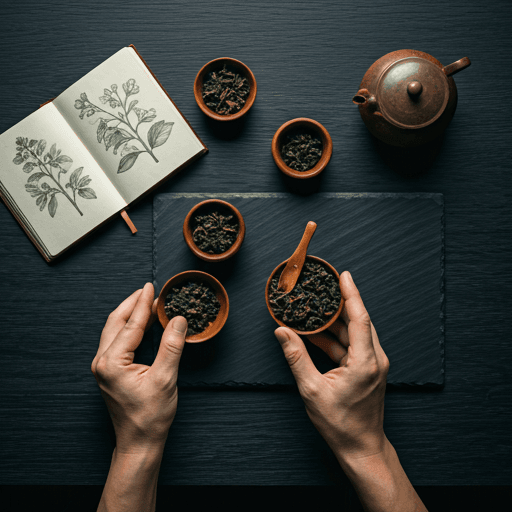
Let us be honest up front: the best tea for weight loss is not a magic fat-burner, and no cup will undo a diet or replace movement. What tea can do is help around the edges. Swapping a sugary latte or soda for unsweetened tea cuts calories, the warmth and ritual can curb mindless snacking, and a few teas carry caffeine plus plant compounds with a small, real effect on metabolism. That is the truthful frame for the best tea to drink for weight loss: a helpful habit alongside diet and activity, not a shortcut.
This is the broad, honest roundup. If you want the green-tea deep dive specifically, see our guide to green tea for weight loss. Here we look at the wider field, rank nothing, sell nothing, and flag the "detox" teas worth skipping.
Why "the best tea for weight loss" works mostly by replacing worse drinks
The biggest lever is the most boring one. A mug of plain tea has almost no calories. If it stands in for a flavored coffee drink, a juice, or a soft drink, you have quietly removed real calories from your day without feeling deprived. Across weeks, that swap matters far more than any thermogenic compound in the leaf.
Tea also supports the basics of weight management in gentle ways. It keeps you hydrated, and we often mistake mild thirst for hunger. A warm drink between meals can take the edge off cravings and slow you down. And the small jolt of caffeine in true teas can nudge metabolism and alertness, which is why caffeinated teas show up most often in the research.
The teas with the best (modest) evidence
The teas most studied for weight are the true teas from the tea plant, rather than caffeine-free herbal tea infusions, because caffeine and catechins are the active players. Here is where the evidence actually stands.
Green tea
Green tea has the strongest research, though "strongest" still means modest. Its catechins, especially EGCG, work with caffeine to slightly extend fat-burning signaling. Meta-analyses of green tea catechins point to an average loss of roughly 1 to 1.4 kg (about 2 to 3 pounds) versus controls, typically when people drink the equivalent of three to four strong cups daily for eight to twelve weeks or more. Notably, the catechins do little on their own; the caffeine appears to be doing much of the work. Useful, real, but not dramatic. For the wider picture, see green tea benefits.
Oolong tea
Oolong, partly oxidized between green and black, has appealing small-trial data. Studies have reported increased fat oxidation over a 24-hour period and a few percent bump in daily energy expenditure compared with placebo, with some participants showing modest drops in weight and waist circumference. More on the style in oolong tea explained.
Pu-erh, black and white tea
Pu-erh (fermented) and black tea (fully oxidized) carry caffeine and polyphenols too. Evidence is thinner and leans on animal or smaller human work for effects on fat accumulation and lipid metabolism, but as unsweetened, low-calorie drinks they fit the same "replace something worse" role. White tea is the least oxidized and least studied for weight specifically; treat its weight claims as gentle, not proven.
Yerba mate
Yerba mate, the caffeinated South American infusion, has promising early data: it may modestly raise satiety signaling and is associated with small reductions in body fat in some studies, with effects that are real but small. It is a herbal infusion rather than a true tea, but its caffeine puts it in the same conversation.
Ginger and peppermint
These two are caffeine-free helpers aimed at appetite and digestion rather than fat-burning. Ginger is mildly thermogenic and is associated in some studies with greater fullness and slightly lower calorie intake. Peppermint soothes the digestive tract and may help with cravings and bloating, though direct appetite evidence is limited. Both are pleasant zero-calorie ways to round out a meal.
A quick comparison: how each tea may help, and the catch
| Tea | How it may help | Caution |
|---|---|---|
| Green tea | Catechins + caffeine slightly support fat oxidation; best-studied | Effect is modest; caffeine can disrupt sleep if taken late |
| Oolong | May modestly raise fat oxidation and daily energy use | Small trials; results vary by person |
| Pu-erh / black | Low-calorie swap; some polyphenol and lipid effects | Thinner human evidence; mind added milk and sugar |
| White tea | Gentle, low-caffeine, low-calorie option | Little weight-specific research |
| Yerba mate | Caffeine; may modestly increase satiety | Strongly caffeinated; very hot mate is best avoided |
| Ginger | Mildly thermogenic; associated with greater fullness | Can aggravate reflux or interact with blood thinners |
| Peppermint | Eases digestion; may dull cravings and bloating | Can relax the LES and worsen acid reflux for some |
The big warning: avoid "slimming," "detox" and "skinny" teas
Here is the part the marketing hides. So-called "slimming," "detox," "skinny," "ballerina" and "biofit"-type teas frequently contain senna or other stimulant laxatives. The scale may dip after using them, but that drop is water and waste leaving your body, not fat. The pounds return as soon as you rehydrate.
Worse, these products carry real risks. Regular use of senna and similar laxatives is linked to stomach cramping, dehydration, electrolyte imbalance (which can affect muscle and heart function), and laxative dependency where normal bowel function falters. Research has also tied laxative use for weight control to a much higher likelihood of disordered eating. There is no credible evidence that senna "detoxes" you or burns fat. Treat any tea that promises fast, effortless weight loss, especially one that "works" by making you go to the bathroom, with deep skepticism, and steer clear.
If a tea promises rapid weight loss or a "detox," read the ingredients. Senna, cascara, or "natural laxative" are red flags, not features.
How to choose and use tea for weight management
- Drink it instead of, not on top of. The win is replacing sugary drinks. Adding sweet teas on top of your usual intake does the opposite.
- Keep it unsweetened. Sugar, syrups, condensed milk, and bubble-tea toppings can erase the calorie advantage in one cup.
- Favor caffeinated true teas for the metabolism angle (green, oolong), and caffeine-free herbals (ginger, peppermint) for appetite and digestion comfort.
- Mind your caffeine and timing. Three to four strong cups is roughly where green-tea studies land, but stop early enough to protect sleep, which itself affects weight.
- Be patient and realistic. Expect a small assist over weeks, not a transformation. Diet quality, portions, sleep, and movement do the heavy lifting.
- Skip the "detox" aisle entirely, as covered above.
A responsible note
Tea is an enjoyable drink, not a medicine. Nothing here is a promise of results, and no tea treats, cures, or "burns off" anything. The effects described are modest and may not apply to everyone. If you are pregnant or breastfeeding, take medication, or have a health condition, talk to a doctor or registered dietitian before leaning on tea, supplements, or any "slimming" product. They can give advice that fits your body and your health, which a tea label never can.
The honest takeaway
The best tea for fat loss is the one you genuinely enjoy unsweetened, drunk in place of higher-calorie choices, as a small support to a sensible plan. Green tea and oolong have the best evidence, ginger and peppermint help with appetite and digestion, and the "skinny detox" teas are the ones to leave on the shelf. Sip for pleasure and hydration, keep your expectations grounded, and let real food and movement carry the result. From here you might explore the focused green tea for weight loss guide.