
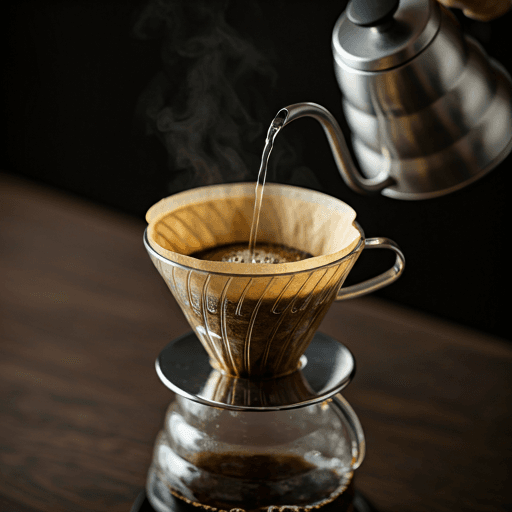
The best grind size for percolator coffee is coarse — coarser than drip, about the same as a French press, and roughly the texture of coarse sea salt or breadcrumbs. A percolator recirculates near-boiling water through the grounds again and again, so a coarse grind keeps the pot from turning bitter and stops fine particles from slipping through the basket into your cup.
The short answer: best grind size for percolator
If you remember one thing, remember coarse. A percolator wants grounds noticeably chunkier than the medium grind you would use in an automatic drip machine — closer to what you would load into a French press. Picture coarse sea salt, cracked peppercorns or fresh breadcrumbs rather than fine sand or powder. That texture is the single most important variable for a good percolated cup, and it holds true whether you brew on a stovetop pot or an electric percolator.
The reason comes down to how a percolator brews, which is the opposite of a gentle one-pass drip. We keep this page focused on grind, so for the full picture of how the perking cycle differs from an automatic machine, see our guide to percolator vs drip coffee. Here the job is simply to pin down how coarse to grind and why.
Why a percolator needs a coarse grind
A percolator does something no other everyday brewer does: it passes hot, often boiling, water over the same bed of grounds repeatedly. Instead of one clean pass, the water cycles up a central tube and showers back down through the coffee over and over until you pull the pot off the heat. That repetition is a built-in over-extraction risk, and grind size is your main defense against it.
Fine grounds have far more surface area, so they give up their flavor fast. Under a percolator's relentless recirculation, fine coffee over-extracts quickly — it keeps handing over the harsh, bitter, astringent compounds that a single-pass brewer would never reach. A coarse grind extracts more slowly and evenly, which buys you a window where the coffee tastes strong and rich rather than scorched, even as the cycle keeps running. Coarse is not about making the coffee weaker; it is about protecting it from the pot's own tendency to overcook the grounds.
There is a second, more mechanical reason for a coarse grind percolator setup. The basket in a percolator is held back only by a perforated metal screen — there is no paper filter. Fine particles and dust are small enough to slip straight through those holes and settle as sludge in your cup, giving you a muddy, gritty last sip. Coarser grounds are too big to fall through, so a coarse grind protects both the flavor and the clarity of the brew at the same time.
Where percolator grind size sits on the scale
It helps to picture the whole range as a sliding scale from powder to gravel. From finest to coarsest, the common brewing points line up roughly like this:
- Espresso — the finest everyday grind, close to powdered sugar.
- Moka pot — fine-to-medium, a notch coarser than espresso.
- Pour over and drip — a true medium, around table-salt texture.
- Percolator and French press — coarse, like coarse sea salt or breadcrumbs.
- Cold brew — the coarsest of all, chunky and gravelly.
So a percolator sits right down at the coarse end, sharing a zone with the French press. If you already grind for a French press, that same setting is a solid starting point for percolator grind size. For a full tour of every grind from Turkish-fine to cold-brew-coarse, our coffee grind size chart maps the entire spectrum with a reference texture for each point.
Practical tips for a coarse percolator grind
Once your grind is in the coarse zone, a few habits keep the pot from tipping into bitterness:
- Do not over-fill the basket. Fill it loosely and level the grounds off; an overpacked basket restricts the flow and nudges the whole pot toward over-extraction.
- Never tamp the grounds. Unlike espresso, a percolator wants a loose, open bed so water can move through freely. Pressing the coffee down slows the flow and draws out more bitterness.
- Pull it off the heat once it has perked enough. The longer a percolator runs, the more times the water cycles through the coffee, and the more bitter the cup gets — longer perking simply means more bitterness. Most stovetop pots need only a few minutes of steady perking once they get going; as a rough guide, four to seven minutes of gentle bubbling, then off the heat. The sight glass in the lid helps here: once the liquid runs a rich brown, it is ready.
- Use fresh, freshly ground coffee. Coarse grounds ground just before brewing hold their aroma far better than a bag that has been open for weeks. Grinding right before you brew is one of the easiest upgrades to a percolated cup.
Dialing in your percolator coffee by taste
Your cup tells you which way to move. Change one thing at a time — the grind, or the perking time — so you can tell what actually made the difference. The two levers work together: grind sets the baseline, and how long you let the pot perk fine-tunes it from there.
If the coffee comes out bitter or muddy, you are over-extracting, so go a step coarser and cut the perking time. If it tastes weak or thin, go a touch finer or let the pot perk a little longer to build strength. If you keep finding grounds in the cup, your grind has too many fines slipping through the basket, so coarsen up and check your grinder. Here is the same idea as a quick reference:
| Symptom | Likely issue | Fix |
|---|---|---|
| Bitter or muddy | Over-extracting — grind too fine and/or perked too long | Go coarser and pull the pot off the heat sooner |
| Grounds or sludge in the cup | Fine particles slipping through the perforated basket | Grind coarser and switch to a more consistent grinder |
| Weak, thin or watery | Under-extracting — grind too coarse and/or perked too briefly | Go slightly finer, or let it perk a little longer |
Getting a consistent coarse grind
Consistency matters as much as coarseness. A grind that is mostly coarse but riddled with fine dust gives you the worst of both worlds: the fines over-extract and fall through the basket while the big pieces stay under-extracted, muddying the cup no matter where you set the dial. This is where the grinder itself matters. Blade grinders chop unevenly and throw off a lot of dust, whereas a burr grinder crushes beans to a far more uniform size, which is exactly what a percolator's coarse setting needs. Our coffee grinder guide covers what to look for in a grinder that can hold a clean, even coarse grind.
Percolator vs moka pot: opposite grind needs
It is worth clearing up a common mix-up, because the percolator and the stovetop moka pot look like cousins but want opposite grinds. A percolator recirculates water and needs a coarse grind to survive it. A moka pot pushes water through the bed just once under gentle steam pressure, so it needs a much finer grind — fine-to-medium, closer to table salt — to build body in that single pass. Grind coarse for a moka pot and the cup turns weak and sour; grind fine for a percolator and it turns bitter and muddy. If you brew both, our guide to the best grind size for a moka pot spells out where that finer setting lands.
The takeaway
The best grind for a percolator is coarse — think coarse sea salt or breadcrumbs, on par with a French press and clearly chunkier than drip. Coarse grounds resist the over-extraction that a percolator's repeated hot-water cycling would otherwise cause, and they are too big to slip through the perforated basket, so your cup stays both smooth and clear. Fill the basket loosely, never tamp, pull the pot off the heat once it has perked, and let taste guide the small tweaks: coarser and shorter if it runs bitter or muddy, a touch finer or longer if it runs weak. Get the grind right and a percolator makes exactly the bold, hot, old-fashioned cup it is famous for.