
Few places carry the weight of Colombian coffee history the way Antioquia does. This mountainous department in the country's northwest, with the city of Medellin at its center, is where the National Federation of Coffee Growers was founded in 1927 and where the first regional coffee committee in the country took shape a year later. It is the department with more coffee-growing families than anywhere else in Colombia, and it is the emotional home of the "paisa" identity, the proud, industrious highland culture that turned steep Andean slopes into a coffee civilization. To understand Colombian coffee, you eventually have to understand Antioquia.
Yet for all its historical heft, Antioquia is often overshadowed on specialty menus by flashier single-origin names. That is a shame, because the cup here is quietly excellent: clean, balanced, and endlessly drinkable, the kind of coffee that made "Colombian" a byword for reliability long before third-wave roasters started chasing exotic ferments. This is the story of that region, its varieties, and why it still matters.
Where antioquia coffee grows
Antioquia spreads across a tangle of Andean ranges, and coffee is planted in dozens of its municipalities. More than 80,000 coffee-growing families work here, spread across roughly 94 of the department's 125 municipalities and tending well over 100,000 farms that cover some 120,000 hectares. That scale makes Antioquia one of the pillars of national production, alongside the neighboring departments of Caldas, Quindio, and Risaralda that form the classic central coffee axis. Culturally and historically, Antioquia belongs to that same greater paisa coffee world.
The department's most celebrated coffee zone is the Suroeste, or Southwest Antioquia, a cluster of green-shouldered mountains around towns such as Jerico, Jardin, Andes, Ciudad Bolivar, Concordia, Betania, and Fredonia. These are picture-book coffee villages of balconied haciendas and painted doorways, and their slopes sit largely between about 1,300 and 1,900 metres above sea level, with the highest lots climbing toward 2,000 metres. Coffee also grows in the department's northern and eastern zones, but the Suroeste is the name most often stamped on an Antioquian bag.
Altitude is the quiet engine of quality here. Cooler nights at elevation slow the maturation of the coffee cherry, letting sugars concentrate and acids develop. Combine that with volcanic and clay-rich soils, generous rainfall, and equatorial sunlight, and you get the conditions that make antioquia coffee dense, sweet, and cleanly acidic rather than flat.
The paisa colonization and coffee's rise
Antioquia's coffee tradition runs back roughly 180 years. Much of it traces to the colonizacion antioquena, the nineteenth-century wave of paisa settlers who pushed south into the mountains, cleared land, and planted smallholdings. Coffee suited that model perfectly: it rewarded family labor on small, steep plots and could be shipped down muddy mule trails to distant ports. Over generations, the crop knitted itself into paisa identity, family economics, and regional politics so thoroughly that founding the Federacion Nacional de Cafeteros in Medellin in 1927 felt less like an event than a formality.
Varieties and processing
Almost everything grown here is washed Arabica, and a handful of varieties dominate. The workhorse today is Castillo, a Colombian variety released by the national coffee research center (Cenicafe) and named for the researcher who led its development. Castillo was bred for resistance to coffee leaf rust while holding on to good cup quality, and it now covers a large share of Antioquian plantings because it lets smallholders keep producing through disease pressure without sacrificing the flavor buyers expect.
Alongside Castillo you will find Caturra, a compact, high-yielding mutation of Bourbon prized for its bright, lively acidity; the Variedad Colombia, an earlier rust-resistant hybrid that preceded Castillo; and pockets of old-school Typica, the elegant, lower-yielding heirloom that the region's first plantings were built on. Each variety pushes the cup in a slightly different direction, which is part of why Antioquian coffees vary from juicy and citric to round and chocolatey depending on the farm and the blend of trees.
The processing method is nearly always the classic Colombian fully washed approach. Pickers harvest ripe cherries by hand, the fruit is depulped, the sticky mucilage is broken down through fermentation, and the parchment coffee is then washed clean with water before drying, often on raised beds, patios, or in mechanical dryers during the region's wetter stretches.
Why washed matters here
The washed process is the reason Antioquian coffee reads as clean and transparent in the cup. Stripping away the fruit before drying removes the heavier, boozy, fruit-forward notes you get from natural or honey processing and instead lets the bean's own sweetness and acidity come through with clarity. For a region built on balance and consistency rather than shock-value flavor, that transparency is the whole point. If you want to understand the mechanics, our guide to the washed process walks through each step.
What antioquia coffee tastes like
Ask a roaster to describe the house Antioquian profile and you will hear a fairly consistent vocabulary: caramel and panela sweetness, a gentle citrus acidity, notes of milk chocolate and toasted nuts, and a medium to medium-full body. It is a coffee of poise rather than pyrotechnics. Where a washed Ethiopian might explode with jasmine and bergamot, a good Antioquian settles into a warm, rounded, approachable cup that works beautifully with milk and holds up as an everyday drinker.
There is variation within that template. Higher lots in the Suroeste can lean brighter and juicier, with red-apple and orange acidity and a lighter body, while lower or hotter sites tend toward heavier chocolate and nut tones. Caturra-heavy lots often show more sparkle; Castillo and Colombia bring dependable body and sweetness. The through-line is drinkability, and that is exactly the trait that made this Colombian coffee heartland famous.
The FNC and Juan Valdez heritage
You cannot talk about this region without the Federacion Nacional de Cafeteros, the grower cooperative born in Medellin in 1927 and still one of the most influential coffee institutions on earth. The FNC pooled the political and economic power of hundreds of thousands of smallholders, funded the Cenicafe research that produced varieties like Castillo, and built the export brand Cafe de Colombia.
Its most recognizable creation is Juan Valdez, the mustachioed grower with his mule Conchita, launched as an advertising figure in the late 1950s and turned into a global cafe brand by the Federation in 2002. Juan Valdez was never a real person but a composite meant to put a human face on the country's smallholders, and the character has long been associated with the paisa image of the diligent mountain farmer. Whatever one makes of the marketing, the institution behind it channeled real value back to growers and helped standardize the quality that Antioquian coffee is known for.
Harvest and seasonality
Like most of central Colombia, Antioquia enjoys two harvests a year, a rhythm that keeps fresh coffee flowing almost continuously. The main crop is gathered roughly from October into December, while a smaller secondary harvest, the mitaca or fly crop, comes in around May and June. This twice-yearly cycle is one of Colombia's structural advantages: buyers can source recently harvested lots for much of the calendar, and roasters can keep an origin on the menu without long gaps.
How Antioquia compares to other Colombian origins
Colombia's coffee character shifts as you travel the Andes, and placing Antioquia against its siblings sharpens what makes it distinct. Southern departments like Nariño and Cauca, sitting closer to the equator at extreme altitudes, tend to produce brighter, more intensely acidic and floral cups. Compare Antioquia's rounded balance with the crisp, high-grown zip of Nariño coffee and you feel the difference immediately.
To the south and east, the big-volume departments each have their own signature. Huila has become a specialty darling for its sweetness and fruit-forward complexity, while Tolima shares the balanced, dependable character that runs through the central axis. Against all of them, Antioquia's calling card is poise: the caramel-and-citrus middle path that made the country's reputation. The Castillo variety, incidentally, is not unique to Antioquia; it is planted nationwide, and our Castillo variety guide covers why it spread so far so fast.
Brewing antioquia coffee
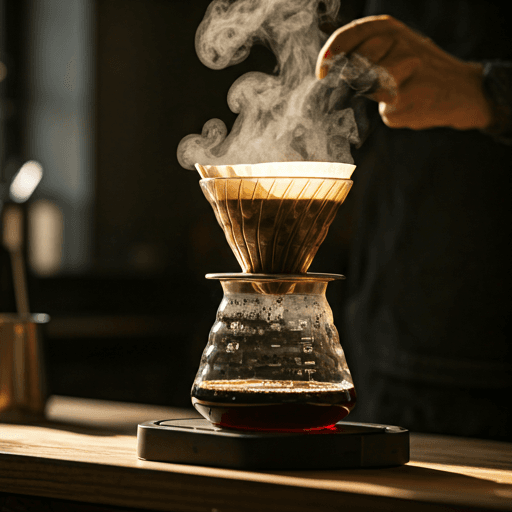
Because the region's coffees are built on balance, they are forgiving and versatile at the brewer. A medium roast flatters the caramel sweetness and keeps the citrus acidity intact without tipping into roast bitterness. Filter methods such as pour-over and drip highlight the clean, sweet clarity that washed processing delivers, while the medium-full body means an Antioquian also stands up well as espresso and shines in a milk drink, where its chocolate and nut notes turn into something like liquid dessert. If you are still deciding where this fits in the wider world of coffee, treat Antioquia as your reliable, food-friendly anchor rather than a novelty.
For most drinkers, that reliability is the point. Antioquia will not always be the most Instagrammable name on a coffee bar's origin board, but it is the one that quietly built the category, and a well-made cup from these paisa mountains remains one of the most satisfying pours in the Colombian repertoire.
Frequently asked questions
Where is Antioquia coffee grown?
Antioquia is a department in northwest Colombia whose capital is Medellin. Its most famous coffee zone is the Suroeste (Southwest Antioquia), around towns like Jerico, Jardin, Andes, and Fredonia, where farms sit mostly between about 1,300 and 1,900 metres above sea level, with the highest lots nearing 2,000 metres.
What does Antioquia coffee taste like?
Expect a balanced, approachable cup with caramel and panela sweetness, gentle citrus acidity, milk-chocolate and toasted-nut notes, and a medium to medium-full body. Higher-grown lots can lean brighter and juicier, while lower sites show heavier chocolate tones.
Which coffee varieties are common in Antioquia?
The dominant varieties are Castillo and Caturra, alongside the Variedad Colombia and pockets of heirloom Typica. Castillo and Colombia are rust-resistant varieties bred by Colombia's Cenicafe research center, while Caturra is prized for its bright acidity. Nearly all of it is washed Arabica.
Why is Antioquia important to Colombian coffee?
Antioquia is the historical heart of Colombian coffee. The National Federation of Coffee Growers was founded in Medellin in 1927, the first regional coffee committee formed here in 1928, and the department has more coffee-growing families than any other in Colombia, with a tradition stretching back roughly 180 years.
What is the connection between Antioquia and Juan Valdez?
Juan Valdez is a fictional coffee grower created as an advertising figure in the late 1950s and turned into a global cafe brand by the Federacion Nacional de Cafeteros in 2002. He is closely tied to the paisa image of the diligent Antioquian mountain farmer, though the character represents smallholders across all of Colombia, not one department.