
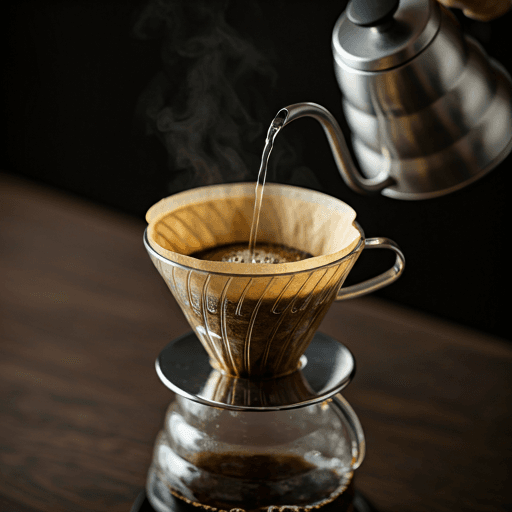
The short answer to americano vs long black: they are almost the same coffee — espresso and hot water — but the order in which you combine them is reversed. An americano is usually espresso with hot water poured on top, while a long black puts the hot water in the cup first and pulls the espresso over it, which keeps the crema and aroma intact. The long black is the Australian and New Zealand take, and it tends to be a touch smaller and a little more intense.
That one change — water first or espresso first — is the whole story. It adds no new ingredient and removes nothing, yet it shifts the crema, the aroma and the way that first sip lands. Below is the full difference between americano and long black, a side-by-side table, and a quick way to decide which one to order.
Americano vs long black at a glance
Both drinks share the same two components in similar proportions, so if you tasted them blind they would read as close cousins. The differences are about texture and presentation more than recipe, and they come almost entirely from the pour. This table lines up the long black vs americano contrast at a glance before we work through each point.
| Attribute | Americano | Long black |
|---|---|---|
| Base | Espresso + hot water | Espresso + hot water |
| Pour order | Espresso first, water added on top | Water first, espresso pulled over it |
| Crema | Often broken up by the added water | Preserved as a layer on top |
| Aroma | Softer and more settled | Fuller, sits on the surface |
| Typical size | Larger, roughly 8–12 oz | Smaller, often around 5 oz |
| Taste | Rounder, slightly more diluted | A touch more intense and aromatic |
| Origin | Associated with American-style long coffee | Australia and New Zealand |
| Caffeine | Depends on the shots used | Depends on the shots used (similar) |
What an americano is
An americano is a shot or two of espresso lengthened with hot water, giving you a black, coffee-forward cup with the character of espresso but the volume of a longer drink. For most baristas the defining move is that the espresso is pulled first, and then the hot water is added — either poured over the shot or the shot dropped into a cup of hot water. That sequence is exactly where the long black diverges. For ratios, sizing and iced versions, see our guide to what an americano is.
It is worth noting that an americano is not the same as a cup of drip or filter coffee, even though both are black. The americano is built from espresso and water, so it carries espresso's heavier body and its crema; drip coffee is brewed a different way and tends to taste cleaner and lighter. If that distinction interests you, we cover it in americano vs black coffee.
What a long black is
A long black flips the sequence: hot water goes into the cup first, and then the espresso is extracted directly over the water. Because nothing is poured through the crema, that golden layer and the aromatic oils settle on top of the drink instead of being broken up and stirred through. It is the standard black coffee across Australian and New Zealand cafés, and it is usually served a little shorter than an americano. For the origin story and how baristas build one, see the long black coffee guide.
The key difference: pour order
The heart of the long black vs americano question is pour order, and almost everything else follows from it. Pouring hot water onto a finished espresso shot — the americano method — agitates and dilutes the crema, so it thins out and often vanishes into the cup. Pulling the espresso on top of the water — the long black method — lays a fresh, intact crema over the surface. Same ingredients, opposite result on the top of the cup.
Because the long black is usually built shorter, the espresso-to-water ratio also tends to be a bit tighter, which nudges it toward a more concentrated cup. An americano is often stretched with more water into a larger mug, giving a gentler, more diluted result. That is the whole difference between americano and long black in one sentence: same parts, reversed order, slightly different size.
Crema and aroma
Crema is the fine, hazelnut-colored foam that sits on a fresh espresso shot, and it carries a lot of aroma. In a long black the crema survives because the shot is the last thing to hit the cup, so you get a fuller aromatic lift and a visible layer on top. In an americano the water is added last and breaks the crema up, so the aroma is softer and more settled and the surface looks flatter. Neither is wrong; they are simply two aesthetics of the same drink, and plenty of cafés serve whichever their region favors by default.
Taste and strength
In the cup, a long black tends to taste a little more intense and aromatic — the intact crema and the tighter ratio push the espresso flavor forward on the first few sips. An americano is usually rounder and a touch more diluted, which many people find smoother and easier to drink slowly. If you like the espresso to lead, lean toward a long black; if you like a mellower, longer black coffee, lean toward an americano.
This is a different lever from the one that separates an americano from a lungo, where the change is in how the shot itself is pulled rather than how water is added afterward. We unpack that in americano vs lungo.
Size
Size is one of the more reliable tells. A long black is often a smaller pour, frequently in the region of about 5 ounces, served in a tulip cup or small mug. An americano is commonly larger, anywhere from roughly 8 to 12 ounces depending on the café, because it is stretched with more water. Sizes vary a lot from shop to shop, so treat these as typical rather than fixed rules.
Is a long black stronger than an americano?
Is a long black stronger than an americano? On caffeine, not really — if both use the same number of shots, the caffeine is essentially the same, because that comes from the espresso rather than the water. What differs is perceived strength: the long black often tastes stronger and more concentrated thanks to its smaller volume, intact crema and tighter ratio, while the americano tastes more diluted. So the honest answer is that a long black is usually more intense in flavor but not meaningfully more caffeinated when the shots match. Exact numbers vary by bean, roast, grind and shot count, so treat this as a general guide rather than a precise figure. Responses to caffeine vary from person to person, and this is general information rather than medical advice.
Which should you choose: americano or long black?
Choosing between americano or long black comes down to what you want from a black espresso drink. Reach for a long black if you want a shorter, more aromatic cup with visible crema and a forward espresso flavor. Reach for an americano if you want a larger, gentler, more sippable black coffee to nurse over a longer stretch. Either way you are drinking espresso and hot water — the label mostly tells you the pour order and the size.
If you are ordering somewhere new, it helps to know the local default: ask for a long black in Melbourne or Auckland and you will get the water-first, shorter build; ask for an americano across much of the world and you will get the larger, water-on-top version. Both are excellent, and the fastest way to learn your own preference is to order one of each and taste them side by side.
Ultimately, americano vs long black is less a rivalry than a matter of style and habit. The long black is a barista's way of protecting the espresso's best qualities — its crema and aroma — inside a longer black coffee, while the americano is the friendlier, roomier cup you can sip all morning. Once you know the only real difference is the pour order, you can order confidently anywhere, and even ask for it built your way.