
In the aeropress vs drip coffee question, the short answer is this: an AeroPress is a hands-on, single-serving brewer that steeps grounds and then presses them through a paper disc for a strong, smooth, low-bitterness cup, while drip coffee is what an automatic machine (or a manual pour-over) makes by trickling hot water through a basket of grounds — cleaner, lighter and almost effortless by the pot. One method rewards your involvement one cup at a time; the other rewards convenience by the carafe. Neither is objectively "better"; they simply solve different mornings.
Below we break down what each brewer actually does, how the two cups tend to differ, and how to decide between an AeroPress or drip coffee maker for your own routine. As with everything in coffee, results vary with your beans, grind and water, so treat the descriptions here as tendencies rather than guarantees.
Aeropress vs drip coffee: the quick verdict
The core difference between AeroPress and drip coffee comes down to how the water meets the grounds. An AeroPress fully immerses the coffee, lets it steep, and then adds gentle hand pressure to push the brew through a filter. A drip machine simply lets gravity pull hot water down through a bed of grounds and out the bottom. Immersion plus pressure tends to pull a richer, fuller cup out of a small dose; gravity drip tends to make a lighter, cleaner, remarkably consistent cup by the potful. If you want one intense, satisfying mug and enjoy the ritual, lean AeroPress. If you want several cups with almost no effort, lean drip.
What an AeroPress is
An AeroPress is a compact manual brewer built from two nesting plastic (or glass) cylinders. You add finely-to-medium ground coffee and hot water to the chamber, stir, let it steep for anywhere from about 30 seconds to a couple of minutes, then push the plunger down. The coffee is forced through a thin paper disc (or a reusable metal filter) into your cup below. Because it combines full immersion with a burst of gentle hand pressure, an AeroPress extracts a concentrated, syrupy-yet-clean cup — the paper disc traps most of the fine sediment and oils, so you get body without grit.
The trade-off is scale: an AeroPress makes one serving at a time (a strong shot-like brew you can drink neat or dilute Americano-style). Its virtues are that it is forgiving, fast to clean, nearly unbreakable and genuinely portable. We will not walk through the recipe here — for the full method, timings and grind, see our dedicated AeroPress guide. The short version: it is the brewer people reach for when they want control and strength from a single cup.
What drip coffee is
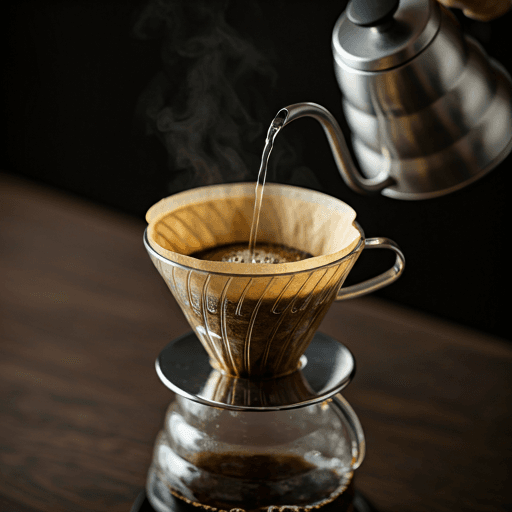
Drip coffee is the everyday brew produced when hot water is dripped, evenly and automatically, through a bed of medium-ground coffee held in a flat-bottom or cone paper filter. An automatic drip machine heats the water, showers it over the grounds and lets gravity do the rest, collecting the finished coffee in a carafe. The result is clean, balanced and light-to-medium bodied, and — crucially — hands-off: you load it, press a button and walk away while it makes several cups.
Manual pour-over is technically drip coffee too (gravity through a paper cone), but when most people say "drip" they mean the countertop machine that brews a pot on a timer. Its whole appeal is consistency and volume with minimal skill required. For the details on choosing and running one, see our drip coffee maker guide. Here it is enough to know that drip is the workhorse: reliable, repeatable and built for feeding more than one person.
The key difference: manual pressure vs automatic gravity
Strip everything else away and the drip coffee vs AeroPress contrast is one sentence: an AeroPress is manual immersion plus pressure for a single cup, and drip is automatic gravity extraction for a pot. That single distinction drives almost every other difference — strength, cleanliness, effort, volume and control all flow from whether you are pressing coffee through a disc by hand or letting a machine trickle water through a basket.
| Attribute | AeroPress | Drip coffee |
|---|---|---|
| Method | Immersion steep + gentle hand pressure through a paper disc | Gravity drip of hot water through a flat/cone paper filter |
| Effort | Hands-on; you grind, pour, stir and press each cup | Set-and-forget; load, press start, walk away |
| Volume | One serving at a time | Several cups per brew (a full pot) |
| Strength & body | Stronger, fuller, syrupy for its size; low bitterness | Lighter, cleaner, milder; light-to-medium body |
| Consistency | Depends on your technique cup to cup | Very consistent batch to batch |
| Control | High — dial grind, dose, time, temperature, pressure | Low — most machines run a fixed cycle |
| Cleanup | Pop the puck, rinse in seconds | Dump the filter; occasional descaling |
| Portability | Travels anywhere; needs only hot water | Stays on the counter; needs power |
| Best for | One strong, hands-on cup; travel; tinkering | Effortless volume for a household or office |
Taste and body: is AeroPress stronger than drip coffee?
Is AeroPress stronger than drip coffee? For the same beans, most drinkers find the answer is yes — an AeroPress cup usually tastes stronger, smoother and fuller for its size. The immersion steep and the final press extract more soluble solids and oils than a gentle gravity drip, so the cup lands heavier and more intense, while the paper disc still filters out most fine particles and much of the bitterness. Many people describe an AeroPress brew as clean and concentrated at once, with a rounded, low-acid character.
Drip coffee, by contrast, tends to taste cleaner, lighter and more even. Because the water passes through quickly and the machine repeats the same cycle every time, drip is prized for its consistency and its bright, tea-like clarity rather than punchy body. Note that "stronger" here means intensity and body, not necessarily caffeine. Caffeine depends mostly on dose and total brew size, so a big mug of drip can easily deliver more total caffeine than one small, concentrated AeroPress serving. Caffeine tolerance and sensitivity vary from person to person — responses vary, and this is general information, not medical advice; if caffeine affects your sleep or health, ask your own healthcare provider.
Effort and volume
This is where the two brewers part company most sharply. A drip machine is the definition of set-and-forget: measure grounds, add water, press a button, and it delivers a full carafe while you do something else. That makes it ideal when several people want coffee, or when you simply do not want to think in the morning.
An AeroPress is the opposite — engaged and hands-on. You grind, heat water, pour, stir, wait and press, all for one cup. Many people find that ritual part of the pleasure, but it does not scale: brewing for four guests with a single AeroPress means four separate brews. If your household drinks by the pot, drip wins on sheer throughput; if you brew mostly for yourself, the AeroPress's single-serve nature is a feature, not a flaw.
Control and consistency
An AeroPress hands you the dials. You can change the grind, the dose, the water temperature, the steep time and how hard and slow you press — small tweaks that noticeably change the cup. That makes it a favorite among people who like to chase flavor and experiment (the whole "inverted method" culture exists for exactly this reason). The flip side is that your result is only as steady as your technique: an off day can mean an off cup.
Most drip machines, on the other hand, run a fixed cycle with little to adjust beyond dose and grind. You give up fine control, but you gain reliability — the machine brews roughly the same cup every single morning. If you value predictable over tunable, that consistency is a genuine strength.
Portability
An AeroPress is famously travel-friendly. It is lightweight, made of tough plastic and needs nothing but ground coffee and hot water, so it slips into a suitcase, a desk drawer or a camping pack. A drip machine, by design, is a countertop appliance that needs a power outlet and a permanent home. If you want good coffee in a hotel room, at the office or on the trail, that difference alone can settle the choice.
Which should you choose?
Deciding between an AeroPress or drip coffee maker really comes down to how you drink and how much effort you enjoy. Choose an AeroPress if you usually brew one cup, want it strong, smooth and low in bitterness, like having control over the outcome, and value a brewer you can take anywhere. Choose drip if you want several cups with near-zero effort, prize consistency over tinkering, and are feeding a household or an office rather than just yourself.
Plenty of people keep both — a drip machine for the weekday pot and an AeroPress for a slow weekend cup or a trip. If you are still weighing options, it also helps to see how the AeroPress stacks up against other manual brewers: compare it with a cone in our AeroPress vs pour-over explainer, or with a steeper in AeroPress vs French press. Whichever you land on, the best brewer is simply the one that fits your morning — and the one you will actually reach for every day.