
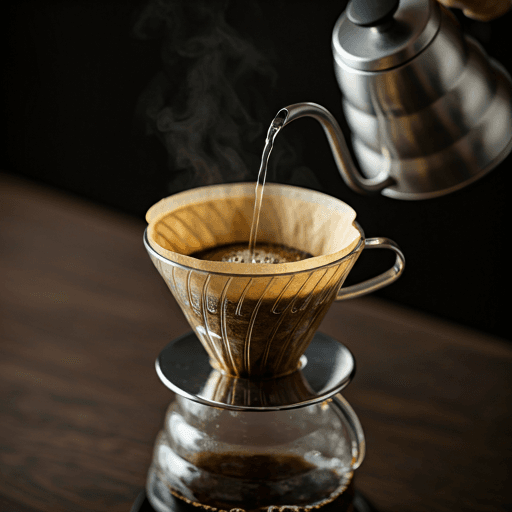
Spanish coffee is a warm, boozy after-dinner cocktail: rum and a coffee liqueur are set alight in a sugar-rimmed glass, then extinguished with hot brewed coffee and finished with whipped cream and a dusting of nutmeg. It is the flaming, tableside showpiece of the coffee-cocktail world, as much theater as drink. Despite the name, it is a bar classic rather than a traditional drink of Spain, and it should not be confused with the sweet, milky Spanish latte.
What is Spanish coffee?
A spanish coffee is a flamed coffee cocktail built directly in the serving glass. Its best-known home is Huber's, Portland, Oregon's oldest restaurant, which did not invent the drink so much as perfect its theater: in the mid-1970s owner Jim Louie adopted the cocktail from a nearby inn and built the flaming, sugar-rimmed tableside routine that made it locally famous, and servers still torch it at the table today. That caramelized sugar rim and the swirling blue flame are a big part of the appeal, which is why many people first meet the drink as a spectacle rather than a recipe.
The classic build is simple: overproof rum (often a splash of 151-proof to help it flame), a coffee liqueur such as Kahlua, a little triple sec or orange liqueur, a sugar-rimmed glass, hot brewed coffee, lightly whipped cream and grated nutmeg. The rum and orange liqueur are lit first, the flame melts and caramelizes the sugar around the rim, and the hot coffee is poured in to put the fire out. The result is rich, sweet, gently bitter and warming, closer in spirit to a spiked dessert than to a cup of coffee.
Spanish coffee cocktail: ingredients and their roles
Before you build one, it helps to know what each part of the spanish coffee cocktail is doing. Everything here is adjustable to taste, so treat the amounts as a starting point rather than a rule.
| Ingredient | Role in the drink |
|---|---|
| Overproof / 151-proof rum | The high-proof spirit that catches fire and caramelizes the sugar rim; adds warmth and backbone |
| Coffee liqueur (e.g. Kahlua) | Sweetness plus a second layer of coffee flavor and body |
| Triple sec / orange liqueur | Bright citrus lift that balances the sweetness |
| Sugar rim | Melts under the flame into a caramelized, crackly edge |
| Hot brewed coffee | Extinguishes the flame and forms the base of the drink |
| Lightly whipped cream | A cool, soft float that mellows the heat and alcohol |
| Grated nutmeg | Aromatic garnish over the cream |
Flaming Spanish coffee recipe: how to make it
Here is a hedged base ratio for one flaming spanish coffee, scaled to a heatproof 8 to 10 ounce glass. Adjust the spirits down if you prefer a lighter drink, and remember these amounts are a guide to taste rather than a fixed formula.
- About 3/4 oz (20 ml) overproof or 151-proof rum
- About 1/4 oz (7 ml) triple sec or orange liqueur
- About 1 to 1 1/2 oz (30 to 45 ml) coffee liqueur
- Hot brewed coffee to fill (roughly 4 to 5 oz / 120 to 150 ml)
- Lightly whipped cream and freshly grated nutmeg
- A wedge of lime or lemon and caster sugar for the rim
- Rim the glass. Rub the rim with a citrus wedge, then roll it in sugar so the edge is evenly coated. Use a sturdy, heatproof glass with a handle if you have one.
- Warm and pour the spirits. Add the rum and triple sec to the empty glass. A warm glass lights more easily, so some bartenders pre-warm it with hot water first and dry it.
- Ignite carefully. With a long match or a long lighter, light the spirits at arm's length. Gently rotate the glass so the low flame travels around the rim and melts the sugar into a caramel crust. Keep this step short.
- Add the coffee liqueur and coffee. Pour in the coffee liqueur, then slowly add the hot coffee, which extinguishes the flame. Make sure the fire is fully out before you touch or move the glass.
- Float the cream and finish. Spoon lightly whipped cream over the top so it sits on the surface, then grate nutmeg over the cream. Serve at once.
Safety first with any flaming drink
Flaming a cocktail is genuinely risky and is best left to careful, sober adults. A few non-negotiable rules: work on a clear, heatproof surface away from paper, curtains, spray and long hair; tie hair back and roll up loose sleeves; keep the pour bottle capped and well away from the flame; and never pour spirit from a bottle onto a live flame, which can flash back up the stream and ignite the bottle. Alcohol flames can be nearly invisible in bright light, so confirm the fire is out before lifting the glass, and keep the flaming step brief so the glass does not overheat and crack. Keep a lid or damp cloth within reach to smother a flame if needed. If you are at all unsure, skip the fire entirely and make the non-flaming version below.
Non-flaming and non-alcoholic versions
You do not need fire to enjoy this drink. For a non-flaming spanish coffee, caramelize the sugar rim under a broiler or with a kitchen torch (or simply skip the caramelization), then build the drink by stirring the rum, triple sec and coffee liqueur into hot coffee and topping with cream and nutmeg. The flavor is nearly identical; you just lose the tableside show.
For a zero-proof version, swap the spirits for non-alcoholic coffee liqueur or a spoonful of coffee syrup, a splash of orange juice or non-alcoholic orange bitters, and a little brown sugar for body, then finish with cream and nutmeg over hot coffee. It becomes a grown-up, dessert-style hot coffee that anyone can drink.
The other "Spanish coffee": everyday coffee in Spain
Confusingly, "Spanish coffee" also gets used for the everyday coffee culture of Spain, which has nothing to do with flames. In a Spanish cafe you are far more likely to order a cafe solo (a short black espresso), a cortado (espresso cut with a little warm milk), or a cafe con leche (a larger milk coffee, often a breakfast staple). The boozy member of that family is the carajillo, an espresso spiked with brandy, rum or a coffee liqueur, usually served small and hot after a meal. And the sweet, milky cafe drink many menus label "Spanish latte" is a separate thing again, closer to a condensed-milk latte than to either the cocktail or the carajillo.
How it fits the coffee-cocktail family
Spanish coffee sits alongside the great hot, spiked coffees. Its most obvious cousin is Irish coffee, which trades the flame and coffee liqueur for whiskey, sugar and a float of cream. If you enjoy this style, the wider world of coffee cocktails ranges from cold, shaken espresso martinis to warming after-dinner builds like this one. Where Irish coffee is understated, the spanish coffee is deliberately dramatic, which is exactly why it endures.
A note on enjoying it responsibly
This is an adults-only drink for those of legal drinking age (21+ in many places), and the overproof rum makes it stronger than it tastes under all that cream and coffee. Pace yourself, keep water on hand, never drink and drive, and treat the flame with the same respect you would any open fire in the kitchen. Enjoyed slowly, one is plenty.
Whether you torch it tableside or simply stir it together, a spanish coffee turns hot coffee, a caramel rim and a couple of spirits into a memorable finish to a meal. Learn the classic spanish coffee recipe once, then adjust the sweetness and strength to your own taste, keep the safety rules front of mind, and you have a dessert-in-a-glass worth bringing out for guests.