
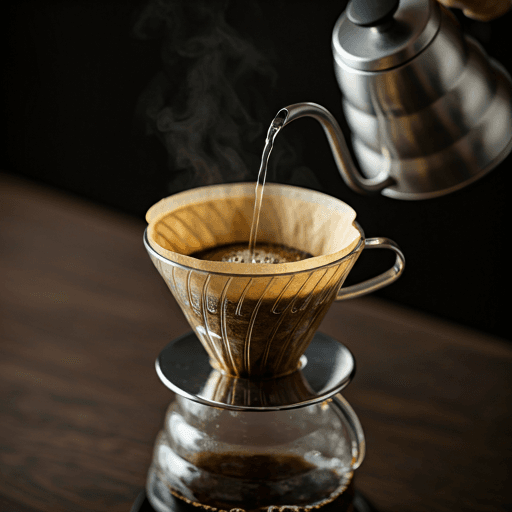
What is pre-infusion? In espresso, pre-infusion is a brief, gentle wetting of the coffee puck with low-pressure water at the very start of a shot, before the machine ramps up to full brewing pressure. That short soak lets the grounds absorb water and swell evenly, so the high-pressure water that follows cannot punch a fast channel straight through a dry pocket. The result tends to be a smoother, more even extraction, with less of the sour-meets-bitter harshness you get when a shot rushes out unevenly.
If you have ever made a pour-over, you already know the instinct: pre-infusion is essentially the espresso version of the pour-over bloom. Below is what it does, how machines create it, how long it usually lasts, and whether you actually need it.
What is pre-infusion in espresso?
A normal espresso shot pushes water through a compacted bed of finely ground coffee, the "puck," at around nine bars of pressure. Pre-infusion adds a short phase before that main event: the machine delivers water at low pressure (or low flow) for a few seconds, just enough to dampen and saturate the whole puck without forcing extraction yet.
Think of it as two stages instead of one. First comes a soft wetting phase, where the dry grounds drink up water and begin to swell. Then, once the bed is evenly saturated, the machine ramps to full pressure and the real extraction begins. The full shot is a bigger topic in its own right; here we are only zooming in on that opening soak. In short, pre-infusion espresso simply splits the pour into "wet gently, then extract firmly."
Why pre-infusion helps, and what pre-infusion does
Dry coffee is not uniform. Even a carefully tamped puck has denser and looser areas, and when full pressure hits a dry bed all at once, water takes the path of least resistance. It races through the weakest spots and barely touches the rest, a problem baristas call channeling. The over-extracted channels turn bitter while the under-extracted zones stay sour, and you taste both at the same time.
So what does pre-infusion do about that? By wetting and swelling the grounds gently first, it closes up loose gaps and creates a more uniform, saturated bed before the pressure arrives. Water then has fewer easy shortcuts, so it tends to move more evenly through the whole puck. The practical payoff people describe is a slower, steadier start to the pour and a more balanced cup. It is not a cure-all: if your grind or tamp is off, channels can still form. But it removes one of the most common triggers. For a deeper look at that failure mode, see channeling in espresso, and for the wider theory of how flavor develops, read coffee extraction explained.
The bloom parallel: espresso's version of wetting the grounds
Filter-coffee drinkers pour a little water over fresh grounds, wait, and watch the bed puff up and release gas before continuing. That is the bloom, and it does two jobs: it lets carbon dioxide escape from freshly roasted coffee, and it pre-wets the bed so the main pour extracts evenly.
Pre-infusion is that same idea applied under pressure. Fresh espresso beans hold a lot of CO2, and that gas can disrupt the flow and push water around unpredictably. A gentle soak gives some of it a chance to work loose and lets the puck settle into an even, wetted state. The full story of degassing and wetting lives in our coffee bloom guide. The takeaway here is that pre-infusion and the bloom are two expressions of one principle: saturate evenly before you extract hard.
How machines create pre-infusion
There is no single "correct" way to pre-infuse; it depends on your equipment. Common approaches include:
- A pre-infusion setting. Many modern espresso machines let you program a low-pressure or low-flow phase and its duration, so it happens automatically at the start of every shot.
- A mechanical valve. Some machines use a line-pressure or spring-loaded pre-infusion built into the group, wetting the puck at a gentler pressure before the pump reaches full force.
- A manual paddle or lever. On lever and paddle machines you control the ramp yourself, easing water in slowly, holding, then opening up to full pressure. This hands-on shaping of the pressure curve is often called flow profiling.
- A simple pause. Even without special hardware, some setups create a brief low-pressure moment as the pump builds, a rudimentary pre-infusion by default.
None of these is inherently "best," and the goal is identical across all of them: deliver a soft, even wetting before the main extraction. If you are tuning a specific machine, our guide on how to dial in espresso covers where pre-infusion fits alongside grind, dose and shot time.
How long should pre-infusion last?
Usually just a few seconds, often somewhere in the range of two to eight seconds, but treat that as a starting point rather than a rule. The right length depends on your machine, the coffee, the grind and how fresh the beans are, so it is genuinely a "taste and adjust" variable rather than a fixed number.
Lighter roasts, which are denser and harder to extract, often benefit from a longer, more patient soak to wet the puck thoroughly. Darker, more soluble roasts may need little or none. The honest approach is to change one thing at a time: add a couple of seconds of pre-infusion, pull a shot, taste it, and see whether the pour starts more evenly and the cup reads smoother. Because numbers vary so much from setup to setup, let the cup be the judge instead of chasing a "perfect" duration.
Do you always need pre-infusion?
No. Plenty of excellent espresso is pulled with little or no deliberate pre-infusion, and it is optional for many everyday shots. It tends to earn its keep most with tricky, hard-to-wet pucks: light roasts, higher doses, or finicky grinders where channeling keeps showing up.
It is also worth being clear about what pre-infusion is not. It is not a fix for a bad grind, an uneven tamp or a carelessly filled basket. It is one tool alongside good puck prep, which means level distribution, a consistent tamp and the right grind size. Get those fundamentals right first, and pre-infusion becomes a useful refinement rather than a rescue attempt. Approached that way, dialing in pre infusion coffee is a low-risk experiment: worst case, you learn your setup does not need it.
With and without pre-infusion: what you notice
| What you notice | Without pre-infusion | With pre-infusion |
|---|---|---|
| Start of the shot | Full pressure hits a dry puck at once | A few seconds of gentle wetting first |
| Channeling risk | Higher; water can race through weak spots | Lower; a saturated puck resists fast channels |
| First drops and flow | Can spurt or gush unevenly | Tends to start slow and steady |
| Extraction evenness | More prone to a sour-and-bitter mix | Tends to be smoother and more balanced |
| Light roasts | Harder to wet and extract evenly | Often easier to coax out sweetness |
| Dialing in | One less variable to manage | One more setting to adjust |
Read these as tendencies, not guarantees: results depend on your beans, grinder and machine.
The bottom line
Espresso pre-infusion explained simply comes down to this: wet the puck softly, let it swell evenly, then extract. When it works, it quietly smooths out a shot and makes stubborn light roasts more forgiving; when your fundamentals are already dialed in, you may barely notice it at all. Either way, it is a low-stakes lever worth experimenting with. Start with a couple of seconds, taste the difference, and let your own palate decide how much pre-infusion your coffee actually wants.