
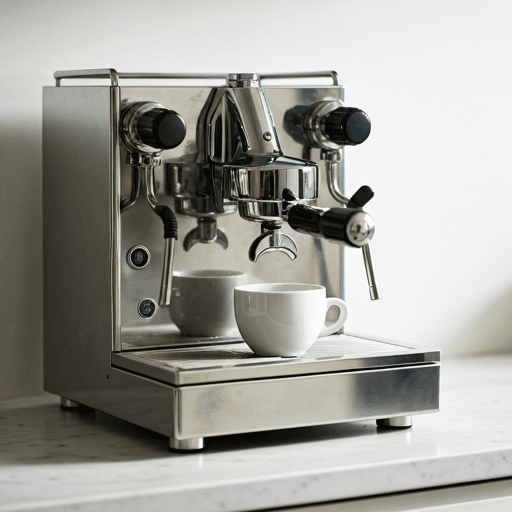
A Turkish coffee maker is any vessel or appliance built to brew Turkish coffee — the finely ground, unfiltered, foam-topped cup that simmers slowly instead of dripping or brewing under pressure. That single label covers two very different tools: the traditional stovetop cezve (the little long-handled pot) and modern electric and automatic Turkish coffee machines that heat, foam, and even auto-brew at the push of a button. This guide walks through both routes, how the automatic machines pull off that slow simmer, and what to weigh before you settle on one.
What a Turkish Coffee Maker Actually Is
The defining feature of a Turkish coffee maker is not the shape of the vessel but the method it is designed to serve. Turkish coffee is brewed from coffee ground to a near-powder, combined with water (and usually sugar) from the very start, then heated gently until a dark foam rises — without ever hitting a full rolling boil. Nothing is filtered out; the grounds settle to the bottom of the cup. Any maker worth the name is engineered around that ritual of slow, watchful heating and thick kopuk (foam). If you want the full background on the drink itself, see our explainer on what Turkish coffee is.
Because the technique is what matters, the word "maker" spans a spectrum. At one end sits a hand-held copper pot you nurse over a flame; at the other, a countertop appliance that measures, heats, and foams on a timer. Both aim for the same cup. They simply differ in how much of the process you control and how much the machine does for you. That is the real decision in front of you — not a brand or a price, but how hands-on you want to be.
The Two Routes: Cezve vs Electric Machine
Choosing a Turkish coffee maker really comes down to picking one of two paths. Neither is objectively better; they suit different temperaments and kitchens.
Route one: the traditional cezve
The cezve (also called ibrik, briki, or dzezva around the region) is the classic Turkish coffee maker pot: a small, wide-based, narrow-necked vessel with a long handle and a pour lip shaped to release foam cleanly. You heat it on a stovetop, a gas ring, or even hot sand, standing over it the whole time. This route rewards attention — you learn to read the foam and pull the pot off the heat at exactly the right second — and it gives you total command over strength, sweetness, and foam. It also travels well and needs no electricity. We keep the deep dive on pot materials, sizes, and care on its own page, so for the copper-versus-brass questions and how to hand-wash a tin lining, head to our guide to the Turkish coffee pot (cezve). For the step-by-step brew, see how to make Turkish coffee.
Route two: electric and automatic makers
The second route hands the watching over to a machine. An electric Turkish coffee maker can be as simple as a plug-in, cezve-shaped kettle that heats your coffee and water without a stovetop, or as involved as a fully automatic Turkish coffee machine that senses the rising foam, lifts the heat away before it boils over, and pours a finished cup. These are the appliances people reach for when they love the drink but not the vigil — or when they are brewing several cups a day and want the same result every time. The trade is straightforward: you give up a little romance and some counter space in exchange for consistency and freedom to walk away.
How Automatic Turkish Coffee Machines Work
An automatic machine is essentially trying to reproduce, in electronics, what a skilled hand does at the stove. Understanding the mechanics helps you judge one on sight.
- Slow, controlled heating. Rather than blasting the water, these machines ramp the temperature gradually so the coffee has time to develop that signature foam. Cheap boilers rush it; good Turkish coffee makers deliberately take their time.
- Foam and boil-over logic. The whole trick of Turkish coffee is stopping the heat the instant the foam swells but before it spills. Automatic machines use sensors or a metered heating cycle to detect that moment, then cut or reduce power — often letting the foam rise, settle, and rise again for a thicker head.
- Auto-dispensing and multi-cup brewing. Some models brew directly in a built-in reservoir and pour into your cup; some heat a detachable pot you then serve from. A number brew two cups (or more) at once, which is the single biggest convenience over a small hand pot.
Names you will see cited as examples of this category include Beko/Arcelik's Telve, Arzum's Okka line, and Fagor, among others; features, capacities, and behaviour vary by model and by market, so treat any spec as something to confirm on the unit in front of you. The point is the category, not a ranking — these all exist to automate the same slow-simmer, foam-first ritual.
What to Look For in a Turkish Coffee Maker
Whether you lean traditional or automatic, a handful of qualities separate a maker you will love from one that gathers dust. Weigh these in words, not price tags.
- Capacity in cups. Turkish coffee is served in small cups, and both pots and machines are sized by how many they yield — typically one to about six. A vessel brimming with one cup foams better than a large one run nearly empty, so size to how many people you usually serve. If it is often just you, a small unit brews a better single cup; if you host, look for a two-cup-or-more machine.
- Automatic foam and boil-over control. For electric and automatic models, this is the whole reason to buy one. A maker that reliably catches the foam and never floods your counter earns its keep; one that boils over is just a fancy kettle.
- Easy cleaning. Fine grounds get everywhere. Favour a removable, wide-mouthed pot or reservoir you can rinse quickly, and check whether parts are dishwasher-safe or must be hand-washed. A traditional tin-lined copper cezve is always hand-wash only.
- Keep-warm and serving. Some automatic machines hold the finished coffee warm for a short window or brew straight into a detachable pot for the table. Handy if you serve in rounds, though Turkish coffee is always best fresh.
- Material and build. Traditional pots run to copper (tin-lined), brass, stainless steel, or enamelled steel. Electric bodies are usually stainless or heat-resistant plastic with a metal heating base — look for a stable base and a genuinely heatproof handle.
- Controls and footprint. A cezve stores in a drawer and needs nothing but a heat source. An automatic machine wants counter space and an outlet, so weigh how much room the convenience is worth to you.
Living With an Electric Turkish Coffee Maker
If you go the electric route, a few day-to-day realities are worth knowing before you commit. None are dealbreakers, but they shape how happy you will be with the machine over months of use.
- Cleaning is a daily habit. Because nothing is filtered, spent grounds coat the bottom of the brewing vessel every single time. The best electric makers use a removable, non-stick or stainless reservoir you can tip out and rinse in seconds; the fiddliest bury the heating chamber where grounds are awkward to reach.
- Descaling matters. Any appliance that heats water builds up mineral scale over time, especially in hard-water areas. Check whether the maker can be descaled easily and how often the manufacturer suggests doing it, since scale dulls both heat delivery and foam.
- Foam consistency takes trust. A well-designed machine produces a reliably thick head, but the very best foam still comes from a practised cook at the stove. If a picture-perfect crown of kopuk every time is your priority, temper your expectations or plan to keep a cezve alongside for special occasions.
- Capacity is fixed. Unlike a drawer holding several different-sized pots, an electric maker brews within a set range. Buy for your typical serving size, because a two-cup machine cannot stretch to a dinner party and a six-cup unit foams poorly when you brew just one.
For the traditional pot, the equivalent upkeep — hand-washing, watching the tin lining, and never scorching it dry — is a small ritual of its own, and one many owners come to enjoy rather than resent.
Turkish Coffee Maker Types Compared
Here is the quick decision view — each type against what it suits and its relative cost. Cost here is qualitative only; think of it as low, moderate, or higher, not a figure.
| Type | What it suits | Relative cost |
|---|---|---|
| Traditional cezve (stovetop) | Ritual lovers who want full control; the smallest footprint; travel and camp brewing; anyone learning the craft | Lowest |
| Electric cezve / plug-in maker | A hands-off version of the pot for dorms, offices, or kitchens without a good stovetop; still fairly simple | Low to moderate |
| Automatic Turkish coffee machine | Convenience seekers who want consistent foam with no watching, and households brewing two-plus cups at once | Highest |
Which One Suits You?
If the appeal of Turkish coffee is partly the ceremony — standing at the stove, coaxing the foam, pouring by hand — the traditional cezve is your maker, and the learning curve is the point. It is also the most affordable, the most portable, and the one most tied to how the drink has been made for centuries.
If you adore the cup but your mornings do not allow a vigil, an electric or automatic Turkish coffee maker earns its place. You trade a little romance and some counter space for a foam-topped cup you can walk away from and repeat identically day after day. Many enthusiasts, tellingly, own both: a machine for busy weekdays and a copper cezve for slow weekends and guests.
Whichever way you lean, the tradition does not end at the pot. The closely related Greek coffee method uses the very same style of long-handled pot and slow-foam technique, so a maker you buy for one will happily serve the other. Pick the route that fits your temperament, and the small, unfiltered, foam-crowned cup at the end will taste like the ritual it comes from — whether you earned it at the stove or at the touch of a button.