
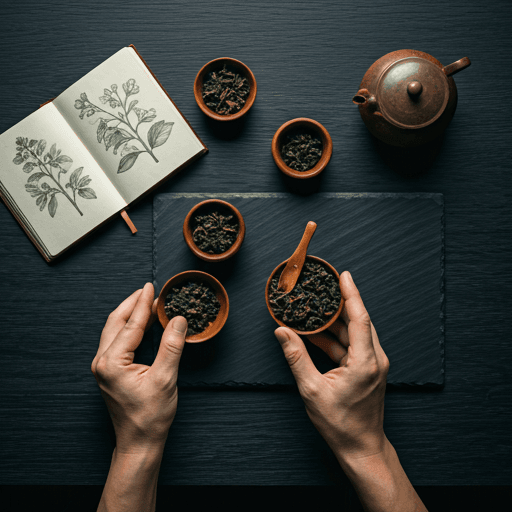
Mullein tea is a caffeine-free herbal infusion made from the dried leaves or yellow flowers of the mullein plant (Verbascum thapsus), and it has been sipped for centuries as a gentle soother for the throat and chest. Its appeal is straightforward: it is mild, easy to brew, and traditionally reached for during dry coughs, hoarseness, and seasonal congestion. The honest catch is that most of what people claim about it rests on long-standing folk use and early lab studies rather than large human trials, so it is best treated as a comforting cup, not a medicine.
This guide explains what mullein is, the benefits people traditionally associate with it, what the evidence actually says, and exactly how to make a clean, smooth cup. One step matters more than any other and most beginners skip it: straining out the plant's tiny hairs. We will get to that.
What is mullein tea?
Mullein is a tall, woolly biennial in the figwort family (Scrophulariaceae). Native to Europe, northern Africa, and Asia, it has since spread across the Americas, Australia, and New Zealand, often growing wild along roadsides and in disturbed soil. In its first year it forms a low rosette of soft, fuzzy, silver-green leaves; in its second year it sends up a dramatic flower stalk, sometimes well over a metre tall, studded with small yellow flowers.
Both the leaves and the flowers are used to make tea. Mullein leaf tea is the most common and has an earthy, grassy, slightly bitter character. Flower tea is milder and a touch sweeter. Either way the drink is naturally caffeine-free, which makes it a calm option for the evening, much like chamomile or lemon balm. If you are new to herbal infusions in general, our guide to types of herbal tea is a useful map of the wider category.
Mullein tea benefits: what tradition and evidence say
Across European and North American folk medicine, mullein has been used mainly as a respiratory helper. Below are the benefits people most often associate with it, framed honestly. Where the research is thin, we say so.
Traditionally used as a respiratory and throat soother
The headline use of mullein leaf tea is for the airways. It has traditionally been taken for dry coughs, sore throats, hoarseness, bronchial irritation, and the tail end of a cold. Herbalists class mullein as an expectorant, meaning it is thought to help loosen and thin mucus so it is easier to clear, and as a demulcent, meaning the saponins and mucilage in the plant may form a soothing coating that calms a scratchy throat. This is the origin of the popular phrase "mullein tea for lungs."
What does the science say? Mullein contains flavonoids, saponins, and other plant compounds, and laboratory (test-tube) and animal studies have shown that extracts can act against some bacteria and viruses linked to respiratory infections, including influenza in one study. That is genuinely interesting, but it is a long way from proof. Robust human clinical trials are lacking, so the respiratory reputation rests largely on traditional use plus early lab work. A warm, soothing cup may bring real comfort; it is not a treatment for asthma, COPD, an infection, or any diagnosed condition.
A calm, caffeine-free cup
Because it contains no caffeine, mullein tea will not keep you awake, which is part of why people enjoy it in the evening or when feeling run down. Some drinkers also report it feels mildly relaxing, and drowsiness is occasionally noted, so it is sensible to see how a cup affects you before driving or operating machinery.
Antioxidant and anti-inflammatory compounds
Like many leafy herbs, mullein supplies antioxidant plant compounds, and its traditional anti-inflammatory reputation lines up with the flavonoids and saponins it contains. These are reasons it earned a place in the herbal cabinet, but they describe potential, not a guaranteed health outcome. Treat any benefit here as a measured "may," not a promise.
What mullein tea will not do
- It is not a cure for any respiratory disease or infection.
- It will not "cleanse" or "detox" your lungs; there is no good evidence for that popular claim.
- It is not a substitute for prescribed medication or medical care.
How to make mullein tea
Brewing mullein is simple. The one non-negotiable step is straining, because the leaves and flowers are covered in tiny hairs (trichomes) that can irritate the throat if they end up in your cup. A standard mesh tea strainer is usually too coarse to catch them, so plan to filter through something finer.
What you will need
- 1 to 2 teaspoons of dried mullein leaves or flowers (or one tea bag)
- About 1 cup (240 ml) of just-boiled water
- A coffee filter, a double layer of cheesecloth, or a fine muslin cloth for straining
- Optional: honey, lemon, or a slice of fresh ginger to round out the flavour
Step by step
- Bring fresh water to a boil, then let it settle for a few seconds off the boil.
- Place the dried mullein in a mug, teapot, or infuser and pour the hot water over it.
- Cover and steep for 10 to 15 minutes. A longer steep draws out more of the soothing compounds; covering keeps the heat and aroma in.
- Strain thoroughly. This is the important part: pour the tea through a coffee filter, fine muslin, or a double layer of cheesecloth to catch the fine hairs. Do not rely on a regular mesh strainer alone.
- Taste and adjust. Mullein is earthy and mildly bitter, so a little honey, a squeeze of lemon, or a slice of ginger can make it more pleasant.
You can drink it warm once or twice a day. If you want to combine it with other soothing herbs, peppermint, ginger, or chamomile pair well for caffeine-free evening blends.
Leaf tea vs flower tea
| Aspect | Mullein leaf tea | Mullein flower tea |
|---|---|---|
| Flavour | Earthy, grassy, slightly bitter | Milder, faintly sweet, floral |
| Texture | Can feel slightly drying | Smoother, softer |
| Most common use | The everyday "mullein tea for lungs" cup | Often blended or used when a gentler cup is wanted |
| Straining | Essential (leaves are very hairy) | Still recommended |
Both come from the same plant, so they share the traditional respiratory associations. Choose by taste, or blend the two.
Safety, side effects, and who should be cautious
Mullein has a relatively clean reputation, with few documented side effects, but "few reports" is not the same as "studied and confirmed safe for everyone." Keep these points in mind:
- Strain it well. Unstrained tea can irritate the throat because of the plant's fine hairs, which is the opposite of what you want from a soothing cup.
- Possible drowsiness. Some people find it mildly sedating; notice how it affects you before driving.
- Pregnancy and breastfeeding. There is not enough research to confirm it is safe during pregnancy or breastfeeding, so avoid it unless a doctor or midwife says otherwise.
- Medication and existing conditions. If you take any medication or have a chronic condition, check with a healthcare professional first, as herbal interactions are not well mapped.
- Source it carefully. Use mullein from a reputable supplier. Wild mullein can be confused with other plants, and foraged material may carry contaminants.
None of this is medical advice. If a cough, sore throat, or breathing problem is severe, lasts more than a week or two, or comes with high fever or shortness of breath, see a doctor rather than relying on tea.
The bottom line
Mullein tea is a gentle, caffeine-free herbal infusion with a long history as a throat and chest soother, and modern lab work hints at why people reached for it, even though strong human evidence is still missing. Enjoy it for what it reliably is: a warm, comforting cup. Brew it for 10 to 15 minutes, strain it through a coffee filter or cloth to remove the hairs, and keep the cautions above in mind. If you would like to keep exploring calming caffeine-free options, our guide to the types of tea is a good next stop.