
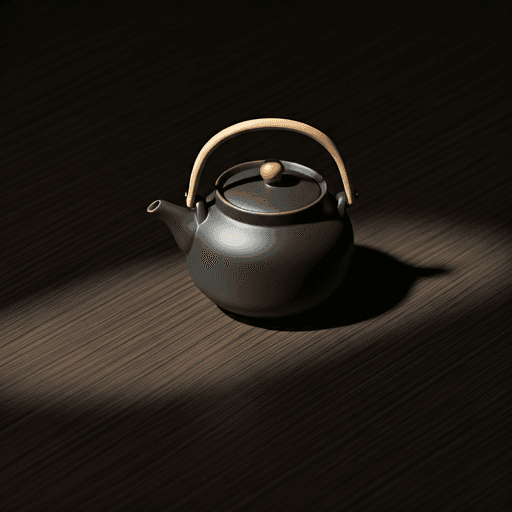
Liu An basket tea is a rare, post-fermented dark tea (heicha) from Qimen County in China's Anhui province, pressed into small bamboo baskets lined with fragrant leaves and cellared for years — often decades — until it turns smooth, sweet, and quietly medicinal. Despite an almost identical spelling, it is a completely different tea from Lu An Gua Pian, the celebrated green "melon seed" tea.
What is Liu An basket tea?
Liu An basket tea (六安籃茶, sometimes written An Cha or Luk On) is a dark, microbially fermented tea from the hills of Qimen County in Anhui province. Unlike a green tea that is drunk fresh, it is built to age: mature spring leaves are processed, then steamed and packed into hand-woven bamboo baskets lined with aromatic leaves, and set aside to mature slowly over many years. Traditionally it is not even released until three years after it is made, and the most prized examples are cellared for decades before anyone opens them.
It belongs to the broad family of Chinese dark teas that also includes pu-erh and the heicha of Guangxi and Hunan. Like those teas, Liu An basket tea keeps changing in storage — its roasty, sometimes rough young character mellowing into a deep, translucent red-brown liquor with a cooling, sweet finish. Because it is post-fermented and matures with age, it sits far closer to aged pu-erh than to any green tea, despite the shared spelling that causes so much confusion.
Liu An basket tea vs. Lu An Gua Pian: clearing up the confusion
This is the single most important thing to get right. "Liu An" and "Lu An" are two romanizations of the same place-name syllables (六安), which is why the market is full of muddled listings. But they name two entirely different teas made in different parts of Anhui:
- Liu An basket tea is a dark, post-fermented tea from Qimen County. It is pressed into bamboo baskets and aged.
- Lu An Gua Pian ("melon seed" tea) is a green tea from the Lu'an area of the Dabie Mountains. It is made from a single mature leaf with the bud and stem removed, sold loose, and drunk fresh.
If you want to taste the green tea for contrast, read our separate guide to Lu An Gua Pian melon-seed green tea — but do not merge the two in your head. The table below lays out how far apart they really are.
| Feature | Liu An basket tea | Lu An Gua Pian |
|---|---|---|
| Tea type | Dark / post-fermented (heicha) | Green tea |
| Chinese name | 六安籃茶 (basket tea) | 六安瓜片 (melon seed) |
| Origin within Anhui | Qimen County (Luxi, Rongkou) | Lu'an / Dabie Mountains |
| Leaf material | Mature leaves, steamed and pressed | Single mature leaf, no bud or stem |
| Packaging | Small bamboo baskets, leaf-lined | Loose leaf |
| Aging | Cellared for years to decades | Drunk fresh |
| Liquor | Deep translucent red-brown | Pale yellow-green |
| Flavor | Earthy, medicinal, betel, sweet | Toasty, grassy, mildly smoky |
Origins in Qimen, Anhui
Liu An basket tea comes from Qimen County in southern Anhui — the same mountainous district famous for Keemun black tea — with the classic villages of Luxi and Rongkou often named as its heartland. Its history is old and, like much tea history, best hedged: written mention is often traced to the late Ming dynasty, when the scholar Wen Long is said to have recorded it in a treatise on tea. By the Qing dynasty it had become a fixture among the merchants and teahouses of the southern coast, and its reputed medicinal virtues earned it nicknames along the lines of "holy tea" or "sacred tea."
For all that pedigree, the tea nearly vanished. Commercial production is generally said to have halted around 1937 amid the upheavals of war, and for decades the baskets survived mainly as treasured old stock in the warehouses and teahouses of the south. A revival began in the 1980s and 1990s, when collectors, factories, and descendants of the old trading houses set out to reconstruct the method and put fresh baskets back into production.
How Liu An basket tea is made
The early steps look deceptively like green-tea processing, which is part of why the two Liu/Lu An teas are so easily confused. What sets the basket tea apart is everything that happens afterward — the curing, the second firing, and the years of maturation.
From fresh leaf to rough tea
Leaves are picked in a narrow spring window, withered to shed moisture, then "killed" in hot woks to arrest oxidation. They are rolled to bruise the cell walls and coax out the oils, and baked over wood or charcoal until dry. This yields a rough tea, or mao cha, which is then set aside to cure for several months.
Autumn refinement and the "white dew"
In autumn the cured tea is re-baked, sorted, and re-blended; yellow leaves and coarse stems are sifted out. In one distinctive traditional step, timed around the Bai Lu or "White Dew" solar term in mid-September, the tea is spread out overnight to absorb the dew — moisture that condenses in the cool night air — softening the leaf before the final stages.
Steaming, basketing, and firing
Finally the tea is steamed until pliable and packed firmly into the woven bamboo baskets, which are then baked — a slow final firing that can run up to two days — to set the tea and drive off surface moisture. From there the baskets go into storage, and the long, slow post-fermentation begins. That aging is what makes it a member of the post-fermented tea family rather than a green tea that happens to be pressed.
The bamboo basket and its leaf lining
The basket is not just packaging — it is part of the tea. Each portion is packed into a small, tightly woven bamboo-fiber basket lined with fragrant leaves, most often ruoye (a broad, aromatic bamboo/reed leaf, Indocalamus). When the pliable tea is pressed in and fired, the heat and residual steam gently cook the lining, and the bamboo and leaf aromas migrate into the tea. Many drinkers describe a distinct green-bamboo note in the cup as a signature of a well-made basket. Small baskets are traditionally woven together into larger flats or bundles for storage and shipping, which is how old stock was moved and cellared in bulk.
A tea built for the sea trade: Guangdong, Hong Kong and Southeast Asia
Liu An basket tea was, for much of its history, an export tea. From Anhui it travelled south to the Guangdong coast and on to Hong Kong, and from there into the overseas Chinese communities of Southeast Asia. It became especially popular through the early twentieth century, valued both as an everyday drink and as a folk remedy. A recurring story has fishermen and sailors around Hong Kong and Guangdong drinking it to settle the stomach and counter the bloating brought on by hard water or a life at sea — one of several traditions that cemented its "holy tea" reputation. Because the tea only improved with keeping, warehouses full of baskets became, in effect, a slow-maturing asset, cellared for years the way collectors cellar Liu Bao dark tea and pu-erh today.
Historic houses: Sun Yi Shun and the revival
No name is more closely tied to Liu An basket tea than Sun Yi Shun (孫義順), a trading house often dated to the early eighteenth century — around 1725 — whose old baskets are among the most sought-after aged teas in existence. Vintage Sun Yi Shun baskets that survived the mid-century collapse of production are legendary among collectors, and the house's identifying paper tickets tucked inside baskets are studied the way wine labels are. In the revival of the 1980s and early 1990s, the master Wang Zhenxiang — working with descendants of the old Sun Yi Shun house — is credited with painstakingly reconstructing the method and restoring credible production. Today several producers around Qimen make basket tea again, though genuinely aged pre-war stock remains vanishingly rare and correspondingly prized.
What aged Liu An basket tea tastes like
Young basket tea can be rough — think roasty, with olive, pumpkin-seed, and even a faint burnt-rubber edge — which is exactly why it is meant to rest. With age it transforms. A well-aged basket brews a deep, clear red-brown liquor and a smooth, almost silky texture. The classic aged-Liu-An descriptors are medicinal and betel-nut, with a cooling, sweet aftertaste often compared to watermelon rind. Older examples can develop a prized camphor or "old wood" aroma. Alongside those, tasters commonly pick out bamboo, roasted grain, dried fruit, cocoa husk, and a clean, mellow earthiness that many find gentler and less muddy than ripe (shou) pu-erh. This is a tea to sip slowly and read like a long sentence — the flavor shifts steeply from steep to steep.
How to brew Liu An basket tea
Treat it like the aged dark tea it is: hot water, a rinse, and patience. Gongfu brewing in a small pot or gaiwan shows it best, but it is forgiving enough for a simpler approach if you keep the water fully boiling.
| Parameter | Guidance |
|---|---|
| Leaf to water | About 7 g per 100 ml for gongfu brewing |
| Water temperature | Fully boiling (around 100°C / 212°F) |
| Rinse | 1–2 quick rinses (5–10 seconds), especially for older or damp-stored tea |
| First infusions | Start around 10–20 seconds, then extend gradually |
| Number of steeps | 8–12 or more; it stays generous |
| Traditional touch | Brew a scrap of the bamboo-leaf wrapper alongside the tea |
Break tea gently from the basket so you keep some larger leaf pieces intact. A short first rinse both wakes the leaf and rinses away any storage dust; if a basket has been kept in humid conditions, a second rinse helps. From there, add a few seconds to each infusion and let the tea tell you when it is fading. For a slower afternoon, the same leaf can also be simmered briefly on its final legs.
Caffeine and wellness notes
Liu An basket tea is a true tea from the Camellia sinensis plant, so it does contain caffeine. As a mature-leaf, fully processed and aged dark tea, it generally brews to a moderate level — many drinkers find aged heicha gentler and less jittery in feel than a brisk young black or green tea, though the actual amount depends on the leaf, the aging, and how strongly you steep. If you are sensitive to caffeine, keep infusions short or enjoy it earlier in the day.
In its home markets the tea has long carried a reputation as a warming, digestion-friendly brew, and it is traditionally associated with settling the stomach after rich meals. Those are cultural traditions rather than proven medical claims — aged tea may be pleasant and comforting, but it is not a cure for anything. Anyone who is pregnant, managing a health condition, or watching their caffeine intake should treat it as they would any caffeinated tea and check with a qualified professional if in doubt. To place it within the wider world of Chinese dark teas — from the pressed Fu brick heicha of the north-west to the post-fermented baskets of Guangxi — it rewards being tasted slowly, side by side with its aged cousins.