
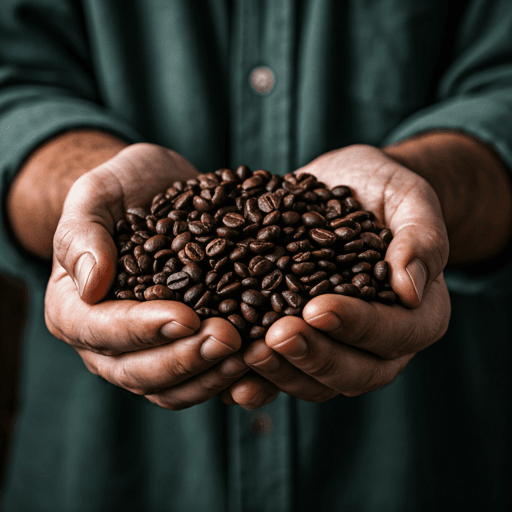
Lavazza Crema e Gusto is one of the Italian roaster's boldest everyday blends: classically a dark-leaning, Robusta-forward mix of Arabica and Robusta beans built for a strong, full-bodied, low-acidity cup topped with a thick layer of crema. The original "Classico" is often cited at roughly 30% Arabica and 70% Robusta, and it tends to shine brightest from a moka pot or espresso machine, where its chocolatey, spiced character comes through in full.
If you want the whole Lavazza range side by side, that lives on our Lavazza blends compared overview, and the company's Turin-1895 story is told in the Lavazza brand guide. This page zooms in on one blend: what Crema e Gusto is, its variants, how it tastes, and what it is best for.
What is Lavazza Crema e Gusto?
Crema e Gusto (Italian for "cream and taste") is a line of blends designed around body and crema rather than the bright, fruity acidity of a single-origin coffee. The defining move is a generous share of Robusta. Robusta beans bring more bitterness and a heavier body than the smoother, sweeter Arabica, but they also produce that dense, lasting crema Italians prize in an espresso, and they hold up well against milk and sugar.
The headline member of the family, Crema e Gusto Classico, is commonly described as roughly 30% Arabica and 70% Robusta, drawing Arabica from Brazil and Robusta from Southeast Asia (some regional descriptions cite African and Indonesian Robusta too). Exact ratios and bean origins are not always published in full and can shift by variant, market and production run, so treat the 30/70 figure as the widely quoted profile rather than a fixed recipe. Lavazza itself markets it as a balanced, "enveloping" blend with a harmony of body and spicy top notes.
One point that trips people up: roast labelling. Depending on the region and the pack, Crema e Gusto is described as either a medium roast with a dark, full-bodied finish or simply a dark roast. In practice it drinks like a classic Italian dark-style espresso blend, and Lavazza rates the Classico at an intensity of 7 on its 10-point scale. Do not over-index on the label; the Robusta-heavy makeup does more to define the cup than the roast word on the front.
Crema e Gusto variants
Crema e Gusto is a small family rather than a single product. The variants share the cream-and-body philosophy but dial the intensity and sweetness up or down. Availability differs by region, and not every variant reaches every market, so the table below is a general guide rather than a guarantee of what is on any one shelf.
| Variant | Character | Typical notes | Leans toward |
|---|---|---|---|
| Classico | The balanced benchmark; the widely cited ~30% Arabica / 70% Robusta blend, intensity around 7/10 | Rounded body, spice, hints of chocolate | Everyday espresso and moka |
| Forte | Stronger and more intense (often rated nearer 9/10); positioned for bold, ristretto-style tastes | Full body, persistent notes of wood and tobacco | Those who want extra punch |
| Gusto Ricco | A longer, prolonged roast; dense and almost liqueur-like | Caramel and cocoa, deep sweetness | An intense, indulgent cup |
| Dolce | A smoother, rounder take with a softer edge | Creamy, gentle spice, easy balance | Milder palates and milk drinks |
| Espresso / pod forms | Crema e Gusto tuned for ground espresso and for capsule and pod systems | Similar bold profile, machine-optimised | Convenience without grinding |
Formats are just as varied as the recipes. Crema e Gusto commonly appears as ground coffee in the familiar vacuum-packed brick, as whole beans for grinding fresh, and in capsule or pod versions for home systems. Because compatibility depends entirely on your machine, check what a given pack is made for before buying, and remember that the pod and capsule versions are tuned to their own systems rather than being freely interchangeable.
How Crema e Gusto tastes
In the cup, Crema e Gusto reads as bold, warm and comforting rather than delicate. The first impression is body: it feels weighty and syrupy on the palate, a texture the Robusta and the darker roast both contribute. Flavour-wise, the recurring descriptors are dark chocolate and cocoa, a gentle spiciness, and a nutty, roasty backbone, with only a whisper of the fruit or floral acidity you would get from a lighter Arabica coffee.
Acidity is deliberately low, which is a big part of the appeal for anyone who finds brighter coffees sharp or sour. The trade-off is a firmer bitterness, especially if the coffee is pushed too hard. Because the blend is Robusta-forward, it is a little less forgiving than an all-Arabica coffee: over-extract it (grind too fine, brew too hot, or run the shot too long) and the chocolate can tip into a scorched, ashy bitterness. Dial it in properly and you get a smooth, rounded espresso with a thick, lingering crema.
Think of Crema e Gusto as an espresso built for texture and depth, not for the clean, tea-like clarity of a modern specialty roast. It is a traditional Italian bar profile in a bag.
What Crema e Gusto is best for
This blend was engineered for pressure brewing, so it is most at home in an espresso machine or a stovetop moka pot. In a moka pot in particular, the low acidity and heavy body suit the method's naturally concentrated, slightly bitter output, and the extra crema-forming Robusta gives the cup a fuller mouthfeel. If you are new to that brewer, our moka pot guide walks through grind, heat and timing so the coffee lands sweet rather than scorched.
Crema e Gusto also earns its keep in milk drinks. A bold, chocolatey Robusta blend does not vanish under steamed milk the way a delicate light roast can; it keeps its presence in a cappuccino, flat white or latte, which is exactly why so many Italian bars favour blends like this. Drunk straight as an espresso or short black, it is a strong, no-nonsense cup, and it takes sugar comfortably if you like it that way.
It is flexible enough to survive other brewers too. Many people run it through a drip machine or a French press for a stronger-than-average pot of coffee, though you lose the crema and some of the intensity the blend was designed to show off. If a syrupy espresso or a punchy moka cup is your goal, that is where Crema e Gusto is happiest.
Crema e Gusto vs Crema e Aroma
Lavazza also sells a close cousin, Crema e Aroma, and the two are easy to confuse. The short version: Crema e Gusto leans darker and more Robusta-forward for a bolder, more bittersweet, heavier cup, while Crema e Aroma is generally the smoother, more aromatic and slightly more Arabica-leaning of the pair, with a rounder character. If you find Crema e Gusto a touch too strong, its sibling is often the gentler step down. We cover that blend in detail in the Crema e Aroma explainer, so this page will not re-tell its full story here.
Between the two, the choice usually comes down to how much bitterness and body you enjoy. Reach for Crema e Gusto when you want a dark, chocolatey, full-bodied espresso with plenty of crema, especially from a moka pot or machine; reach for Crema e Aroma when you want something smoother and more balanced for everyday sipping.
The bottom line
Crema e Gusto is Lavazza's answer to the classic Italian bar espresso: bold, low in acidity, rich in body and crema, and led by Robusta more than most everyday blends. The Classico is the balanced starting point, with Forte, Gusto Ricco and Dolce nudging the intensity and sweetness in either direction. If you like your coffee strong, chocolatey and unpretentious, and you brew with pressure, it is an easy, dependable choice, and one that rewards a little care in the dial-in. From there, the wider Lavazza world of beans, machines and capsules is only a comparison away.