
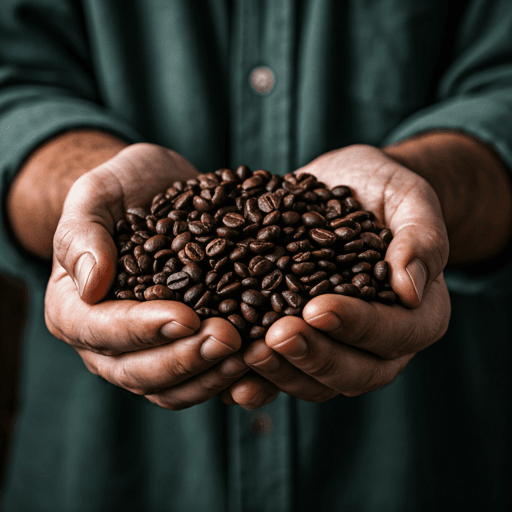
The short answer to instant vs ground coffee is this: instant coffee is real coffee that has already been brewed and then dried into dissolvable granules you stir straight into hot water, while ground coffee is roasted beans ground so you can brew a fresh cup yourself. Ground coffee almost always tastes fuller, rounder and more aromatic, but instant wins on speed, shelf life and sheer convenience. Neither one is fake coffee — they are two formats of the same drink, built for different moments.
If you have ever stood in a kitchen deciding whether to spoon granules into a mug or reach for a bag of grounds and a brewer, this guide walks through exactly where each format shines, so the choice comes down to the moment rather than a guess.
Instant vs ground coffee at a glance
Here is the difference between instant and ground coffee in a single view. Use it as a quick reference, then read on for the reasoning behind each row.
| Attribute | Instant coffee | Ground coffee |
|---|---|---|
| What it is | Brewed coffee dried into soluble granules | Roasted beans ground for fresh brewing |
| How you make it | Stir into hot (or cold) water | Brew with a filter, press or machine |
| Taste and aroma | Flatter and more uniform; freeze-dried is better | Fuller, fresher, more nuance and aroma |
| Caffeine per cup | Comparable, often slightly less (varies) | Comparable, varies by dose and brew |
| Equipment needed | Just a cup and hot water | Grinder or pre-ground plus a brewer |
| Prep time | Seconds | A few minutes |
| Shelf life | Long; stable for months unopened | Best fresh; stales within weeks of grinding |
| Best for | Travel, camping, baking, quick fixes | Everyday cups where flavour matters |
What each one actually is
Instant coffee starts life as ordinary brewed coffee. That liquid is concentrated and then dried — usually by spray-drying, where hot air turns it into a fine powder, or freeze-drying, where it is frozen and the water is drawn off under vacuum to leave dry, crystalline granules. Because the brewing already happened at the factory, the granules dissolve in water; you are simply rehydrating coffee that was made earlier. For the full story of how those granules are produced and how to get the best from them, see our guide to instant coffee explained.
Ground coffee is the more familiar picture: roasted coffee beans broken down into particles so that hot water can pull the flavour out as it passes through. Nothing has been brewed yet — that part is your job, whether you use a paper filter, a French press, a moka pot or an espresso machine. If the whole beans-to-grounds-to-powder chain still feels blurry, our explainer on ground coffee vs coffee beans vs powder untangles the terms.
Taste and aroma: where fresh grinding wins
This is where ground coffee pulls clearly ahead. A large share of coffee's aroma lives in delicate volatile compounds that begin escaping the moment beans are ground and keep fading as brewed coffee is dried and stored. Grinding beans just before you brew captures those aromatics near their peak, which is why a fresh pour-over or press smells and tastes livelier, with more sweetness, acidity and character. If you want to lock in that freshness, our guide on how to grind coffee beans covers the basics of getting the particle size right.
Instant coffee, by contrast, has been through extra processing, so it tends to taste flatter and more uniform, with less of the origin personality that makes single beans interesting. That said, the gap is smaller than it once was. Freeze-dried instant generally holds on to more aroma than older spray-dried powder, and specialty roasters now sell single-origin instant that is a genuine step up from the harsh, bitter granules many people remember from decades past. It still rarely matches a well-brewed fresh cup, but the old "instant equals bad" verdict is out of date.
Caffeine: is it really that different?
Caffeine is where a lot of myths creep in. In practice the two are roughly comparable per cup, and if anything a typical mug of instant often lands a touch lower than a similarly sized cup of freshly brewed ground coffee. But those numbers move around a great deal: the bean variety, since robusta carries more caffeine than arabica, plus how much you use, the water temperature and the brew method all shift the total. Treat any single figure as a rough guide rather than a rule. Responses to caffeine vary from person to person, and this is general information, not medical advice.
The practical upshot: if you are weighing ground vs instant coffee to manage how much caffeine you take in, the format itself is a minor factor next to how strong you make each cup and how many you drink in a day. If caffeine is a real concern for you, it is worth talking it through with your own healthcare provider.
Convenience and shelf life
Convenience is instant coffee's home turf. It needs no grinder, no filter, no machine and almost no cleanup — a spoon, a mug and hot water are enough, which makes it hard to beat when you want caffeine in under a minute. It also dissolves in cold water and milk, so it is handy for a quick iced drink without any brewing.
Shelf life is the other big practical win. Because nearly all the moisture has been removed, a sealed jar of instant stays drinkable for many months to a couple of years, and even an opened jar keeps well if you close it tightly and keep it away from damp. Ground coffee is the opposite: it is at its best within days to a couple of weeks of grinding, after which it steadily loses aroma to oxygen and moisture. Whole beans last considerably longer than pre-ground, which is one reason people who care most about flavour tend to buy beans and grind per brew.
When instant coffee genuinely makes sense
Choosing instant is less a compromise than picking the right tool for the job. It earns its place when:
- You are travelling or camping. No gear, no power and no mess — just add hot water from a kettle or flask wherever you are.
- You are baking or cooking. Instant granules dissolve cleanly into batters, frostings and sauces, adding coffee flavour without extra liquid, which is why many dessert recipes call for it specifically.
- You want a fast iced coffee. Because it dissolves in cold liquid, you can stir up an iced cup straight away instead of brewing and then chilling.
- Speed or space is the priority. A single jar in a drawer beats a shelf of equipment when you only want one quick cup.
Is instant coffee worse than ground? The effort trade-off
So, is instant coffee worse than ground? Not worse — different. The honest way to frame instant coffee vs ground coffee is as a trade between effort and payoff. Ground coffee asks more of you: grinding, measuring, brewing and cleaning, all of which take a few minutes and a little practice. In return you get a cup with more aroma, freshness and depth. Instant asks almost nothing and gives back a decent, consistent cup in seconds, at the cost of some of that character.
Plenty of people keep both on hand and switch based on the moment: fresh grounds for a slow weekend brew, and a jar of instant for the rushed weekday morning, the office drawer or the backpack. There is no single winner here — only the format that best fits what you want from that particular cup.
Instant and ground coffee are two answers to the same question, one shaped by convenience and the other by flavour. Once you stop thinking of one as proper coffee and the other as a lesser stand-in, the decision gets easier: reach for freshly ground beans when the ritual and the taste are the point, and let instant do the heavy lifting when speed, portability or a long shelf life matter more. Both have a place in a well-stocked kitchen.