
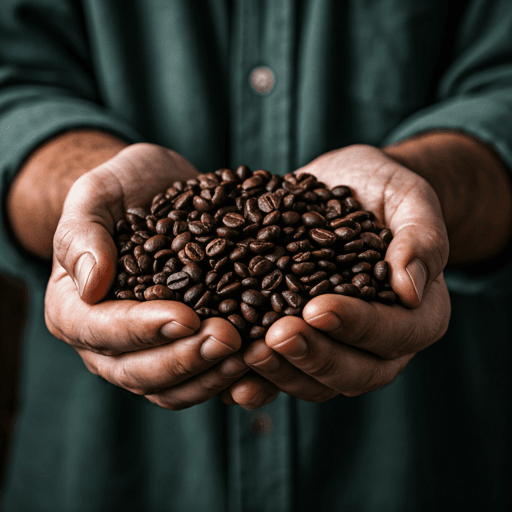
IAPAR-59 is a compact, rust-resistant Arabica bred in Brazil that became a quietly important workhorse for growers who needed a dependable, disease-tolerant tree rather than a trophy lot. It belongs to the broad family of modern cultivars whose defining trait — resistance to coffee leaf rust — traces back to a single wild curiosity found on the island of Timor. Where earlier disease-resistant coffees were often dismissed as blunt and cuppy, IAPAR-59 sits in a more comfortable middle ground: a hardy, productive plant that lowered risk for farmers while still turning in a respectable cup.
This guide profiles the variety carefully — who bred it, what its lineage actually is (a point that is often stated loosely), why its Timor Hybrid ancestry matters, how it behaves in the field, and how it tastes relative to both other rust-resistant coffees and the classic varieties it was never quite designed to beat. Where the public record is thin or contested, we say so rather than inventing tidy specifics.
What is IAPAR-59?
IAPAR-59 is a Brazilian Arabica (Coffea arabica) cultivar developed by the Instituto Agronomico do Parana — IAPAR — the state agricultural research institute based in Londrina, in the southern Brazilian state of Parana. The number is simply a selection identifier from the institute's breeding program, and you will see the name written several ways: IAPAR-59, IAPAR 59, or Iapar 59. They all refer to the same variety.
Parana sits toward the cooler, frost-prone southern edge of Brazil's historic coffee belt, and IAPAR's breeding work was shaped by that reality: the institute needed varieties that were productive, adaptable, and — increasingly through the late twentieth century — able to shrug off coffee leaf rust, the fungal disease that first reached the Americas in Brazil around 1970. IAPAR-59 was one of the institute's answers, released to growers as a compact, high-yielding, rust-resistant cultivar. It later sat alongside IAPAR's "IPR" series of dwarf cultivars and has since been planted well beyond Parana, including elsewhere in Brazil, in Peru, and in trials and plantings across Central America.
The lineage: a Sarchimor, not quite a Catimor
The angle on IAPAR-59 is often summarized loosely as a "Catimor-type" coffee, and it does sit in that broad orbit — but the precise pedigree is worth stating carefully, because it places the variety on a specific branch of the family tree.
According to World Coffee Research and IAPAR's own breeding records, IAPAR-59 descends from a cross between Villa Sarchi (accession CIFC 971/10) and the Timor Hybrid (accession CIFC 832/2). That combination — Villa Sarchi crossed with Timor Hybrid — is the textbook definition of a Sarchimor. So while people casually group IAPAR-59 with the Catimor lines, it is more accurately a Sarchimor-line selection. Both belong to the same Catimor/Sarchimor family of Timor-Hybrid-derived rust-resistant coffees; they simply use different dwarf parents.
To untangle the two terms:
- Catimor = Caturra × Timor Hybrid. Caturra is a compact, natural dwarf mutation of Bourbon that arose in Brazil.
- Sarchimor = Villa Sarchi × Timor Hybrid. Villa Sarchi is likewise a compact Bourbon-derived dwarf, named for the Sarchi district of Costa Rica.
In other words, both families pair a small-statured, Bourbon-lineage Arabica with the Timor Hybrid to marry compactness and good agronomy with disease resistance. IAPAR-59 takes the Villa Sarchi route. The founding Sarchimor cross (the hybrid known as H361) was made at the Centro de Investigacao das Ferrugens do Cafeeiro — the international coffee rust research center in Oeiras, Portugal — and the resulting material was then advanced and selected in Brazil through IAPAR's field program. Exact release dating and some intermediate pedigree codes are reported inconsistently across sources, so those finer points are best treated as approximate rather than definitive.
Why Timor Hybrid ancestry keeps recurring
The reason the Timor Hybrid shows up in the ancestry of IAPAR-59 — and in so many other modern rust-resistant coffees — comes down to genetics. The Timor Hybrid is a spontaneous natural hybrid between Arabica and Robusta (Coffea canephora), discovered on the island of Timor in the mid-twentieth century. From its Robusta side it inherited resistance genes against coffee leaf rust (Hemileia vastatrix), the disease that can strip a tree of its leaves and gut a harvest.
Crucially, the Timor Hybrid behaves genetically like an Arabica — it has the right chromosome makeup to cross cleanly with cultivated Arabica varieties. That made it the go-to donor for breeders worldwide: cross it into a good agronomic Arabica, select over several generations, and you can transfer rust resistance while gradually breeding back toward normal cup quality and plant form. Nearly every national rust-resistance program of the late twentieth century leaned on this same source, which is why Timor Hybrid ancestry recurs across Catimors, Sarchimors, and countless named releases. IAPAR-59 is one node in that much larger network.
One honest caveat: rust is a moving target. IAPAR-59 was near-completely resistant when it was released, and for years it served as a resistance benchmark in scientific trials. But rust evolves new physiological races, and resistance conferred by a limited set of genes can erode over time. Reflecting this, World Coffee Research now characterizes IAPAR-59's leaf-rust resistance as intermediate rather than absolute — a reminder that no single-variety solution to rust is permanent.
Compact stature and dependable yields
IAPAR-59's field appeal is straightforward. Thanks to its Villa Sarchi parentage, it is a dwarf, compact plant with short internodes — the same growth habit that made compact varieties so attractive across Latin America. Small trees pack more plants into a hectare, and IAPAR-59 is typically managed at high density, on the order of several thousand plants per hectare under single-stem systems. Compact trees are also easier to prune, to spray, and to pick, and they lend themselves to mechanized harvesting on suitable terrain.
Beyond size, growers valued the variety for a bundle of practical traits:
- Dependable, precocious yields. IAPAR-59 comes into production relatively early and is widely described as high-yielding, with production often beginning around the third year.
- Uniform flowering and ripening. More even maturation simplifies harvest planning and can improve picking efficiency.
- Tolerance to stress. It is reported to handle heat, drought, and lower-fertility soils reasonably well, though like most high-yielding compacts it responds strongly to good nutrition.
- Some nematode resistance. It carries the Mex-1 gene for resistance to the root-knot nematode Meloidogyne exigua — inherited from its Timor Hybrid side — though it is not resistant to Pratylenchus species or to several other Meloidogyne species, so the protection is useful but partial.
Add the rust resistance on top, and the value proposition is clear: a hardy, productive, disease-tolerant, easy-to-manage tree that lowered downside risk. For a grower weighing a season, that risk reduction can matter as much as any headline cup score.
How does IAPAR-59 cup?
This is where expectations should be calibrated honestly. The first generations of rust-resistant coffees, especially early Catimors, earned a reputation for flat, sometimes astringent or "green" cups — a consequence of the Robusta introgression that came bundled with the resistance genes. IAPAR-59 is generally considered a step better than that: a good, acceptable, clean cup for a rust-resistant variety, often described as smooth, full-bodied, and moderate in acidity. It is a coffee that performs its job without embarrassing itself in the roastery.
What it is not, by most accounts, is a top-tier specialty superstar. World Coffee Research rates its quality potential at high altitude as low, and traditionalists still tend to rank the finest classic varieties — the Bourbon and Typica descendants — above it for clarity and complexity in the cup. In practical terms, IAPAR-59 tends to shine as a reliable, well-processed commercial and mid-specialty coffee rather than as a competition lot. As always, altitude, soil, processing, and roast do much of the heavy lifting; a carefully handled IAPAR-59 can outperform a carelessly handled "better" variety.
Where IAPAR-59 fits in the rust-resistant family
It helps to see IAPAR-59 not as a standalone oddity but as one member of a large, interlinked family of Timor-Hybrid-derived selections. Alongside the Catimor and Sarchimor lines to which it belongs, that family includes a wide array of national releases bred on the same principle: take good local agronomy, cross in the Timor Hybrid for resistance, and select for a decade or more. Its own Sarchimor siblings, developed from the same population, include Brazilian releases such as Tupi and Obata.
Within Brazil specifically, IAPAR-59 also sits in a landscape of well-known compact Arabicas. Some of those — such as Catuai and Mundo Novo — are prized productivity varieties that do not carry Timor Hybrid rust resistance, while others like Catucai and Topazio represent different Brazilian breeding routes to hardiness and yield. Set against that backdrop, IAPAR-59's particular contribution was combining Brazilian-tested productivity and compact stature with the durable-at-the-time rust resistance of the Sarchimor line.
| Trait | IAPAR-59 |
|---|---|
| Breeder / origin | IAPAR, Parana, Brazil |
| Genetic group | Sarchimor (Timor-Hybrid-derived) |
| Parentage | Villa Sarchi × Timor Hybrid |
| Stature | Compact / dwarf |
| Leaf-rust resistance | Strong at release; now intermediate |
| Yield | High and dependable |
| Cup | Good for a rust-resistant variety |
The takeaway is not that IAPAR-59 is the best coffee you can plant, but that it was a sensible, de-risking one — and understanding it is a clean way to understand the whole logic of modern rust-resistant breeding.
Frequently asked questions
Is IAPAR-59 a Catimor or a Sarchimor?
Strictly speaking it is a Sarchimor. Its pedigree is Villa Sarchi crossed with the Timor Hybrid, which is the definition of a Sarchimor; a Catimor uses Caturra instead of Villa Sarchi. Both, however, belong to the same broad Catimor/Sarchimor family of Timor-Hybrid-derived rust-resistant coffees, which is why the terms are often used loosely.
Who bred IAPAR-59 and where?
It was developed by the Instituto Agronomico do Parana (IAPAR), the state agricultural research institute in Londrina, Parana, Brazil. The founding Sarchimor cross behind it was made at the international coffee rust research center in Oeiras, Portugal, and the material was then advanced and selected in Brazil.
Why is IAPAR-59 resistant to coffee leaf rust?
Its resistance comes from its Timor Hybrid ancestry. The Timor Hybrid is a natural Arabica–Robusta cross that carries rust-resistance genes from its Robusta side, and it crosses cleanly with Arabica. Note that this resistance is not permanent: rust evolves new races, and IAPAR-59's resistance is now often rated intermediate rather than complete.
Does IAPAR-59 taste good?
It cups as a good, clean, acceptable coffee for a rust-resistant variety — commonly described as smooth, full-bodied, and moderate in acidity — and it is generally regarded as better than early Catimors. It is not, however, a top competition-grade variety; the finest classic Bourbon and Typica descendants are usually rated higher for complexity.
Why do so many rust-resistant coffees share Timor Hybrid ancestry?
Because the Timor Hybrid was the most practical genetic source of rust resistance available to breeders in the twentieth century. It behaves like an Arabica genetically, so its resistance genes could be crossed into cultivated varieties. Nearly every national rust program used it, which is why its ancestry recurs across Catimors, Sarchimors, and named releases like IAPAR-59.