
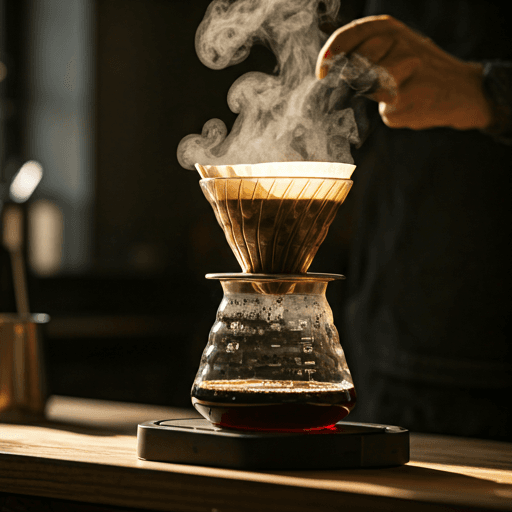
If you want to know how to make passion fruit syrup, the short version is this: simmer fresh passion fruit pulp (or a good passion fruit juice) with roughly equal parts sugar and water, steep it off the heat, then strain out the seeds. What you get is a vivid, tart-sweet, intensely tropical-floral syrup — a tangy golden pour that stirs into iced coffee, an espresso tonic, iced or green tea, lemonade, sodas and cocktails. It is punchy and perfumed, so a little goes a long way.
What passion fruit syrup is
Passion fruit syrup is a fruit syrup built on the bracing, sweet-tart character of passion fruit — bright acidity, a heady floral perfume and that unmistakable tropical tang. Left to itself the fruit is almost too sharp to sip; folded into sugar and water it becomes a balanced, pourable syrup that keeps the zing but tames the bite. The seeds are edible and add a pretty speckle and a gentle crunch, but most people strain them out for a smooth, clean syrup that pours easily and does not clog a bottle spout.
The fruit itself — often sold under its Spanish name, maracuya — is a signature tropical crop of Latin America, and it is grown and loved across the tropics and Australasia too. Its flavor is instantly recognizable in juices, desserts and drinks: floral, citrusy and almost winey all at once. Turning it into a syrup is simply a way to bottle that flavor so you can reach for it any time. If you are new to flavoring drinks this way, our overview of coffee syrups explained is a good place to see where a fruit syrup like this fits in the wider family.
The key thing to know: passion fruit is very acidic
The one point that shapes this whole recipe is that passion fruit is intensely acidic and aromatic. That is a gift and a warning at the same time. It means the flavor carries a long way, so you rarely need much syrup in a drink — but it also means the sugar has real work to do. Rather than following a fixed number to the letter, taste as you build: start with equal parts sugar and water, add the pulp, and then adjust. If it puckers too hard, a touch more sugar rounds it off; if it feels flat, a squeeze of lime sharpens it back up. This is a passion fruit syrup recipe you steer by tongue as much as by measurement.
What you will need
This is a passion fruit simple syrup at heart — fruit stirred into a basic sugar-and-water base. The amounts below make a small bottle; scale them up in the same ratio once you know how strong you like it.
- The pulp of about 4 to 6 ripe passion fruit, or roughly 1/2 cup of good passion fruit juice or puree
- About 1 cup granulated sugar
- About 1 cup water
- An optional squeeze of fresh lime, to lift the acidity and brighten the color
Ripe fruit matters: look for passion fruit that feels heavy for its size with a slightly wrinkled skin, which signals sweetness and depth rather than green sharpness. If fresh fruit is out of season, a quality bottled passion fruit juice or frozen puree makes a very respectable syrup — just check that it is unsweetened or lightly sweetened so you stay in control of the sugar. For the plain base technique on its own, our guide to how to make simple syrup covers the sugar-to-water ratios in detail.
How to make passion fruit syrup, step by step
The method is quick and forgiving. The only thing to watch is the heat: a gentle simmer keeps the fruit's fresh perfume intact, while a hard, long boil dulls it.
- Halve the passion fruit and scoop the pulp, seeds and all, into a bowl or measuring cup. If you are using juice or puree, simply measure it out.
- In a small saucepan, combine the sugar and water. Warm over medium heat, stirring, just until the sugar fully dissolves and the liquid turns clear.
- Add the passion fruit pulp or juice. Stir to combine and bring to a gentle simmer.
- Simmer briefly — about 3 to 5 minutes — just long enough to marry the flavors. Do not boil hard or reduce it heavily; you want a syrup, not a jam.
- Take the pan off the heat and let the mixture steep for 10 to 15 minutes so the flavor deepens.
- Strain the syrup through a fine sieve to remove the seeds for a smooth, glossy pour — or leave a few seeds in for texture and a rustic look. Press gently on the solids to get every drop.
- Taste. Add a squeeze of lime if you want more brightness, or a little extra sugar if it is too sharp for you.
- Cool completely, then pour into a clean, sealable bottle or jar.
That is it — a bottle of tangy golden syrup ready to transform a glass of iced coffee or a fizzy soda.
Seeds in versus strained
Whether you strain is a matter of look and use rather than right or wrong. Here is how the two compare.
| Style | Texture and look | Best for |
|---|---|---|
| Strained (seeds out) | Smooth, glossy, clear golden pour; nothing to clog a spout | Iced coffee, espresso tonic, cocktails, bottling and gifting, anything you want to pour cleanly |
| Seeds left in | Speckled, rustic look with a gentle crunch and extra visual pop | Lemonade, sodas, desserts, cocktails where the seeds are a feature and a talking point |
A common middle path is to strain most of the syrup for everyday drinks and set aside a small seeded portion for when you want the fruit to show.
How to use passion fruit syrup
Because it is so aromatic, start small and build. A little stirred into a tall glass of iced coffee gives a tropical, almost sunny lift — this is where passion fruit syrup for coffee really shines, especially over cold brew or an espresso poured long over ice. For an espresso tonic, add a bar spoon or two to tonic water and ice, then float the espresso on top for a layered, bittersweet cooler.
Beyond coffee, it is wonderful in iced or green tea, stirred into lemonade, shaken into cocktails and mocktails, or splashed over sparkling water for an instant soda. It plays beautifully with other bright fruit flavors, so it sits naturally alongside a citrus pour like how to make lime syrup or a berry one such as how to make strawberry syrup — try a passion-fruit-and-lime soda, or a strawberry-passion iced tea. It also drizzles over yogurt, pancakes and desserts. Whatever you are making, taste as you go: passion fruit is loud, and it is far easier to add another splash than to rescue a drink you have oversweetened.
Storage and shelf life
Since this is a fresh-fruit syrup with no preservatives, treat it like something perishable. Keep it in a clean, sealed bottle in the refrigerator and use it within about 1 to 2 weeks. Always pour with clean utensils, and give it a look and a sniff before each use — if the color, smell or texture seems off, or you spot any cloudiness or mold, throw it out. When in doubt, throw it out is the right instinct with any homemade syrup.
To keep it longer, freeze it: pour the cooled syrup into an ice-cube tray, freeze until solid, then pop the cubes into a freezer bag. A single passion fruit cube dropped into a glass of iced coffee or sparkling water melts into instant flavor, which is a neat way to portion it and avoid waste.
A light food-safety note
This is a food-safety note, not a health one: the main things that matter are keeping the syrup cold, using a clean bottle and utensils, and not keeping it past a week or two. Passion fruit is naturally tart and sugary, so lean on refrigeration rather than assuming the acidity or sugar will preserve it indefinitely. Responses and tastes vary from person to person, and none of this is medical advice — enjoy it as a bright, flavorful addition to your drinks rather than for any health purpose, and if you have specific dietary or health questions, check with a qualified professional.