
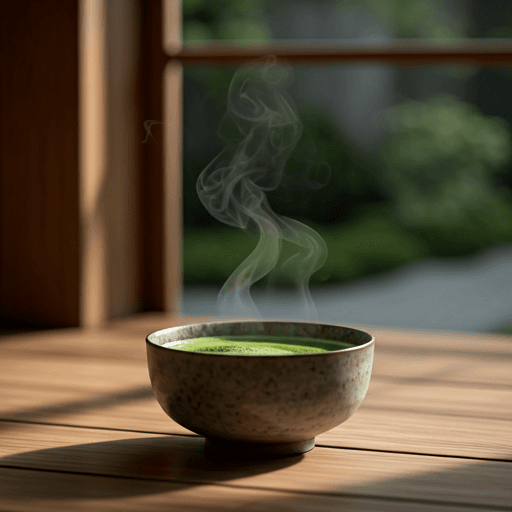
So how much sage tea per day makes sense? Because sage tea is naturally caffeine-free, caffeine is not the thing that caps it — but sage leans more toward a keep-it-modest herb than an all-day sipper, so most people settle on about one to two cups a day rather than pouring it constantly. Responses vary from person to person, and this is general information, not medical advice.
That is the headline. Below we unpack why the usual caffeine math does not apply, what actually sets the sensible ceiling, how the tea tastes and brews, and who should check with a healthcare provider before making it a habit.
The short answer: how much sage tea per day
For most healthy adults, a comfortable sage tea daily amount is roughly one to two cups. That is a common, widely repeated range rather than a strict medical dose, and lighter is perfectly fine. Some casual drinkers push toward a few small cups, but there is little reason to go higher — with sage, more is not better.
The key point that surprises people: unlike a black tea or coffee, sage is not held back by stimulants. It is a herbal tisane, so there is no caffeine ceiling to bump into. If caffeine were the only concern, you could technically drink far more — but sage brings a different limiting factor, which is why the practical number stays modest. For the caffeine question itself, see our companion piece on whether sage tea has caffeine.
Quick reference
| Question | Short answer |
|---|---|
| How many cups of sage tea a day? | About 1-2 cups for most people; keep it modest |
| Does caffeine limit it? | No — sage tea is caffeine-free |
| What does limit it? | A natural compound called thujone, best kept in check |
| Is it an everyday drink? | Better as occasional or short-run than constant |
Why caffeine is not the limit
Sage tea is not a "true" tea at all. Black, green, white and oolong all come from the same plant, Camellia sinensis, and all carry caffeine. Sage tea, by contrast, is an infusion of the culinary sage plant (Salvia officinalis) — a herb, not a tea leaf — so it starts out with essentially no caffeine.
The only real exception is a blend. If your sage is mixed with actual tea leaves, or you sip it alongside a caffeinated brew, that caffeine comes from the other ingredient, not the sage. So when you are working out how many cups of sage tea a day feels right, you can leave the usual caffeine tally aside. That freedom is exactly why the sensible number has to come from somewhere else. For the practical side of steeping, our guide on how to make sage tea covers ratios and timings in detail.
What actually limits sage tea per day
The reason sage sits in the "modest" column comes down to a naturally occurring compound called thujone. Sage leaves contain small amounts of it, and thujone is one of those things that is fine in the everyday amounts found in a cup of tea but is best not consumed in large, concentrated, day-after-day quantities. Food-safety bodies treat it as a compound to keep within limits rather than to load up on.
In plain terms: an occasional cup or two is the kind of casual amount most guidance describes as reasonable for healthy adults, while very strong brews, many cups a day, or long unbroken stretches of medicinal-style drinking are the pattern to avoid. This is not a reason to fear a normal cup — it is simply the honest explanation for why "how much sage tea per day" lands on a small number instead of "drink as much as you like." Because responses differ, treat the range as a general guide, not a prescription, and steer clear of large or extra-strong daily amounts.
What sage tea tastes like and how it is brewed
Sage tea is savory and herby rather than sweet. Expect an earthy, slightly peppery cup with a cooling, camphor-like or pine note — some people catch a whisper of mint or eucalyptus behind it. It is a grown-up, almost aromatic flavor, and it is easy to over-steep into something harsh, which is another reason a light hand suits it.
A typical cup uses about one teaspoon of dried sage leaf (or a small handful of fresh leaves) steeped in freshly boiled water. Cover the cup and let it sit for around five to ten minutes — shorter for a milder, brighter cup, longer for a bolder, more resinous one. Covering matters: it keeps the fragrant volatile oils in the cup instead of drifting off as steam. A slice of lemon and a little honey are the classic partners, softening the savory edge and rounding everything out. If you want the full method, timings and variations, lean on a dedicated sage tea brewing guide rather than eyeballing it.
A light, traditional use
Sage has a long folk history as a comforting drink for a scratchy, tired throat — sipped warm, or cooled slightly and used as a gentle gargle with a little salt, lemon or honey. That is the gentle, everyday reason many people reach for a cup rather than any dramatic promise. We are keeping this strictly non-medical: think of it as a soothing ritual, not a treatment, and do not expect a cup of tea to fix anything. For a broader look at what sage brings to the cup, see our overview of sage tea benefits, and remember that comfort and cure are not the same thing.
Start low and keep it occasional
A sensible approach with any assertive herb is to start low. Begin with one modest cup, see how you feel, and build a habit around occasional or short-run use rather than an all-day-every-day fixture. Sage is a herb that rewards restraint: a well-brewed single cup delivers all of its character, and doubling up mostly doubles the thujone you take on for no real gain.
If you like the idea of a warm herbal in constant rotation, it is smart to vary what is in your mug — alternating sage with genuinely gentle, drink-daily tisanes keeps any one compound from adding up. That is a good habit across the herbal shelf, not just for sage.
Is it safe to drink sage tea every day?
For many healthy adults, an occasional daily cup is generally regarded as fine — but "is it safe to drink sage tea every day" is exactly the kind of question where personal circumstances matter, and some people should be more careful. Because sage contains thujone and is biologically active, the following situations call for a conversation with your own doctor or pharmacist before you make it a routine, and for avoiding large or strong daily amounts:
- Pregnancy or breastfeeding.
- Epilepsy or a seizure disorder.
- Diabetes, blood-pressure or hormone-sensitive conditions, or any medication for them.
- Any prescription medicine or sedative that might interact.
None of that makes sage "dangerous" for the general population — it simply means the modest, occasional pattern exists for a reason, and that a professional who knows your history is the right person to clear it for regular use. Responses vary from person to person, and this article is general information, not medical advice.
How it compares to other daily herbals
It helps to see where sage sits on the spectrum of caffeine-free tisanes. Something like hibiscus is a tart, refreshing brew that many people enjoy more freely through the day — our look at how much hibiscus tea per day is worth a read for comparison, and it too has its own gentle caveats. Sage lands on the more cautious end of that spectrum: caffeine-free like the rest, but a herb you sip with a bit more intention because of its thujone content and its bold, savory character.
So the takeaway is simple. Caffeine will not stop you, but sage is not the tisane to drink by the potful. Keep it to roughly one to two modest, well-brewed cups on the days you want it, favor the occasional over the constant, lean on the sibling guides for the caffeine details and the brewing method, and check with a healthcare provider if anything on the caution list applies to you.