
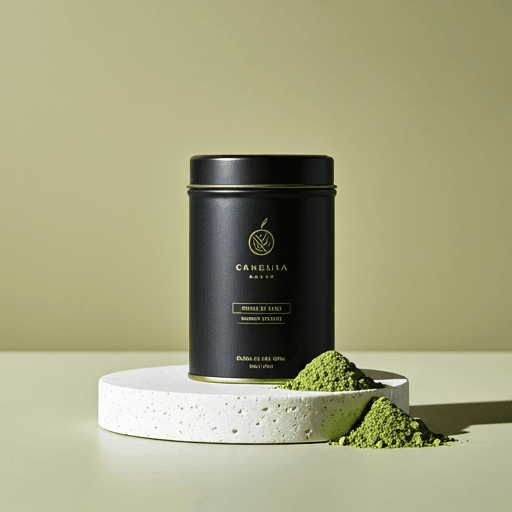
How much caffeine in white tea can you actually expect? On average, a cup carries a low-to-moderate dose — very roughly 15 to 45 mg of caffeine per 8 oz (240 ml) serving, usually a touch less than black tea and often less than green, and far less than a mug of brewed coffee. But here is the twist that surprises most people: white tea is not automatically the lowest-caffeine tea. It is made largely from young leaf buds, which are naturally caffeine-dense, so a generously leafed, long-steeped cup can test surprisingly high.
Every figure below is a rough, hedged range. Real caffeine content swings with the specific tea, how much leaf you use, water temperature, steep time and how many times you re-steep — so treat these numbers as ballpark guides, not precise lab readings. Like green, oolong and black tea, white tea comes from the Camellia sinensis plant; the differences are all in the processing. For what white tea actually is and how it is made, our guide to what white tea is covers the full story.
How much caffeine in white tea? The rough number per cup
As a ballpark, a standard 8 oz (240 ml) cup of white tea brewed the usual way tends to land somewhere around 15 to 45 mg of caffeine. That is a wide band on purpose — the bud content, leaf quantity and steep time move the needle a great deal. For comparison, here is roughly where common drinks fall (all figures approximate and per 8 oz cup):
| Drink (per 8 oz / 240 ml) | Rough caffeine per cup |
|---|---|
| White tea | ~15-45 mg (varies widely) |
| Green tea | ~20-45 mg |
| Oolong tea | ~30-50 mg |
| Black tea | ~40-70 mg |
| Brewed coffee | ~80-100 mg |
| Herbal tisanes (rooibos, chamomile) | ~0 mg (naturally caffeine-free) |
The pattern to remember: white, green and oolong teas usually cluster in the lower-to-middle range, black tea sits higher, and coffee is in a league of its own. If you want the full head-to-head across coffee, tea, soda and energy drinks, our caffeine in drinks compared guide lays it all out. And whether tea contains caffeine at all — yes, every true tea does — is covered in does tea contain caffeine.
White tea vs green tea caffeine
People often assume white tea has less caffeine than green tea, and sometimes it does — but the white tea vs green tea caffeine question has no fixed winner. Both usually fall in a similar low-to-moderate band and overlap heavily. A bud-heavy white tea steeped long can out-caffeinate a quick, cool-brewed green, while a strong, finely ground green can easily beat a light white. How you brew each one matters far more than which category it belongs to.
The "lowest-caffeine tea" myth: does white tea have caffeine?
Does white tea have caffeine? Yes — always some, because it is a true tea. The stubborn myth is that white tea is the lowest-caffeine tea, practically a decaf. In reality, white tea caffeine content is genuinely unpredictable. Delicate styles are made almost entirely from unopened leaf buds, and the tips of the tea plant are exactly where caffeine concentrates. So gram for gram, a bud-heavy white tea can carry as much caffeine as — or even more than — some green or black teas.
Why does the myth persist? White tea tastes light, pale and sweet, and a light flavor gets mentally filed as "light caffeine." But taste and caffeine content are not the same thing. The takeaway is simple: do not assume white equals decaf. If caffeine matters to you, judge the cup by how you brew it, not by its gentle color.
What changes the caffeine in white tea
Four levers do most of the work, and they matter more than the name on the tin:
- Leaf quantity. More leaf means more caffeine in the cup. A heaping measure of fluffy buds extracts far more than a light pinch.
- Water temperature. Hotter water pulls caffeine faster. White tea is often brewed cooler (around 75-85 C / 167-185 F), which naturally extracts a little less than a near-boiling steep.
- Steep time. This is the big one. A quick 1-2 minute steep releases noticeably less caffeine than a long 5-minute soak, because longer contact time keeps pulling caffeine into the water.
- Re-steeps. Good white tea re-steeps several times, and most of the caffeine comes out early. The first steep holds the largest share; each later infusion is gentler.
Because caffeine is fairly water-soluble and extracts quickly, that first infusion typically carries the biggest hit, with every re-steep tapering off from there.
Silver Needle vs Bai Mu Dan
Two classic white teas show how much the style matters. Silver Needle (Bai Hao Yinzhen) is made entirely from the plump top buds — the most caffeine-dense part of the plant — so it can brew stronger in caffeine than its pale looks suggest. Bai Mu Dan (White Peony) blends buds with young leaves, which often makes for a rounder, slightly more forgiving cup. Neither is guaranteed to be higher or lower every single time; harvest, grade and your own brewing choices still decide the final number.
How to get less caffeine from white tea
If you love white tea but want to keep caffeine on the lower side, a few easy tweaks help:
- Steep shorter. Pull the leaves at 1-2 minutes instead of 4-5 for a lighter, less caffeinated cup.
- Use cooler water. Brewing at the lower end of the range extracts a bit less caffeine (and tends to taste sweeter and less astringent, too).
- Use a little less leaf. Simple, and it lowers the total caffeine in the cup.
- Try a quick rinse-and-resteep. Some drinkers do a fast 20-30 second first steep, pour it off, then drink the second infusion. Since a lot of caffeine extracts early, this can trim the amount — though it also pours away flavor and is far from a reliable way to "decaffeinate" tea.
- Reach for later infusions. If you re-steep, the third or fourth cup is naturally gentler than the first.
Worth saying plainly: none of these turns white tea into a caffeine-free drink. For truly zero caffeine, a naturally caffeine-free herbal tisane such as rooibos or chamomile is the surer choice.
Who might want to watch their intake
For most healthy adults, white tea's modest caffeine is easy to enjoy through the day. A few people pay closer attention: those who are sensitive to caffeine, anyone drinking tea late in the evening who wants to protect their sleep, and people who are pregnant or managing a health condition. Because white tea caffeine content varies so much, "one cup" is not a fixed dose.
Responses to caffeine vary a great deal from person to person, and this is general information, not medical advice. If you have specific concerns — pregnancy, medication, sleep or a heart condition — talk to your own doctor or healthcare provider about what is right for you.
The bottom line
So, how much caffeine in white tea? Enough to give a gentle lift, rarely as much as coffee, but not the near-zero many people expect — and always dependent on the buds, the leaf and the steep. If you love the ritual more than the buzz, brew it cooler and shorter and lean on the re-steeps. And if you are comparing your options across the tea family, it is worth seeing how white stacks up against the boldest brews: our look at how much caffeine is in black tea makes a useful next stop.