
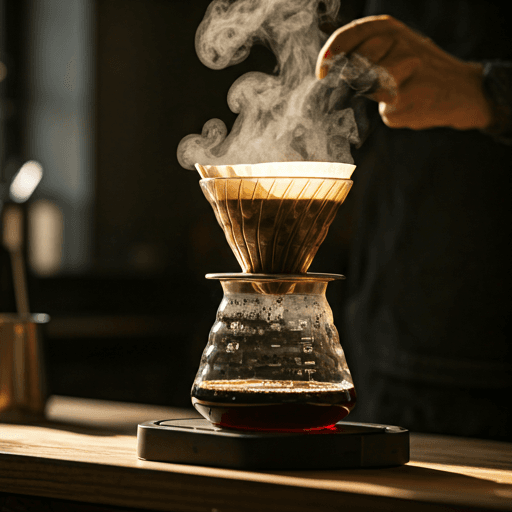
So how much caffeine in Turkish coffee actually ends up in your cup? A small demitasse serving usually carries roughly 50 to 65 mg of caffeine, though the exact figure varies. The caffeine in Turkish coffee tastes far stronger than that number suggests, because it is brewed from very finely ground beans simmered with the grounds still in the cup. Here is what the numbers really mean, and why such a tiny cup can feel so intense.
The short answer: caffeine in Turkish coffee
A traditional small cup of Turkish coffee - the little demitasse it is usually served in, around 60 to 90 ml - tends to land somewhere around 50 to 65 mg of caffeine. That is a ballpark, not a fixed rule, and a strongly brewed cup can climb higher. If you drink a double or a larger cup, you can reasonably expect roughly 100 to 160 mg in total.
What makes it interesting is the concentration. Turkish coffee is unfiltered and made from an extremely fine grind, so per ounce it is one of the most concentrated ways to brew coffee. The whole cup is small, but every sip is dense. For a full walk-through of what the drink is and how it is prepared, see our guide to what Turkish coffee is - this piece stays focused on the caffeine.
It helps to separate two ideas that often get blurred together: how concentrated a coffee is, and how much caffeine the whole serving holds. Turkish coffee scores high on the first and moderate on the second. That combination is exactly why a cup you can finish in a few sips can still feel like a real jolt.
Why Turkish coffee is deceptively strong
Three things stack up to make each sip punchy:
- A very fine grind. Turkish coffee uses a powder-fine grind, finer than espresso. More surface area means the water can pull more soluble material - including caffeine - out of the coffee.
- Simmering, not a quick pass. The coffee is heated slowly along with the water, so the grounds and water stay in contact longer than in many other methods. Longer contact tends to mean more extraction.
- The grounds stay in the cup. Turkish coffee is unfiltered. The fine sediment settles at the bottom, and a little keeps steeping even after it is poured, nudging the strength up.
Put together, these factors mean the drink is concentrated per ounce, even though the cup itself is tiny. That is the source of the small-cup, big-kick reputation. Keep in mind these are general tendencies, not precise measurements - the real number in any given cup depends on the beans and how it is made.
It is also worth noting that the caffeine in a cup is not perfectly predictable. Two cups made by the same person on the same day can differ, because tiny changes in grind, heat and timing all nudge extraction. So the figures here are best read as a sensible range, not a lab measurement.
Why the serving size matters
Here is the part that surprises people. Because Turkish coffee is concentrated, it is easy to assume the total caffeine must be huge. But it is served in a deliberately small cup. A demitasse holds far less liquid than a mug of drip coffee, so even though each ounce is dense, the whole cup adds up to a modest total - often less caffeine than a standard mug of brewed coffee.
In other words, strong-tasting and high total caffeine are not the same thing. So does Turkish coffee have a lot of caffeine? Per ounce, yes - it is very concentrated. Per cup, a single small serving is usually moderate. It is the small size of the cup that keeps the total in check.
How Turkish coffee caffeine content compares
The easiest way to make sense of Turkish coffee caffeine content is to line it up against other everyday drinks. All of these are rough averages that shift with beans, roast and preparation, so treat them as guides rather than exact readings.
| Drink | Typical serving | Approx. caffeine |
|---|---|---|
| Turkish coffee, small | 1 demitasse (~60-90 ml) | ~50-65 mg |
| Turkish coffee, double or large | 2 servings | ~100-160 mg |
| Brewed / filter coffee | 8 oz (240 ml) | ~95 mg |
| Espresso | 1 single shot | ~60-65 mg |
| Decaf Turkish coffee | 1 demitasse | ~2-5 mg |
A standard mug of brewed or filter coffee sits around 95 mg - see how much caffeine is in a cup of coffee for the full picture. A single shot of espresso lands in a broadly similar range to a small Turkish coffee, and we break that down in our guide to caffeine in espresso. A decaf Turkish coffee, like any decaf, still contains a trace, usually only a few mg.
One takeaway from the table: the drink that tastes the most intense is not automatically the one with the most caffeine. Serving size does a lot of the work. A large mug of mild drip coffee can easily out-caffeinate a single fierce little Turkish coffee, simply because there is more of it.
What changes how much caffeine in Turkish coffee you get
The 50 to 65 mg figure is only a starting point. Several things push the real number up or down:
- Cup size and how many you drink. One small demitasse is modest, but Turkish coffee is often enjoyed in twos or threes over a long conversation, and those add up quickly.
- How strong it is brewed. A heaping spoonful of coffee to a small amount of water makes a denser, higher-caffeine cup than a lighter measure.
- Robusta vs arabica beans. Robusta beans naturally carry roughly twice the caffeine of arabica, so a blend heavy in robusta lifts the number, while a pure arabica coffee sits lower.
- Decaf. A decaf Turkish coffee is not caffeine-free, but it drops to only a few mg per cup - a good option if you want the ritual without much of the stimulant.
- How much sediment you sip. Because the grounds are left in, drinking down toward the muddy bottom can add a little more than stopping higher up - though the difference is small.
How it fits your daily caffeine limit
Health authorities often cite up to about 400 mg of caffeine a day as a reasonable ceiling for most healthy adults. In those terms, a few small Turkish coffees can fit comfortably, though it depends on everything else you drink across the day - other coffees, tea, cola and energy drinks all count. For the wider view on limits, see how much caffeine per day.
How the same amount affects you also depends on timing and habit. A Turkish coffee late in the evening may sit differently than one after lunch, since caffeine can linger in the body for hours. People who drink it regularly often notice the effect feels milder over time, while an occasional drinker may feel a small cup more sharply.
That ceiling is a general guideline, not a personal target. Caffeine sensitivity varies a lot from person to person, and sleep, anxiety, pregnancy, breastfeeding, heart conditions and certain medications can all change what is right for you. If any of those apply, it is worth talking to your own healthcare provider before leaning on Turkish coffee - or any caffeine - as a daily habit. Responses vary, and this is general information, not medical advice.