
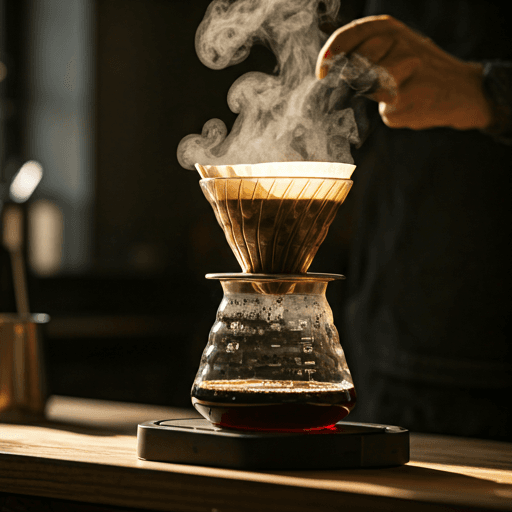
Put a small cup of each on the table and the greek coffee vs espresso question sorts itself out fast: both are tiny, dark and intense, but they are made in almost opposite ways. Greek coffee is unfiltered, simmered slowly in a little long-handled pot until a foam rises, then poured with its grounds still in the cup. Espresso is forced through a compact bed of coffee under high pressure in about half a minute, arriving filtered and crowned with crema. Same small size, very different drink.
The short answer: greek coffee vs espresso
In one line, the difference between greek coffee and espresso comes down to how the water meets the coffee. Greek coffee is an unfiltered simmered pot coffee: ultra-fine grounds and water (usually with sugar) are heated gently in a small pot until foam builds, then everything is poured into the cup and the grounds settle at the bottom. Espresso is a high-pressure filtered shot: hot water is pushed through packed grounds at around 9 bar for roughly 25 to 30 seconds, and the coffee that lands in the cup has been strained through the puck and a fine metal screen, so there are no loose grounds to drink.
Everything else, from texture to how you sip it to where it comes from, flows from that single fork in the road. If you want the deep dive on each drink on its own, we cover the traditional method in our greek coffee guide and what actually counts as a proper pull in what is an espresso shot.
How each one is made
Greek coffee: simmered in a briki
Greek coffee starts with coffee ground almost to a powder, finer than espresso and closer to flour. That powder goes into a briki (also called an ibrik or cezve), a small pot with a long handle and a narrow neck, along with cold water and, traditionally, sugar added at this stage rather than at the table. The pot sits over low heat and is never rushed. As it warms, a creamy foam called kaimaki forms on top and starts to climb the neck of the pot. Just before it boils over, it comes off the heat and is poured, foam, liquid and fine grounds together, straight into the cup. Nothing is filtered out. You let it rest for a minute so the sediment sinks, then sip from the top and leave the muddy layer at the bottom behind.
Espresso: pressure through a puck
Espresso takes the opposite approach. Finely ground coffee (coarser than Greek coffee, but still fine) is dosed into a portafilter and tamped into a level, compact puck. An espresso machine then drives hot water through that puck at high pressure, with the classic reference point being about 9 bar, for something in the region of 25 to 30 seconds. The result is a small, concentrated shot of roughly 1 to 2 ounces (around 30 to 60 ml) with a layer of reddish-brown crema on top. Because the coffee passes through the puck and a fine filter screen, the cup is clean, with no grounds sitting at the bottom. These are ballpark figures, not strict rules, since pressure, dose and time all shift from one bar to the next.
Texture and grounds: the biggest difference
If you only remember one thing from the espresso vs greek coffee comparison, make it this: the grounds. Greek coffee is served with a fine sediment that settles at the bottom of the cup. That sediment is part of the experience, giving the drink a thicker taste and a heavier body, but you are not meant to drink it. Tradition even reads the leftover grounds a bit like tea leaves. Espresso, by contrast, is a filtered drink. The puck and screen catch the grounds, so what you get is a smooth, clean shot finished with crema, the golden-brown foam that forms when pressurized water emulsifies the coffee oils. One cup ends with mud you leave behind; the other ends clean.
Strength and serving size
People often ask, is greek coffee stronger than espresso? The honest answer is that both are small and concentrated, and neither is dramatically stronger across the board, because it depends on how you measure. By volume they are close: a Greek coffee is usually a few small sips, and espresso is a 1 to 2 ounce shot. The experience of drinking them differs, though. Espresso is often knocked back quickly, sometimes in a couple of mouthfuls, while Greek coffee is sipped slowly over many minutes, paired with a glass of water and a long conversation. So espresso feels like a fast, punchy hit, and Greek coffee feels like a slow, lingering one, even when the cups are a similar size. Perceived strength also leans heavily on flavor and body, which we come to next.
Flavor
Both drinks are bold, but they taste bold in different ways. Greek coffee tends to be intense, rich and slightly gritty, with a heavier, almost muddy body from the fine particles suspended in the liquid. Adding sugar during brewing rounds it out, and many people drink it metrios (medium-sweet) or glykos (sweet). Espresso leans syrupy and concentrated, with a rounder mouthfeel from the crema and a sweetness or bitterness that shifts with the beans and roast. Espresso can also show off brighter, more aromatic notes, because the fast extraction pulls delicate flavors cleanly. Greek coffee trades some of that clarity for weight and staying power. Both descriptions are general, since beans, roast and technique move the flavor around a lot.
Caffeine: a similar concentrated ballpark
On caffeine, the two land in roughly the same concentrated territory per small serving, and the real number depends on grind, dose and, crucially with Greek coffee, how much you actually drink above the settled grounds. Because Greek coffee is unfiltered and steeped in contact with the water, plenty of caffeine ends up in the cup, but you stop sipping before the sediment. Espresso packs its caffeine into a tiny, filtered shot. In practice, one Greek coffee and one espresso sit in a comparable, hard-to-pin-down range rather than being wildly apart. For the closely related strength question against its Eastern Mediterranean cousin, see turkish coffee vs espresso. Caffeine responses vary from person to person, so treat any figure as a rough guide rather than a precise dose, and remember this is general information, not medical advice.
Greek coffee and Turkish coffee: nearly the same drink
It is worth clearing up a common point of confusion. Greek coffee and Turkish coffee are made with essentially the same method, ultra-fine grounds simmered unfiltered in a small long-handled pot, and the technique traces back to the Ottoman and wider Eastern Mediterranean coffee tradition. The names mark cultural identity and small local habits more than a fundamentally different drink. So most of what applies to Greek coffee here applies to Turkish coffee too. If you want the nuances between those two specifically, we compare them in turkish vs greek coffee.
Greek coffee vs espresso at a glance
| Attribute | Greek coffee | Espresso |
|---|---|---|
| Method | Simmered slowly in a briki (small pot) until foam rises | Hot water forced through a puck at high pressure (about 9 bar) |
| Grind | Ultra-fine, almost powdery | Fine, but coarser than Greek coffee |
| Filtered? | No, poured with the grounds | Yes, strained through the puck and screen |
| Serving | A small cup, sipped slowly with water | A 1 to 2 oz shot, often drunk quickly |
| Texture | Thick and rich, with fine sediment at the bottom | Clean and smooth, topped with crema |
| Origin | Ottoman and Eastern Mediterranean tradition (Greece) | Italy |
Which should you choose or order?
Pick Greek coffee when you want to slow down. It is made for lingering: a small cup you nurse over a long chat, with a glass of water beside it and no rush to finish. Order it by sweetness (sketos for no sugar, metrios for medium, glykos for sweet), since the sugar goes in during brewing rather than at the table. Reach for espresso when you want a quick, clean, intense shot you can drink in moments, or use as the base for a cappuccino, latte, cortado or a long list of milk drinks. It is filtered, so there is no sediment to wait out.
Neither is better; they simply answer different moods. Greek coffee is unfiltered, simmered pot coffee with grounds in the cup, and espresso is a high-pressure filtered shot. Once you have that one line, the whole greek coffee vs espresso comparison makes sense, and you can order either with confidence wherever you find it.