
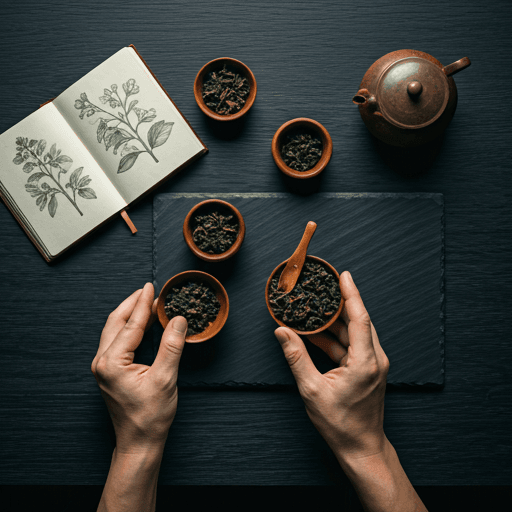
When you search tea near me, the goal is not just to find a place that serves tea, but to find a genuinely good one. This guide gives you a repeatable method you can use to find a great tea room or tea shop near you, in any city on earth: how to search smartly, how to read reviews critically, the quality signals that mark a serious tea place, and what to order to test it. It works whether you want a proper afternoon tea, a fresh pot of loose-leaf, a quick boba, or a well-made matcha latte.
The phrase "tea near me" covers a lot of different places, so the first job is knowing what you actually want. Then you point the right search at the right kind of shop and read the results like someone who knows what good tea looks like.
First, decide what kind of "tea near you" you want
"Tea shop" and "tea room" mean different things in different places. A short bit of clarity here saves you a wasted trip. The main categories you will find searching for tea near you are:
- Tea room / tea house — a sit-down spot built around brewing and serving tea well, often with loose-leaf menus, cakes, and sometimes a full afternoon tea service.
- Tea shop (retail) — a store that sells loose-leaf tea, blends, and teaware to take home. Some have a tasting bar; many do not have seating.
- Cafe with a real tea program — a coffee-forward cafe that also takes tea seriously, brews to temperature, and makes a proper matcha.
- Bubble tea / boba shop — focused on iced milk teas and fruit teas with chewy pearls. A different experience entirely, with its own way of judging quality.
- Specialty matcha or single-origin bar — a newer category focused on Japanese green tea, ceremonial matcha, and origin-specific leaf.
Knowing which one you want changes the words you type into a map. Searching the wrong term is the single most common reason people end up disappointed.
How to search "tea near me" so you get the right place
A map app like Google Maps (or Apple Maps) is your best tool, because it ranks by location, shows live ratings and recent reviews, and lets you scan dozens of options in a minute. The trick is using specific search terms instead of the generic one.
Try these, depending on what you are after:
tea room near meortea house near me— for a sit-down brewing-focused spot.loose leaf tea shop near me— for buying leaf and teaware to take home.afternoon tea near meorcream tea near me— for the British-style service with scones, cakes, or finger sandwiches.matcha latte near meormatcha cafe near me— for Japanese green-tea drinks made well.bubble tea near meorboba near me— for iced milk and fruit teas with pearls.chai near meormasala chai near me— for spiced milk tea brewed properly rather than from a syrup.
A few search habits that genuinely improve results:
- Use the map's rating filter. Most map apps let you show only places rated 4.0 or 4.5 stars and up. That trims the list fast.
- Sort by relevance, not just distance. The closest pin is not always the best cup. A great tea room ten minutes further is usually worth it.
- Check the hours yourself. Hours change, holidays happen, and small tea rooms often keep short or seasonal schedules. Confirm the current hours on the listing before you set off rather than trusting a cached result.
- Look at the photos uploaded by visitors, not just the owner's marketing shots. Customer photos show the real pot, the real scone, the real cup.
How to read tea-shop reviews without being fooled
Star ratings are a starting point, not the answer. A 4.6 with 1,200 reviews tells you far more than a perfect 5.0 with eight reviews. Read like a sceptic:
- Sort reviews by "most recent." A place can change owners, lose a great brewer, or slip. Reviews from the last few months matter more than glowing ones from three years ago.
- Read the three-star reviews. Five-star raves and one-star rants are often emotional. The middle reviews tend to be the most honest and specific about what is actually good or weak.
- Look for tea-specific language. Reviewers who mention loose-leaf, steep temperature, a named tea (Darjeeling, sencha, oolong), or "the matcha was vibrant, not bitter" are telling you the place is the real deal. Reviews that only mention the wifi and the decor tell you it is a hangout, not a tea house.
- Watch for review patterns. A burst of identical five-star reviews in one week can be staged. Steady, varied feedback over time is more trustworthy.
- Note the experienced reviewers. On Google Maps, frequent contributors (Local Guides) often write more detailed, comparative reviews than one-off visitors.
The quality signals of a great tea room or tea shop
Once you are standing in the door, a handful of signals separate a serious tea place from one that just sells hot water on a bag. None requires you to be an expert.
Signals in a tea shop or tea room
- Loose-leaf is front and centre. Whole-leaf tea brewed in a pot or basket infuser almost always beats a dunked bag. A menu organised by type — white, green, oolong, black, pu-erh, herbal — signals people who care.
- They brew to temperature and time. Good green tea is steeped below boiling; black tea needs hotter water; over-steeped tea turns bitter. Staff who use a timer, a thermometer, or a kettle with temperature settings know what they are doing. See how to brew loose-leaf tea for what "right" looks like.
- The leaf looks and smells fresh. In a retail tea shop, ask when a tea was packed or roasted. Fresh leaf is aromatic; flat, dusty, faded leaf is old stock.
- Single-origin and named teas exist. "Black tea" is generic. "Second-flush Assam" or "Uji gyokuro" shows sourcing knowledge.
- The teaware is proper. Pots, gaiwans, strainers, and the option of a separate jug of just-off-the-boil water for re-steeping all point to a real tea culture.
- It is busy with locals. A steady local trade is one of the most reliable quality signals anywhere in the world.
Signals for matcha, chai, and bubble tea
- Matcha: a great matcha latte near me result whisks real ceremonial- or premium-grade matcha powder fresh, so it is smooth and green, not dusty, grey, or sweetened from a pre-mixed syrup.
- Chai: the best places brew spiced tea with real leaf, milk, and whole spices rather than pumping a flavoured syrup into hot milk.
- Bubble tea: look for tea brewed fresh that day, pearls cooked to order (chewy, not hard or mushy), and adjustable sweetness levels.
Afternoon tea vs cream tea: know what you are booking
If your "tea near me" search is really a search for the full sit-down ritual, two terms get confused constantly, and they cost different amounts and fill you up differently.
| Service | What you get | Best for |
|---|---|---|
| Cream tea | A pot of tea plus warm scones served with clotted cream and jam. Simple and lighter. | A quick, classic treat or a mid-afternoon pause. |
| Afternoon tea | A tiered spread: finger sandwiches, scones with cream and jam, and cakes or pastries, with a pot of tea. | A celebration or a leisurely, filling occasion. |
| High tea | Historically a more substantial, savoury evening meal — not the fancy hotel service many assume. | A heartier, early-evening meal. |
A small, genuinely lovely detail to test a tea room on: in the West Country of England, Devon spreads cream on the scone first then jam, while Cornwall does jam first then cream. A tea room that has an opinion about this usually cares about the rest, too. For the full breakdown, see afternoon tea vs high tea explained. Costs vary widely by country, city, and venue — a hotel afternoon tea sits at a premium tier, while a village tea room's cream tea is far more modest — so always check the menu before you book.
What to order to test a new tea place
The fastest way to judge a tea room or shop is to order the thing that is hard to fake:
- A pot of plain loose-leaf tea — a straight Darjeeling, sencha, or oolong, no milk or sugar. If the unadorned cup is clean, aromatic, and not bitter, the place can brew.
- A plain matcha or matcha latte — real matcha tastes vegetal and slightly sweet, never chalky or harsh.
- A scone, if they do a cream tea — freshly baked, not microwaved from frozen, served with real clotted cream.
- Ask the staff one question: "What would you brew for someone new to good tea?" Enthusiasts light up and give you a real recommendation. A shrug tells you plenty, too.
Questions worth asking the staff
- Is this loose-leaf or bagged?
- What temperature and time do you brew this at? (Good staff know.)
- When was this tea packed or roasted?
- Can I re-steep the leaves, and do you offer more hot water?
- Where is this tea from?
You do not need to be a connoisseur to ask these. The answers — and how readily they come — tell you whether you have found a keeper.
Keep exploring
Finding a great tea room near you is a skill you carry to every new city: search the specific term, filter and sort the map, read recent reviews like a sceptic, and trust the quality signals once you are inside. The same critical eye works for coffee, too — try the method on finding the best coffee shop or cafe near you. And to walk into your next tea room already knowing what good tastes like, brush up on the main types of tea. The more you know, the easier every great cup is to find.