
Great camp coffee comes down to one decision: match a brewing method to your gear, your heat source, and how fussy you want to be at sunrise. You do not need a cafe rig to drink well outdoors. With a coarse-ish grind, a rough 1:15 to 1:17 ratio of coffee to water, and a pot of near-boiling water, almost any method below makes a clean, satisfying cup at a campsite.
One quick note before the methods. Camp Coffee is also the name of a long-running Scottish coffee-and-chicory liquid essence, first made in Glasgow in 1876 and still sold today for quick milky coffee and for flavouring bakes like coffee cake. This guide is not about that bottle. It is about brewing real coffee at a campsite, by hand, over a stove or fire.
What makes camp coffee work
Camping strips brewing back to fundamentals, which is freeing once you understand them. Three things carry almost all of the quality: your ratio, your grind, and your water temperature. Get those roughly right and the specific gadget matters less than people think.
- Ratio. Aim for about 1:15 to 1:17 coffee to water by weight. Without a scale, that is roughly 2 level tablespoons of grounds per 6 to 8 oz (180 to 240 ml) cup. Want it stronger? Add coffee, not less water.
- Grind. Grind to suit the method. Immersion methods (cowboy coffee, French press, cold brew) like a coarse grind. Quick methods (AeroPress, pour-over) like medium. Moka pots want fine-ish. Pre-grinding at home is the easiest move; a hand grinder is the dialed-in one.
- Water. You rarely control temperature precisely outdoors, and you do not need to. Take the water off the heat, let it settle for 20 to 30 seconds, then brew. At altitude water boils below 212F (100C), so "just off the boil" is simply your hottest available water, and that is fine.
If you want a refresher on the underlying technique before you pack, our guide to how to make coffee covers ratio, grind, and extraction in plain terms.
The camp coffee methods, from gear-free to dialed-in
Cowboy coffee (no equipment)
The classic. Boil water in your camp pot, take it off the heat for half a minute, then stir in a coarse grind at about 1:15. Let it steep around 4 minutes. To drop the grounds, sprinkle a little cold water on top or tap the side of the pot, then pour slowly and leave the last inch behind, since that is where the sludge settles. Rustic, but genuinely good when you respect the steep time.
Moka pot (stovetop, strong)
A moka pot makes a strong, espresso-style concentrate on a camp stove. Fill the base to the valve with hot water, fill the basket with a fine-medium grind (do not tamp), and set it on low, steady heat. Pull it off when it starts to gurgle and the top chamber is full. Drink it neat, top it with hot water for an americano-style cup, or add milk. Best for car campers who have a stable burner.
Camping percolator (campfire classic)
Percolators are the nostalgic metal pots that cycle boiling water up through the grounds. Use a coarse grind, around 1 tablespoon per cup, and let it perk for 5 to 10 minutes. Watch the colour in the little glass knob and pull it before it turns inky, because percolators happily over-extract into bitterness. They are sturdy, group-sized, and forgiving of an open fire.
French press or travel press
A French press is one of the most reliable camp brewers: coarse grind, 1:15, pour just-off-boil water, stir, cap, and plunge after 4 minutes. An insulated travel press is the camping upgrade, since you brew and drink from the same double-walled vessel and there is no separate carafe to break. Full-bodied and very low-skill.
AeroPress (a camper favourite)
The AeroPress is beloved by campers for good reason: light, near-unbreakable, fast, and the cleanup is a joke. Use a medium grind at roughly 1:14 to 1:16, steep about a minute, then press. The spent puck pops straight out into your trash bag, so there is almost nothing to rinse. Ideal for one or two people who want a clean, controlled cup.
Pour-over with a collapsible dripper
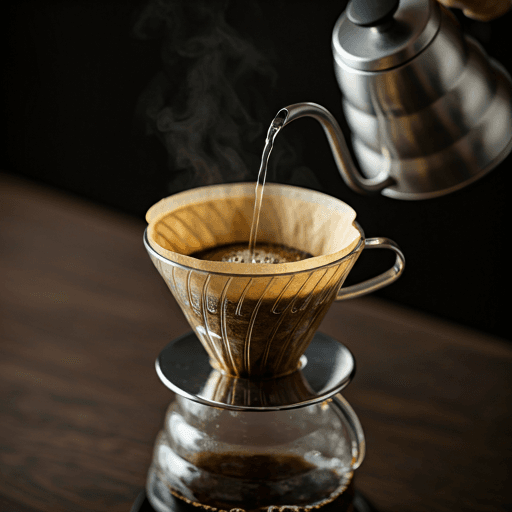
A collapsible silicone dripper plus paper filters packs flat and weighs almost nothing. Bloom the medium grind with a little water for 30 seconds, then pour in slow stages over 3 to 4 minutes. It rewards a steady hand and gives the cleanest cup here. The trade-off is that you must carry filters and pour patiently, which is harder in wind.
Instant coffee and coffee bags
Do not dismiss these. Modern instant has come a long way, and single-serve coffee bags (like a tea bag, but coffee) brew with nothing but hot water and leave no grounds to deal with. This is the ultralight, fast, zero-cleanup option for backpackers and pre-dawn starts. See our explainer on instant coffee for how it is made and how to pick a decent one.
Overnight cold brew (no heat)
No stove, no fire, no problem. Steep a coarse grind in cold water in a jar or bottle overnight (12 to 18 hours), then strain. A 1:8 ratio gives a concentrate you cut with water or milk; 1:15 gives a ready-to-drink brew. It is smooth, low in bitterness, and perfect for hot weather. Full method in our guide to how to make cold brew coffee.
Camp coffee methods compared
| Method | Gear you need | Best for |
|---|---|---|
| Cowboy coffee | A pot and a heat source | Minimalists with no brewer |
| Moka pot | Moka pot + stable stove | Strong, espresso-style cups |
| Percolator | Metal percolator + fire/stove | Groups and campfire cooking |
| French / travel press | Press (insulated travel press ideal) | Full-bodied, low-skill brewing |
| AeroPress | AeroPress + filters | Light, fast, easy cleanup |
| Pour-over | Collapsible dripper + filters | Cleanest cup, ultralight |
| Instant / coffee bags | Just hot water | Backpacking and speed |
| Cold brew | A jar or bottle, time | Hot weather, no heat source |
Tips for brewing over a fire or camp stove
- Heat control. An open fire is hotter and less even than a stove. Brew at the edge of the coals, not over roaring flames, and keep a metal pot moving so it does not scorch.
- You cannot dial in temperature, so do not try. Boil, rest 20 to 30 seconds, brew. For steep methods the exact degree barely matters.
- Wind is the enemy of pour-over. If it is gusty, switch to an immersion method (press, cowboy, cold brew) that does not need a delicate stream.
- Pre-measure at home. Bag your grounds per cup before you leave so you are not guessing in the cold.
Leave no trace: clean up the grounds
Used coffee grounds are organic, but they are not "natural" to a wild site and they do not vanish quickly. The responsible move is to pack them out with your other waste. Never dump grounds or rinse water within about 200 feet (60 m) of a lake, stream, or spring. Used paper filters go in your trash bag, not the fire ring and not the bushes. Scatter rinse water widely on durable ground, away from camp and water. An AeroPress puck or a coffee bag makes this easiest, which is part of why both are so popular outdoors.
Keep it simple, or dial it in
The simplest reliable setup is instant or coffee bags plus a pot to boil water: featherlight, foolproof, nothing to clean. One step up, a travel press or an AeroPress gives real brewed flavour for very little weight or fuss. The dialed-in route adds a hand grinder, fresh whole beans, and a small scale, which turns a campsite into a pour-over bar if that is your idea of a good morning. None is "correct" -- match the effort to the trip.
Once you know which style suits you, choosing the actual hardware is the next step: our guide to camping coffee makers compares the gear by weight, durability, and how it travels. Pack good beans, respect the steep time, carry your grounds back out, and camp coffee turns from a compromise into one of the best cups of the day.