
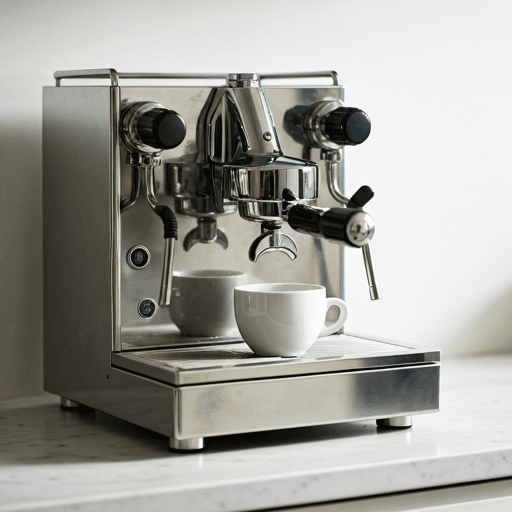
An iced coffee maker brews coffee hot and fast, then chills it in minutes, so you get bright, full-flavored coffee over ice without waiting overnight. That is the single fact that should guide your choice: an iced coffee machine is built around heat and speed, while a cold brew maker steeps grounds in cold water for 12 to 24 hours. Once you understand that split, picking the right brewer becomes easy. This guide explains the maker types, what to look for, and how to avoid a watery cup.
What an iced coffee maker actually does
The core trick of any good iced coffee maker is concentration. If you brewed a normal-strength batch and poured it over a glass of ice, the melting ice would dilute it into something thin and sad. So an iced coffee maker brews stronger than usual, then meets the ice on purpose. Most machines do this in one of two ways: they brew hot concentrate directly onto a cup or carafe packed with ice (the ice instantly chills the brew and the extra strength absorbs the meltwater), or they brew hot and then rapidly cool the coffee with a chilling plate or a cooler second pour so it barely melts the ice at all.
Hot extraction matters for flavor, not just speed. Brewing with water around 195 to 205 degrees Fahrenheit pulls out the bright, fruity, aromatic notes that cold water leaves behind. That is why iced coffee tastes like crisp, fresh coffee, while cold brew tastes mellow, smooth, and low-acid. Neither is "better" -- they are different drinks. If you want to understand the chilled side of the family, our explainer on what iced coffee is walks through the styles.
Iced coffee maker vs cold brew maker vs just chilling
This is the most important distinction on the page, so it is worth being blunt about it. These three approaches make a cold cup in completely different ways.
| Approach | How it makes a cold cup | Time | Flavor |
|---|---|---|---|
| Iced coffee maker (hot, fast) | Brews hot, concentrated coffee straight over ice or rapidly chills it | ~4 to 10 minutes | Bright, fresh, classic coffee flavor |
| Cold brew maker (cold, slow) | Steeps coarse grounds in cold or room-temperature water | 12 to 24 hours | Smooth, mellow, low-acid, rich |
| Just chilling hot coffee | Brew normally, refrigerate, pour over ice later | Brew + fridge time | Fine, but can taste flat or stale; ice waters it down |
The reason a dedicated iced coffee maker beats simply refrigerating a pot is dilution control. A cold brew maker sidesteps dilution by being a concentrate you cut to taste; an iced coffee maker sidesteps it by brewing strong and chilling instantly. Plain refrigerated coffee has neither advantage -- it is brewed at normal strength, loses aromatics as it sits, and then gets watered down by the ice on top. If smooth and low-acid is your goal, you want cold steep gear instead -- see our companion guide to the best cold brew coffee makers and the step-by-step how to make cold brew coffee. The rest of this page is about the hot-and-fast iced machines.
The main types of iced coffee makers
There is no single "best" machine, because the right iced coffee maker depends on how you like to drink, how many cups you make at once, and whether you also want hot coffee. Here are the categories worth knowing, with well-known examples named only to illustrate each type -- not as endorsements.
Dedicated brew-over-ice machines
These are single-purpose iced coffee makers that brew a small, hot, concentrated batch straight down onto a tumbler full of ice. The Mr. Coffee Iced Coffee Maker is a familiar example; its "rapid chill" style brew is ready in roughly four minutes. Brands such as Hamilton Beach and Dash make similar compact units, and some Ninja models offer a comparable single-serve over-ice path. They are inexpensive, simple, and genuinely quick -- a strong pick if iced coffee is mostly what you drink and you do not need a hot-coffee machine too. The trade-off is that a dedicated unit does one job, so you give up flexibility for that low price and small footprint.
Multi-mode brewers with an "over ice" setting
These do hot and iced from one machine. Ninja's hot-and-cold systems are a common example: an "over ice" or thermal-extraction mode brews a richer, more concentrated coffee specifically to account for ice melt, and many of the same machines also include a separate rapid cold-brew cycle that finishes in well under an hour rather than overnight. A premium drip brewer such as a Moccamaster is not marketed as an "iced" machine, yet it works beautifully for the purpose because it brews hot (around 196 to 205 degrees) and finishes a batch in under six minutes -- exactly the heat-plus-speed an iced coffee machine needs; you simply brew a strong batch directly over a carafe of ice. If you want one appliance for everything, this category is the sweet spot. Our how to make coffee guide covers the brewing fundamentals these machines automate.
Pod machines with an iced button
Single-serve pod brewers have leaned into iced coffee. Keurig's iced-capable models add a "brew over ice" or dedicated iced button that brews a smaller, more concentrated shot than the standard cup size, so it holds up over ice. The appeal is convenience and zero cleanup; the trade-off is per-cup pod cost and less control over strength. Pod machines also lock you into one capsule system, so the iced button is only as good as the roasts that system sells. If pods are your world, this is the path of least resistance for a fast cold cup on a busy morning.
The no-machine method (flash brew)
You do not strictly need a dedicated appliance at all. The classic "Japanese iced coffee" or flash-brew method is a manual pour-over brewed hot directly onto ice. The idea is simple: replace part of your brew water with ice in the carafe, then brew hot coffee over it. A typical approach uses your normal coffee dose but splits the water so that roughly a third of the total water weight is ice waiting in the server, with the remaining two-thirds poured hot through the grounds; a slightly finer grind helps the coffee dissolve and chill cleanly. The hot brew preserves aromatics, and the ice locks them in the instant the coffee lands. Any pour-over dripper works, and the result is the brightest cup of the bunch for the price of a paper filter.
Comparison: which iced coffee maker suits you
| Maker type | How it makes iced coffee | Best for |
|---|---|---|
| Dedicated brew-over-ice | Hot concentrate brewed straight onto ice, ready in minutes | Iced-first drinkers who want cheap, fast, and simple |
| Multi-mode hot/iced brewer | "Over ice" mode brews stronger; some also do rapid cold brew | One machine for both hot and iced, bigger batches |
| Pod machine with iced button | Smaller, concentrated pod shot designed to go over ice | Convenience seekers who value zero cleanup over cost |
| Flash brew (no machine) | Manual pour-over brewed hot over ice in the carafe | Hands-on brewers who want control and bright flavor |
What to look for in an iced coffee machine
Whatever type you lean toward, these criteria separate a cup you love from a watery letdown. Use them as a checklist.
- Brews concentrated. The machine should brew stronger than a normal cup, or let you choose a bold setting, so melting ice does not dilute it. This is the number one feature -- everything else is secondary to it.
- Hot extraction, then fast chill. Look for genuinely hot brewing followed by quick cooling -- either by landing straight on ice or via a chilling step. Heat brings the flavor; speed keeps the ice from melting away.
- Capacity that fits your habit. Single-serve tumblers are perfect for one drink; carafe-style multi-mode machines suit a household or a batch you sip through the afternoon. Match the machine to how many glasses you actually pour at once.
- Easy to clean. Removable, dishwasher-safe baskets and carafes matter more than you would think when you brew daily in summer; oils go rancid fast on a machine you skip cleaning.
- Also-does-hot (if you want it). If you do not want two appliances, prioritize a multi-mode brewer over a dedicated iced-only unit. If your counter and budget are tight and you only drink iced, the dedicated unit wins.
- Strength control. A "bold" or "over ice" dial lets you dial in concentration for different ice loads and milk levels, which a fixed single-strength brewer cannot.
- Ice and grind. Use plenty of ice and a slightly finer-than-normal grind on concentrated settings; weak ice or coarse grounds undo even a good machine.
Common mistakes that make iced coffee watery
A great machine still needs good habits. Most weak iced coffee traces back to one of these:
- Too little ice. A half-full glass of ice melts fast and dilutes hard. Fill the glass; a fuller glass of ice melts more slowly and chills faster, keeping the brew strong.
- Brewing at normal strength. If your machine has no concentrated setting, dose more coffee than you would for a hot cup so the meltwater brings it back to normal rather than weak.
- Letting coffee sit before icing. Brew onto fresh ice right away; coffee that cools slowly on the counter goes flat and stale before it ever reaches the glass.
- Adding warm milk first. Pour milk in after the coffee hits the ice so it does not warm the cup and speed up melting.
Want milk-forward drinks built on this same concentrated base? An iced latte starts from a strong shot or batch plus cold milk over ice -- the stronger your starting brew, the better it survives both ice and milk.
The bottom line
Choosing an iced coffee maker comes down to one question: do you want bright, fresh coffee in minutes, or smooth, mellow cold brew over a long steep? If it is the former, any of the hot-and-fast machines here -- dedicated, multi-mode, pod, or a simple flash-brew pour-over -- will serve you well, as long as it brews concentrated and chills quickly. If the smooth, low-acid profile is calling, dedicated cold steep gear and a long, patient brew are the way to go instead. Either way, you are a few minutes from a great cold cup. Explore more gear and methods on our coffee hub.