
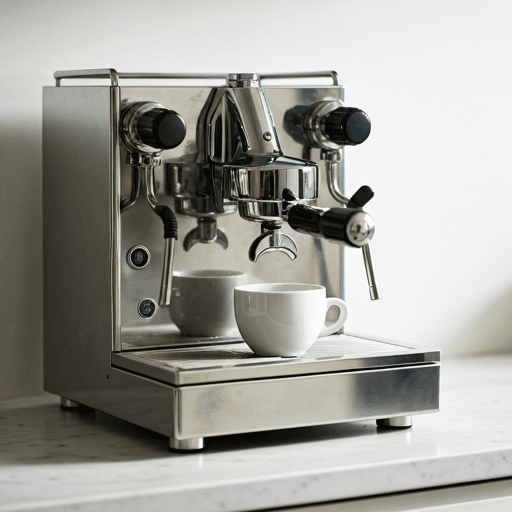
A stovetop coffee machine is any coffee brewer you heat directly on the hob rather than plugging in — no cord, no pod, just a burner and a pot. The main options are the moka pot (often sold as a "stovetop espresso maker"), the stovetop percolator, and a stovetop kettle paired with a pour-over or immersion brewer. Each one pushes hot water through the grounds a little differently, so each pulls a bolder or cleaner cup — and none of them needs electricity, which is exactly why they earn a spot in tiny kitchens, off-grid cabins and camp kits.
What is a stovetop coffee machine?
The term covers a whole family of brewers that sit on a gas ring, an electric coil or an induction hob and rely on the heat of the flame — not an internal element — to do the work. A stovetop coffee maker can be as simple as a pot of water you boil and pour over grounds, or as engineered as a pressurised moka pot with a safety valve and a filter basket. What they share is independence from the wall socket, a low price of entry, and the kind of hands-on brewing that lets you taste the difference between a rushed cup and a patient one.
Because there is no pump, no heating element and no electronics, a stove top coffee pot tends to last for years and travels well. The trade-off is that you are the thermostat: you decide when the water is hot enough, when to pull the pot off the heat, and how fine to grind. That control is the appeal for some drinkers and the hassle for others, which is why it helps to know how each style actually brews before you pick one.
The main types of stovetop coffee makers
There are four brewing families you will meet under the "stovetop" banner. Three are proper brewers; the fourth is the pot-and-grounds method campers fall back on. Here is how they compare at a glance before we look at each in turn.
| Type | How it brews | Strength and style | Best for |
|---|---|---|---|
| Moka pot (stovetop espresso maker) | Steam pressure pushes hot water up through a packed puck of grounds | Strong, concentrated, near-espresso with a light crema | Espresso-style intensity in small batches |
| Stovetop percolator | Boiling water recirculates up a tube and rains back through the grounds, over and over | Bold, hot and old-school; can turn bitter if left too long | Big, robust pots and nostalgic camp coffee |
| Stovetop kettle + pour-over or French press | You boil water on the hob, then brew separately in a dripper or press | Clean and bright, or full-bodied — you control it | Clarity, control and brewing flexibility |
| Cowboy coffee (pot boil) | Coarse grounds go straight into the boiling pot, then settle | Rustic, unfiltered and gritty | Camping with almost no gear |
The moka pot: a stovetop espresso maker
The moka pot is the icon of stovetop brewing — a three-chamber aluminium or stainless pot that a lot of people simply call a "stovetop espresso maker." Water in the bottom chamber heats until steam pressure forces it up through a basket of finely ground coffee and into the top, where a rich, concentrated shot collects. It is not true espresso — the pressure is a fraction of a café machine's — but it is the boldest cup most stovetop gear will give you, ideal as a base for a milky drink or sipped straight in a small cup.
Moka pots reward a medium-fine grind, a gentle flame and a quick pull off the heat the moment they gurgle. They are compact, nearly indestructible and a fixture of the Italian kitchen. For the full method — grind, fill line, heat and the classic pull-off timing — see our moka pot guide, which covers the deep detail this overview only touches.
The stovetop percolator
A percolator is the big, bubbling pot of diner and campfire lore. Water boils in the base, climbs a central tube and showers down over the grounds in the upper basket, then drains back to be pumped up again — a cycle it repeats until you take it off the heat. That recirculation is what makes percolator coffee so bold and so hot, and also what makes it easy to over-extract into bitterness if you let it run. The fix is simply to pull it once the brew looks strong enough, usually after a few minutes.
Percolators shine when you need volume — a full pot for a crowd or a campsite — and they suit drinkers who like their coffee loud and traditional rather than delicate. A coarse grind and a watchful eye keep the harshness at bay. Our coffee percolator guide walks through timing, grind and the stovetop-versus-electric question in more depth.
The stovetop kettle plus a pour-over or press
The most flexible "stovetop coffee maker" is not a single dedicated pot at all: it is a hob kettle that boils your water, which you then pour into a separate brewer. Pair it with a pour-over cone for a clean, bright, tea-like cup, or with a French press for a heavier, full-bodied one. Because the kettle only heats water, you can brew any style you like and judge temperature by feel or with a clip-on thermometer — a gooseneck spout gives the slow, controlled pour that pour-over rewards.
This route gives you the most say over the final cup and the easiest path to clarity, which is why so many third-wave drinkers gravitate to it. The kettle itself deserves its own attention — materials, induction bases, whistling versus gooseneck spouts — so we cover choosing one in the stovetop kettles guide.
Cowboy coffee and the pot boil
The oldest method needs no special vessel: coarse grounds go straight into a pot of hot water, steep, and settle to the bottom before you pour carefully off the top. It is gritty, rustic and utterly unfiltered — the taste of a campfire morning. It is less a machine than a technique, and it is the ultimate backup when all you have is a pot and a flame. Seasoned campers have tricks — a splash of cold water to drop the grounds, a slow and steady pour — that turn a muddy cup into a surprisingly good one.
What to look for in a stove top coffee pot
Whichever style tempts you, a handful of practical features decide how well a coffee brewer stove top setup fits your kitchen and your routine. Weigh these before you commit.
Material: aluminium vs stainless steel
Classic moka pots and many percolators are aluminium — light, quick to heat and inexpensive, but reactive over time and not dishwasher-friendly. Stainless steel costs more, resists staining, is easier to clean and, crucially, works on induction hobs. If you want something that will look and brew the same in a decade, stainless is the safer bet; if you love the featherweight classic feel, aluminium still has its charm.
Induction compatibility
Induction hobs only heat magnetic metals, so a pure aluminium pot simply will not warm up on one without an adapter plate. Stainless-steel pots — or moka pots sold with an induction-ready base — are the fuss-free choice for a modern kitchen. Always check the base if your hob is induction, because it is the single most common reason a beautiful pot ends up unused on a shelf.
Size and cup count
Stovetop brewers are sized in "cups," but those are small espresso-style cups, not full mugs — a "six-cup" moka pot makes roughly three modest servings. Pick a size close to how much you actually drink: moka pots in particular brew best when the basket is full, so a giant pot you only half-fill will make weaker, uneven coffee. Percolators scale up more gracefully for a crowd.
Heat source and control
Gas gives the most responsive flame and is kindest to small moka pots; keep the flame within the base so the handle does not scorch. Electric coils and glass-ceramic hobs work too but heat more slowly, so allow extra time. Whatever the source, a gentle-to-medium heat and a quick removal at the right moment matter far more than raw power.
Cleaning and upkeep
Simplicity is the point: most stovetop pots come apart into a few pieces that rinse under the tap. Aluminium moka pots are best cleaned with just hot water — no soap, which strips the seasoned patina — while stainless pieces tolerate a proper wash. Replace the rubber gasket and check the safety valve on a moka pot every so often, and empty percolator baskets promptly so old grounds do not sour.
Portability and camping
Because they need only heat, stovetop brewers are the natural choice for off-grid coffee. A sturdy stainless moka pot or a classic percolator will sit happily on a camp stove or a bed of embers, and there is nothing to break or recharge. If the outdoors is your main use case, our camping coffee makers guide compares the toughest packable options.
How to choose the right stovetop coffee machine
The decision comes down to the cup you want in your hand. Match the flavour to the format and the choice makes itself.
- You want espresso-style intensity. Go moka pot. It gives the strongest, most concentrated cup of any stovetop option and doubles as the base for a homemade latte or cortado.
- You want a big, bold pot for a group. Go percolator. It brews volume, keeps coffee piping hot and delivers that unmistakable old-school punch.
- You want control and clarity. Go stovetop kettle plus a pour-over or French press. You steer temperature, grind and technique for the cleanest, most nuanced cup.
- You want a no-gear backup. Boil grounds cowboy-style. It is rough around the edges, but it works with nothing more than a pot and a flame.
Plenty of coffee lovers end up owning two: a moka pot for the fast, punchy morning shot and a kettle-and-dripper for the slow weekend cup. Since none of them costs much or takes up real space, there is little downside to keeping a couple of methods on the shelf.
The bottom line
A stovetop coffee machine trades the convenience of a button for something quieter and more tactile — the smell of coffee climbing a moka pot, the burble of a percolator, the steady pour from a kettle you filled yourself. There is no single best answer, only the method that suits your taste and your hob. Start with the flavour you crave, check that your chosen pot fits your heat source, and you will have good coffee that needs nothing but a flame — the most portable, least fussy way to brew there is.