
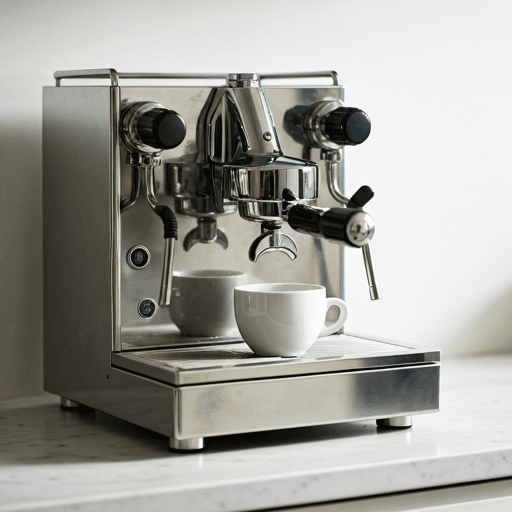
Latte cups are the wide, roughly 8 to 12+ oz (about 220 to 350 ml) cups or short glasses that comfortably hold a single espresso shot topped with a generous pour of steamed milk. That extra width does more than fit the volume: it gives the milk a broad, shallow surface so latte art can bloom and the drink stays silky rather than crowded. If you are choosing a set, the size, the shape of the bowl and the material all shape how the finished drink looks, feels and holds its heat.
This guide walks through how latte cups compare with smaller cappuccino and espresso vessels, which shapes flatter the pour, how ceramic and glass trade off, and the small practical details worth checking before you commit to a set. Costs are described only in broad tiers, from everyday to premium, so you can match a cup to how you actually drink.
What are latte cups, and how big should they be?
A latte is an espresso-forward drink that is mostly steamed milk with a thin cap of microfoam, so it needs more room than a cappuccino or a flat white. In practice, latte cups usually land in the 8 to 12 oz range, with plenty of larger 12 to 16 oz options for people who like a longer, milkier drink. The classic proportions are one or two espresso shots to the rest steamed milk, which is why a cup that feels almost too big empty is often just right once it is filled.
Going too small is the common mistake. A cup that only just contains the liquid leaves no headroom, so the foam threatens to spill and there is no clear surface to pour a pattern onto. A touch of extra volume is your friend: it keeps the milk from overflowing and gives you a margin for a slightly heavier pour on a sleepy morning. Sizing is not an exact science, though, so treat these ranges as a starting point and let your own recipe and appetite fine-tune the number.
How latte cups compare with cappuccino, flat white and espresso cups
The easiest way to understand a latte cup is to line it up against its smaller cousins. Espresso goes into a tiny demitasse; a cortado sits just above that; cappuccino and flat white cups are compact so their foam stays tall and dense; and the latte cup is the wide, roomy one at the top of the range. These are typical ranges, not strict rules, and every roaster and cafe draws the lines a little differently.
| Drink | Typical cup size | Character |
|---|---|---|
| Espresso | ~2 to 3 oz (60 to 90 ml) | Tiny demitasse, thick-walled to hold heat |
| Cortado | ~4 to 5 oz (120 to 150 ml) | Small glass or cup, equal espresso and milk |
| Cappuccino | ~5 to 6 oz (150 to 180 ml) | Compact bowl, tall dense foam |
| Flat white | ~5 to 6 oz (150 to 180 ml) | Small, thin microfoam, espresso-led |
| Latte | ~8 to 12+ oz (220 to 350 ml) | Wide bowl, milky, room for latte art |
Because the cappuccino cup has its own job to do, we keep the deep dive on those smaller vessels in our cappuccino cups guide. If you want the wider picture of every drink and its matching vessel, the coffee mug and cup guide maps the whole range.
Shape: why a wide bowl helps latte art
Shape matters as much as volume. The most latte-friendly cup has a wide mouth, a rounded or gently curved base, and a soft taper toward the bottom. That curved base guides the milk into a smooth circular motion as it settles, which is exactly what you want when you are trying to draw a heart, a rosetta or a tulip. A wide opening also lets you bring the milk pitcher close to the surface, which is the single biggest factor in a clean pour.
Steep, straight-sided cups and narrow mugs fight you here. The milk has nowhere to spread, the crema does not integrate as evenly, and any pattern you pour tends to bunch up rather than open out. For latte art specifically, prioritize width and a rounded interior over height.
Tall latte glasses for layered and iced lattes
There is a second family worth knowing: the tall latte glass. These trade the wide art-friendly bowl for height, which shows off the layered look of a latte where espresso sits over milk, and they are the natural home for an iced latte over ice. Tall glasses are more about presentation than pouring a pattern, so they suit people who love the striped, cafe-window aesthetic or drink their lattes cold. Double-walled glass is especially popular here because it keeps the layers looking clean while protecting your hand from the cold or the heat. For more on glassware in general, our glass mugs guide covers the single- and double-walled options in depth.
Does cup color matter for latte art?
It can, at least for how the pattern reads. A white or light-colored interior gives the best contrast, because the brown crema sits against a pale background and the poured white milk shows up crisply on top. Dark glazes and heavily patterned interiors tend to swallow that contrast, so a beautiful rosetta can look muddy even when the pour was clean. If showing off your art is part of the fun, a plain light interior is the safe bet; if the drink is just for you, color is purely a matter of taste and does nothing to the flavour.
Materials: ceramic, porcelain, glass and stoneware
The material you choose changes heat retention, weight, how the cup feels in the hand and how it looks on the table. None is objectively best; each has a clear trade-off.
| Material | Strengths | Trade-offs |
|---|---|---|
| Ceramic / porcelain | Excellent heat retention, classic cafe feel, easy to pre-warm, wide design choice | Opaque, so no layered view; can chip if knocked; heavier |
| Double-walled glass | Insulates the drink and your hand, keeps the exterior cool, shows off layers | Usually a premium tier; thinner feel; check whether it is dishwasher and microwave safe |
| Tempered / single-wall glass | Affordable, shows the drink, sturdier than fine glass | Loses heat faster, gets hot to hold without a handle or sleeve |
| Stoneware | Chunky, rustic, hard-wearing, great heat retention | Heavy; thick rims feel different on the lip; bulkier to store |
For hot lattes where you want the drink to stay warm to the last sip, ceramic and porcelain are the traditional choice, and they take a coat of glaze beautifully. Double-walled glass wins on looks and on keeping the outside cool, which is why it shows up so often for both layered hot lattes and iced ones. Tempered glass is the value option that still lets you admire the drink. Stoneware leans into a cozy, handmade mood.
What to look for when buying latte cups
Once size, shape and material are settled, a handful of practical details separate a cup you love from one that just sits in the cupboard.
- Handle or handleless. A handle keeps your fingers off a hot ceramic cup and suits a sit-down drink; handleless tumblers look modern and stack more easily, but pair better with double-walled glass so they do not scorch your hand.
- Wall thickness and pre-warming. Thicker walls hold heat longer, which matters because a cold cup steals warmth from your latte the moment you pour. Warming the cup first, with a splash of hot water or on a machine's cup tray, keeps the drink hotter for longer whatever the material.
- Rim shape. A slightly thinner, tapered rim feels more refined on the lip; a thick rim feels sturdy and casual. It is personal, so try to picture how you actually like to drink.
- Dishwasher and microwave safe. Check the base or the maker's notes. Some hand-finished glazes, metallic trims and double-walled glasses prefer hand washing, and not every glass is microwave friendly.
- Buy as a set or singly. Matching sets look tidy and are convenient if you host; buying singly lets you build a mix of shapes, say a couple of wide bowls for art and a tall glass for iced days.
- Stability and storage. A wide, weighted base resists tipping, and cups that nest or stack save space if your shelf is tight.
If you are still weighing up the fundamentals of choosing between cup styles across your whole coffee routine, our guide to choosing coffee cups lays out the decision step by step.
Caring for and storing your latte cups
A little care keeps a set looking and performing its best for years. Delicate glazes, gold or metallic rims and most double-walled glasses last longer with a gentle hand wash rather than a hot, aggressive dishwasher cycle, and metallic trims should never go in the microwave. Glass rewards a bit of caution around sudden temperature swings: pouring boiling milk into a fridge-cold glass, or plunging a hot glass into cold water, invites thermal shock, so let extremes meet gradually. Stack or nest cups only if they are designed for it, and slip a thin cloth or felt pad between stacked ceramics to guard the rims and interiors from the little chips that dull a favorite cup over time.
Matching the cup to how you drink
Think about your habits before your cupboard. If you are practicing pours at home, a wide ceramic bowl in the 8 to 10 oz range gives you the best canvas. If you love a long, milky drink, size up to 12 oz or more. If your lattes are mostly iced or you adore that layered look, a tall double-walled glass earns its place. Many home baristas end up with two or three shapes rather than one, and that is a perfectly sensible way to cover every mood without overspending.
There is no single right answer, only the cup that fits your drink and your kitchen. Get the size roughly right, favor a wide rounded bowl if latte art is your goal, pick a material that matches how warm you like your coffee, and the rest is a happy matter of taste. Warm the cup, pour with a steady hand, and enjoy the small daily ritual of a latte in a vessel that was made for it.