
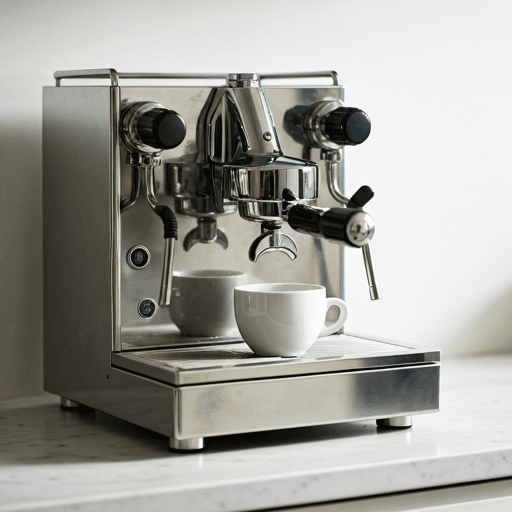
A coffee doser is the part of a traditional espresso grinder that portions out ground coffee. It is the round chamber on the front, divided into fanned, pie-shaped compartments, with a lever on the side. Each pull of that lever sweeps one wedge of grounds out of the chamber and into your portafilter, so a doser's whole job is to measure and deliver a single "dose" of coffee, one shot at a time.
That sounds simple, and it is, but the doser sits at the heart of a long-running debate among coffee people: doser versus doserless, and the newer habit of single dosing. This guide explains what a doser actually does, how it differs from a modern doserless grinder, why some home baristas now skip the chamber entirely, and how to get clean, repeatable doses from whichever you use. For the grinder itself, the coffee grinder guide covers the bigger picture; here we focus on the doser.
What a coffee doser is and how it works
Picture the classic cafe grinder: a tall hopper of beans on top, the burrs in the middle, and a metal cylinder bolted to the front with a lever sticking out. That cylinder is the doser. Inside it, a spinning wheel is split into six fan-shaped segments, like slices of a pie. Ground coffee falls from the burrs into the chamber and fills those segments. When you pull the lever toward you, the wheel rotates one slice past an opening and drops that wedge of grounds straight down into the waiting portafilter. Let the lever spring back, pull again, and the next segment empties.
The size of each dose is mechanically adjustable. On a Mazzer-style doser, for example, internal vanes are raised or lowered with a knurled nut, so each pull delivers somewhere in the range of roughly 5.5 to 9 grams, commonly set near 7 grams for a single shot. The chamber itself holds a few hundred grams of ground coffee, which is the point: a busy barista can grind ahead, build up a reserve, and then dispense dose after dose with quick flicks of the lever while a queue forms. The doser was built for speed and rhythm in a cafe, not for fussing over a single cup at home.
Doser vs doserless grinder
A doserless grinder removes that chamber altogether. Instead of collecting grounds in segmented compartments, it grinds straight out of a chute into whatever you place under it: the portafilter, a dosing cup, or a paper filter. Most modern home grinders are doserless, because for a household making one or two drinks at a time, a chamber full of ageing grounds is a liability rather than a help.
The trade-offs are real and worth understanding before you pick a side:
- Freshness. A doser stores ground coffee, and ground coffee goes stale fast, losing aroma within minutes as oils oxidise. Grounds left sitting in the chamber between shots are past their best. A doserless grinder grinds on demand, so the coffee goes from burrs to basket in seconds.
- Waste and accuracy. Doser segments are calibrated for a target weight, but bean density, grind setting and how full the chamber is all nudge the real dose up or down. Cafes accept that and "sweep" to even it out. A doserless grinder lets you weigh exactly what you want with no leftover wedges.
- Speed. This is where the doser still shines. Pre-ground reserve plus a lever pull is faster than grind-on-demand when you are pulling back-to-back shots, which is why high-volume bars keep them.
- Mess and static. Counterintuitively, the doser chamber contains splatter and tames static, so grounds are less likely to fly around. Doserless grinders can throw static-charged grounds that cling and scatter, though there are easy fixes (more on that below).
- Cleaning. A doser has more moving parts and nooks where grounds and oils collect, so it needs more regular cleaning than a simple chute.
Neither is "better" in the abstract. The doser is a cafe tool optimised for throughput; the doserless grinder is a home tool optimised for freshness and precision. Your brewing volume decides which logic wins.
What is single dosing?
Single dosing is a method, not a machine. Instead of keeping a hopper full of beans or a doser full of grounds, you weigh out exactly one drink's worth of beans, drop just those into the grinder, and grind every last one through. Nothing is stored; what you put in is what comes out. It has become hugely popular with home baristas chasing maximum freshness and the freedom to switch beans between cups without contaminating the next drink.
Single dosing almost always uses a doserless grinder, because the whole idea is that no grounds linger in a chamber. You typically weigh beans on a scale, sometimes apply a drop of water to the beans first (the trick explained below), grind into a dosing cup or straight into the portafilter, then brew. The downsides are that it is slower, you handle a scale every time, and grinders vary in how much coffee they trap inside, which matters more when every gram counts. If you want the mechanics of grind size and method, see how to grind coffee beans.
Doser vs doserless vs single dosing at a glance
| Approach | How it works | Best for |
|---|---|---|
| Doser grinder | Grounds collect in a segmented chamber; a lever pull dispenses one wedge (~5.5-9g) per pull | Cafes and high-volume setups pulling shots back to back, where speed beats per-gram precision |
| Doserless grinder | Grounds fall straight from a chute into the portafilter, a cup or a filter; no storage chamber | Most home setups that brew one or two drinks at a time and want fresh, on-demand grinding |
| Single dosing | A method (usually on a doserless grinder): weigh one shot of beans, grind them all, store nothing | Home baristas who prize freshness, exact weights and switching beans between cups |
How to use a doser grinder well
If you have a doser grinder, a few habits keep your doses consistent and your coffee as fresh as the design allows.
- Grind only what you will use soon. The cafe trick of stockpiling grounds works when shots fly out every minute. At home, grind a small batch and use it quickly, because the chamber does not preserve freshness.
- Sweep the chamber. Grounds settle unevenly across the segments, so a quick sweep of the lever (or a finger across the dosing window) levels them before you dispense, giving a more even fill per pull.
- Pull the lever fully and consistently. A half pull drops a partial wedge. Pull to the stop every time and let it spring back, so each dose matches the last.
- Weigh to calibrate. Dosers measure by volume, not weight, so put your portafilter on a scale and check the actual grams against your lever count. Adjust the internal vane until one or two pulls land on your target weight.
- Empty and clean it regularly. Stale grounds and coffee oils build up in the chamber and around the wiper. Tip out leftovers and brush the chamber often to keep doses accurate and flavour clean.
Grind retention, static and the water trick
Two quirks come up constantly with both dosers and doserless grinders: retention and static.
Grind retention is the coffee that stays stuck inside the grinder after you finish, trapped in the burr chamber, the chute or the doser. It matters for two reasons. Retained grounds are stale by your next session, and they throw off single dosing, where you expect every gram in to come out. Doser grinders inherently hold more because the chamber stores grounds by design; doserless grinders retain less, though none reach truly zero.
Static is the other gremlin. Grinding generates a charge that makes fine grounds cling to surfaces and leap out of the cup. The popular fix is RDT, the Ross Droplet Technique: stir a single drop of water into the beans (or mist them lightly) before grinding. The moisture neutralises the static charge, so grounds fall cleanly instead of scattering, and it noticeably cuts retention too. RDT only suits single dosing, though, because you never want to add water to a hopper or doser full of beans that will sit around and risk going mouldy. A simple dosing cup or funnel also helps: grind into the cup, give it a tap, and tip a tidy puck of grounds into the portafilter with almost no mess. The spent puck, by the way, gets knocked out into a coffee knock box after you brew, which is a separate piece of the espresso kit.
How to choose: which suits you
You rarely buy a doser on its own; it comes built into the grinder you choose. So the real question is which style of grinder fits your routine. Use this checklist.
- Volume. Pulling many shots in a row for a household, an office or a small bar? A doser's grind-ahead reserve and lever speed earn their keep. Making one or two drinks a day? A doserless grinder makes more sense.
- Freshness priority. If freshest-possible grounds matter most, lean doserless and consider single dosing, so nothing is stored between shots.
- Switching beans. If you change beans often, a doser cross-contaminates because old grounds linger; single dosing on a doserless grinder keeps each coffee clean.
- Tolerance for fuss. Single dosing means a scale and a few extra steps every time. If you want push-button simplicity, a doserless grinder with a timer or a doser with a calibrated pull is less work.
- Burrs first. Whatever the dosing style, the burrs do the real work. A consistent grind from quality burrs matters more than the doser debate; the burr coffee grinders explainer covers why.
One more note on cost: doser grinders are a traditional, often commercial format, so many live at the prosumer or professional end, while doserless home grinders span everything from entry-level to premium. Think in tiers, match the tool to how you actually brew, and do not pay for cafe throughput you will never use.
The bottom line
A coffee doser is a clever piece of cafe engineering: a segmented chamber that lets a barista grind ahead and dispense one tidy dose per lever pull, fast, all day long. For a home setup making a couple of drinks at a time, that same chamber mostly stores grounds you would rather have fresh, which is why doserless grinders and single dosing have taken over the home counter. Neither approach is wrong; they solve different problems. Decide how much coffee you pull, how much you value freshness over speed, and how much fuss you will tolerate, then let that pick the grinder. From there, the fundamentals of grind size and burr quality matter far more than the chamber on the front, so those deserve your attention next.